A collection of opinionated commentaries on culture, politics and religion compiled predominantly from an American viewpoint but tempered by a global vision. My Armwood Opinion Youtube Channel @ YouTube I have a Jazz Blog @ Jazz
and a Technology Blog @ Technology. I have a Human Rights Blog @ Law
"The greatest damage Donald Trump did may not be in the actions he took, but in the influence he had.
Donald Trump isn’t the brightest bulb. He’s tremendously talented as a room-reader and as a reflector of emotion, but he is no brilliant tactician, no wise sage, no erudite intellectual.
He runs on spectacle and fury. There is no grand vision or grand plan. His quest is to win the moment. His focus is too narrow to even consider the larger struggle.
But he did something, unleashed something, that is so much bigger than he is now or ever will be: He pushed the limits of acceptability, hostility, aggression and legality beyond where other politicians dared push them. And for the most part, he has not only survived it, but been rewarded for it.
Now, the danger is that Republicans won’t only try to imitate Trump but to one-up him.
Take Florida’s governor, Ron DeSantis.
He is often described as a Trump ally, but covetousness is often born of communion. If “The Talented Mr. Ripley” had a political corollary, it might well be The Scheming Mr. DeSantis.
Whereas Trump’s rhetoric was poisonous, and he issued some incredibly harmful orders and his administration instituted some corrosive policies, he wasn’t able to codify much of it. Some of Trump’s most high-profile policies — though not all — have been reversed by the Biden administration.
DeSantis, along with some other Republican governors, is taking the next step, doing the thing that Trump couldn’t do much of: getting laws to his desk and signing them. They have taken what might once have been stigmas, realized that in the modern Republican Party they confer status, and converted them into statutes.
It was on the state level that Jim Crow was erected, and it is on the state level that Donald Crow is being erected.
Just take a look at the things that DeSantis has done since the 2020 elections.
He hassigneda voter suppression law, during an appearance on “Fox & Friends” no less, that included more restrictions on drop boxes and granted new authority to partisan poll watchers.
He’s expected to sign the so-called “Don’t Say Gay” bill, which does far more damage than just tamping down classroom discussion. As my colleagues Amelia Nierenberg and Dana Goldstein havepointed out, it also has far-reaching implications for how mental health services are delivered to children, even those who may not be L.G.B.T.Q. One clause in the law reads:
“Classroom instruction by school personnel or third parties on sexual orientation or gender identity may not occur in kindergarten through grade 3 or in a manner that is not age appropriate or developmentally appropriate for students in accordance with state standards.”
As Nierenbergconcludes, “The impact is clear enough: Instruction on gender and sexuality would be constrained in all grades.”
He has signed an anti-protesting law, which granted some civil protections to people who drove through protesters blocking a road. As The Orlando Sentinelreportedin April 2021, when the bill was signed, the law “might have protected the white nationalist who ran over and killed counterprotester Heather Heyer during the Charlottesville tumult in 2017.” A judge blocked the legislation last fall.
Earlier this month, the Florida Legislature passed the “Stop WOKE Act,” another so-called anti-critical race theory law. This one invoked the idea that a lesson that may make a person “feel guilt, anguish, or other forms of psychological distress” should be banned.
DeSantis, who has been a big proponent of the bill and signed an executive order to this effect,is expectedto sign the bill.
DeSantis is even going further than his own Republican-controlled Legislature is willing to go on some issues. Hethreatened to vetoa redistricting map drawn up by the Legislature that would most likely increase Republican seats. But it didn’t go far enough for DeSantis. He drew up his own map that would go further, reducing the Black and Hispanic voting power even more.
He has also proposed raising his own defense force. As CNNreportedin December, he wants to “re-establish a World War II-era civilian military force that he, not the Pentagon, would control,” one that would “not be encumbered by the federal government.”
DeSantis has repeatedly claimed that he has no plans to run for president in 2024, but you always have to take politicians demurring in this way with a healthy dose of skepticism.
DeSantis is playing to the base that Trump exposed and unleashed, but unlike Trump, he is demonstrating to them what it looks like when their priorities have the durability of enacted law. He is trying to be for them what Trump was not: a competent legislative deal maker.
I don’t know whether DeSantis will run for president or if he could win, but he is the first version of what many of us fear: a Trump-like figure with less of the bombast (though DeSantis has plenty) and more of the killer skill to enact policy.
The greatest damage Donald Trump did may not be in the actions he took, but in the influence he had.
Donald Trump isn’t the brightest bulb. He’s tremendously talented as a room-reader and as a reflector of emotion, but he is no brilliant tactician, no wise sage, no erudite intellectual.
He runs on spectacle and fury. There is no grand vision or grand plan. His quest is to win the moment. His focus is too narrow to even consider the larger struggle.
But he did something, unleashed something, that is so much bigger than he is now or ever will be: He pushed the limits of acceptability, hostility, aggression and legality beyond where other politicians dared push them. And for the most part, he has not only survived it, but been rewarded for it.
Now, the danger is that Republicans won’t only try to imitate Trump but to one-up him.
Take Florida’s governor, Ron DeSantis.
He is often described as a Trump ally, but covetousness is often born of communion. If “The Talented Mr. Ripley” had a political corollary, it might well be The Scheming Mr. DeSantis.
Whereas Trump’s rhetoric was poisonous, and he issued some incredibly harmful orders and his administration instituted some corrosive policies, he wasn’t able to codify much of it. Some of Trump’s most high-profile policies — though not all — have been reversed by the Biden administration.
DeSantis, along with some other Republican governors, is taking the next step, doing the thing that Trump couldn’t do much of: getting laws to his desk and signing them. They have taken what might once have been stigmas, realized that in the modern Republican Party they confer status, and converted them into statutes.
It was on the state level that Jim Crow was erected, and it is on the state level that Donald Crow is being erected.
Just take a look at the things that DeSantis has done since the 2020 elections.
He hassigneda voter suppression law, during an appearance on “Fox & Friends” no less, that included more restrictions on drop boxes and granted new authority to partisan poll watchers.
He’s expected to sign the so-called “Don’t Say Gay” bill, which does far more damage than just tamping down classroom discussion. As my colleagues Amelia Nierenberg and Dana Goldstein havepointed out, it also has far-reaching implications for how mental health services are delivered to children, even those who may not be L.G.B.T.Q. One clause in the law reads:
“Classroom instruction by school personnel or third parties on sexual orientation or gender identity may not occur in kindergarten through grade 3 or in a manner that is not age appropriate or developmentally appropriate for students in accordance with state standards.”
As Nierenbergconcludes, “The impact is clear enough: Instruction on gender and sexuality would be constrained in all grades.”
He has signed an anti-protesting law, which granted some civil protections to people who drove through protesters blocking a road. As The Orlando Sentinelreportedin April 2021, when the bill was signed, the law “might have protected the white nationalist who ran over and killed counterprotester Heather Heyer during the Charlottesville tumult in 2017.” A judge blocked the legislation last fall.
Earlier this month, the Florida Legislature passed the “Stop WOKE Act,” another so-called anti-critical race theory law. This one invoked the idea that a lesson that may make a person “feel guilt, anguish, or other forms of psychological distress” should be banned.
DeSantis, who has been a big proponent of the bill and signed an executive order to this effect,is expectedto sign the bill.
DeSantis is even going further than his own Republican-controlled Legislature is willing to go on some issues. Hethreatened to vetoa redistricting map drawn up by the Legislature that would most likely increase Republican seats. But it didn’t go far enough for DeSantis. He drew up his own map that would go further, reducing the Black and Hispanic voting power even more.
He has also proposed raising his own defense force. As CNNreportedin December, he wants to “re-establish a World War II-era civilian military force that he, not the Pentagon, would control,” one that would “not be encumbered by the federal government.”
DeSantis has repeatedly claimed that he has no plans to run for president in 2024, but you always have to take politicians demurring in this way with a healthy dose of skepticism.
DeSantis is playing to the base that Trump exposed and unleashed, but unlike Trump, he is demonstrating to them what it looks like when their priorities have the durability of enacted law. He is trying to be for them what Trump was not: a competent legislative deal maker.
I don’t know whether DeSantis will run for president or if he could win, but he is the first version of what many of us fear: a Trump-like figure with less of the bombast (though DeSantis has plenty) and more of the killer skill to enact policy.
“Democrats letting Republicans manhandle their Black woman nominee has angered their most loyal base.
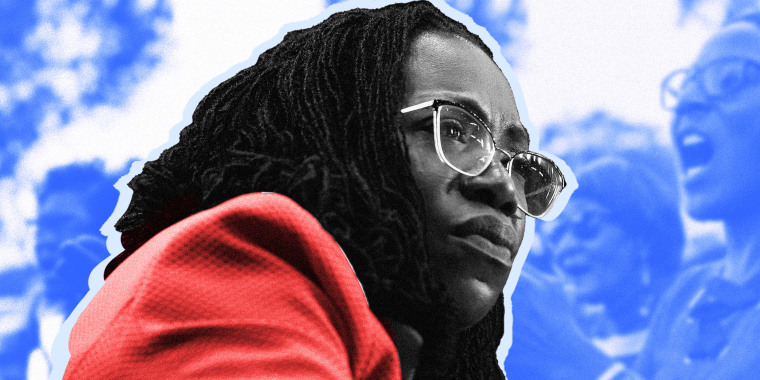
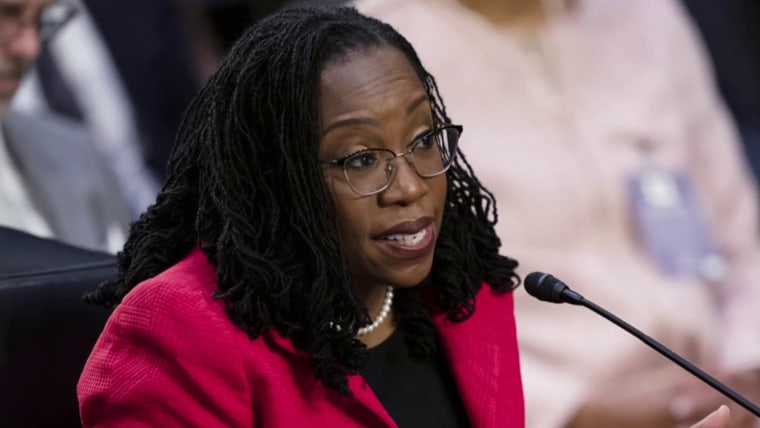
Judge Ketanji Brown Jackson's Supreme Court confirmation hearings this week should have been a moment of pride for our nation, but instead of being a high point, the nomination of the first African American woman to the Supreme Court became a painful reminder of the racism, sexism and downright evil that men and women can do in service to white supremacy. It may also be a defining moment for the Democratic Party’s most loyal base: Black women.
Judge Ketanji Brown Jackson's Supreme Court confirmation hearings this week should have been a moment of pride.
The failure of Democrats on the Senate Judiciary Committee to forcefully defend Jackson may be a moment the party comes to regret.
Black women painfully watched the spectacle of an overly qualified Black woman getting vilified by people who are neither her intellectual nor moral peers. And during that bacchanalia of thinly disguised racial hatred and animus aimed at Jackson, Black women watched the members of the party that nominated her barely defend her. What was always going to be a difficult hearing turned into a brutal show of hatred by Republicans. And Democrats let it happen.
During the Republican histrionics, Jackson was subjected to countless asinine questions about the sentences she imposed in child pornography cases and about whether she uses critical race theory to decide cases. To top it off, Sen. Ted Cruz, R-Texas, asked her about racist babies. If that wasn’t enough, she was also asked about her religion by Sen. Lindsey Graham, R-S.C., ostensibly to relitigate 2020’s confirmation hearings of Justice Amy Coney Barrett, a Catholic.
But this piece isn’t about Republicans’ disingenuous, disturbing and sometimes vile attacks on Jackson, but about the Democratic Party, the politics of representation and the shaky ground the party occupies in 2022.
More from MSNBC Daily
Must reads from Today's list
With the exception of Sen. Mazie Hirono, D-Hawaii; Sen. Jon Ossoff, D-Ga.; and, to some extent, Sen. Cory Booker, D-N.J., (more on him in a moment) Democrats did not defend Jackson as carefully or thoroughly as they should have. Slate’s Dahlia Lithwick stated the case forcefully, saying the Democrats "stranded" Jackson, leaving America with the optics of Sen. Dick Durbin, D-Ill., controlling the gavel but leaving her alone to fend off QAnon smears and relentless attacks. Lithwick counted Booker’s defense of Jackson as Wednesday’s only highlight.
However, as impassioned and full of hope as Booker’s defense was, and as important as it was for Black women to see and hear a Black man defend Jackson, Booker weaving his own biography into hers smacked of condescension. His telling Jackson, “You have earned this spot. You are worthy. You are a great American,” goes without saying. But it is typical of the kind of appeal that Black people must so often make to justify their presence in a white male-dominated society. Booker’s attempt to support her by telling her she belongs didn’t confront the evil fact that the Republicans who were in the room know Jackson belongs; they simply don’t want her on the court. Period.
Those hearings were difficult for Black women who have experienced what Jackson experienced in public and on television.
Even though it appears Democrats have the votes to confirm Jackson, those hearings were difficult for Black women who have experienced what Jackson experienced in public and on television: being doubted, vilified and slighted by people trying to denigrate us for their own advancement. My social media feeds were filled with Black women describing how hard it was to watch her keep control of her temper while being lied about. Before the hearings even began, I predicted on Twitter that the worst part about the confirmation hearings would be the sight of her intellectual and moral inferiors using their questions to create a soundbite that might boost their fundraising. Sadly, that appears to be exactly what they were doing.
Black women should not be assuaged if Jackson is sworn in because her prodigious record was already proof she belongs there. Instead, they have every reason to remain angry that Democrats didn’t adequately come to her defense. Their decision to let Republicans manhandle their nominee is not a strategy to bring the base together but instead may be recipe for disaster in the 2022 and 2024 elections.
The lack of full-throated support and protection of Jackson is a reminder that Democrats appoint well-qualified women of color to prestigious positions. What they don’t do is support them. Representation is not enough. In exchange for Black women’s votes and financial support, we demand more than representation. We demand respect, protection and action on issues of concern in our communities.
As the most loyal voting bloc of the Democratic Party, Black women deserved to see from Democrats a concerted pushback against the nefarious attacks that Republicans used to smear Judge Ketanji Brown Jackson and, as it so often felt, all of us. But Democrats failed her, and they failed us.“
A Ukrainian serviceman stands in a heavily damaged building in Stoyanka, Ukraine. Photograph: Vadim Ghirdă/AP
Vladimir Putin is seeking to split Ukraine into two, emulating the postwar division between North and South Korea, the invaded country’s military intelligence chief has said.
In comments that raise the prospect of a long and bitter frozen conflict, Gen Kyrylo Budanov, who foretold of Russia’s invasion as far back as November, warned of bloody guerrilla warfare.
The prediction came as Leonid Pasechnik, the leader of the self-proclaimed Luhansk People’s Republic in eastern Ukraine, said: “I think that in the near future a referendum will be held on the territory of the republic, during which the people will … express their opinion on joining the Russian Federation.”
Budanov said he believed Putin had rethought his plan for full occupation since failing to swiftly take Ukraine’s capital, Kyiv, and overthrow Volodymyr Zelenskiy’s government. “It is an attempt to create North and South Korea in Ukraine,” he said of the new Kremlin strategy.
Officials in Kyiv said they expected troops attacking the capital and the embattled city of Kharkiv to move east within two weeks...
Donald Trump speaks during a Save America rally at the Banks County Dragway in Commerce, Georgia, on Saturday.Photograph: Megan Varner/Getty Images
"Donald Trump chose a rally in Georgia on Saturday night once again to praise Vladimir Putin, calling the Russian president “smart” even as he said the invasion of Ukraine amounted to a “big mistake”.
The Republican former president also had warm words for China’s presidentXi Jinpingand North Korean dictatorKim Jong-unand referred to such leaders collectively by saying: “The smartest one gets to the top.”
He spoke admiringly of Xi in terms of the fact that he “runs 1.5 billion people with an iron fist” and referred to Kim as “tough”.
Then of Putin, Trump told the crowd: “They asked me if Putin is smart. Yes, Putin was smart.”
He also praised Russia’s strategy of a huge accumulation of military force on its border with Ukraine prior to invading, even if the war is not going well for the aggressor.
“That’s a hell of a way to negotiate, put 200,000 troops on the border…That was a big mistake, but it looked like a great negotiation. That didn’t work out too well for him,” Trump said.
Trump was inGeorgiaas primary races heat up before the midterm elections in November, as part of his continuing effort to bend national Republican candidates to his will and the party to do his bidding.
Trump’s presence in the state came 18 months after he pressured Georgia’s secretary of state,Brad Raffensperger, to “find” enough votes to overturn Joe Biden’s victory, a conversation that is now the subject of a grand jury investigation in Atlanta.
The loss, which made Trump the first Republican presidential candidate to lose the state in 28 years, continues to rankle the former president, and he has endorsed the state congressman Jody Hice in his challenge to Raffensperger. He also backed other candidates in the state against establishmentRepublicans, including David Perdue against the sitting governor, Brian Kemp.
It follows a similar pattern in other states where Trump has held or plans to hold rallies as a way of showing support for Republican candidates who have offered him their fealty.
Saturday’s rally in Commerce, 70 miles north-east of Atlanta and one of the most conservative parts of the state, featuredHerschel Walker, a former football player running for the US Senate; Perdue; and the congressional candidate Vernon Jones, a former Democratic state representative who began calling himself the “Black Donald Trump” after switching parties.
But Trump is playing a high-stakes game and his candidates’ success in Georgia’s May primaries is far from guaranteed.
Walker is slightly ahead of the Democratic senator Raphael Warnock inRealClearPolitics polling averages, but Jones, who dropped a bid for the governorship in February, faces a crowded Republican field for the conservative 10th congressional district, which covers part of east Georgia.
Trump’s pick for governor, Perdue, faces an even more complex struggle. He has struggled to raise campaign money and trails incumbent Brian Kemp by 11 points, according to a Fox News poll.
Perdue has toed Trump’s false line of a “stolen” 2020 election and begun claiming that his defeat to the Democratic senator Jon Ossoff, to whom he conceded in January, was also problematic. “Most people in Georgia know that something untoward happened in November 2020,” hetoldthe talk radio host Bryan Pritchard. “I’ll just say it, Bryan. In my election and the president’s election, they were stolen. The evidence is compelling now.”
The Perdue-Kemp contest represents a personal grudge for Trump, which flared after Kemp refused to support his bid to overturn Georgia’s 2020 election result."
Tesla CEO Elon Musk, shown in 2021, has tested his limits with U.S. auto safety regulators over the years. Recently, they've started to push back. (Al Drago/Bloomberg News)
Weeks earlier, a Tesla using the company’s advanceddriver-assistancesystem hadcrashedinto a tractor-trailer at about 70 mph, killing the driver. When National Highway Traffic Safety Administration officials called Tesla executives to say they were launching an investigation, Musk screamed, protested and threatened to sue, said a former safety official who spoke on the condition of anonymity to discuss sensitive matters.
The regulators knewMuskcould be impulsive and stubborn; they would need to show some spine to win his cooperation. So they waited. And in a subsequent call, “when tempers were a little bit cool,” the official said, Musk agreed to cooperate: “He was a changed person.”
Since that success in 2016, officials have learned to work with Musk, using a combination of pressure, flattery and threats to persuade him to comply with federal safety measures, according to a half-dozen former regulators, some of whom spoke on condition of anonymity to discuss sensitive matters. In the past six months, Tesla has issued at least a dozen voluntary recalls, a dramatic turnaround for a company known to quietly issue software updates direct to cars — without alerting the public — to fix sometimes alarming safety problems.
With about 2 million cars on the road, Tesla recently has experienced a wave of troubles: Cars using its driver-assistance features have slammed on the brakes for no reason and rolled through stop signs — the latter because Tesla programmed them to do so. A string of crashes into parked emergency vehicles is under investigation. And the cars’ batteries have been documented exploding in crashes and while parked in garages.
Such issues typically prompt NHTSA to investigate and sometimes to push for voluntary or mandatory recalls. If an automaker refuses to cooperate, NHTSA can impose cash fines of about $23,000 per day. The threat of fines — which can add up to nearly $115 million — generally works with traditional companies, the former officials said, but hasn’t proven effective when dealing with Tesla, an extraordinarily valuable company owned by the richest man in the world.
So NHTSA officials have turned to less conventional strategies to force the electric vehicle manufacturer to be more transparent about safety issues — a critical matter at a time when more than 50,000 drivers can now use Tesla’s “Full Self-Driving” software to navigate the nation’s public roads.
“Tesla is presumably smart enough to realize when they don’t have the upper hand anymore,” said Phil Koopman, an associate professor at Carnegie Mellon University whose focus includes federal auto regulations. “Tesla has a choice to make — they have to decide whether to cave or go to the mat. And the reality is, on [federal safety regulations] they’re going to lose.”
Tesla and Musk did not respond to specific questions in a detailed request for comment. Musk said in an email, “For the 100th time, please give my regards to your puppetmaster,” referring to Amazon founder Jeff Bezos, who owns The Washington Post. In a subsequent email, he also criticized The Post’s paywall for online articles.
NHTSA declined to make anyone available for an interview, citing ongoing investigations. But the agency issued written statements to The Post expressing its commitment to protect public safety.
The Post asked experts to analyze videos of Tesla beta software, and reporters Faiz Siddiqui and Reed Albergotti test the car's performance firsthand. (Video: Jonathan Baran/The Washington Post, Photo: The Washington Post)
Tesla has publicly touted the safety of its vehicles and its driver-assistance technology,boastingthat it has won the highest possible score — five stars — in crash tests where NHTSA slams cars into barriers and then examines the results. Tesla also hassaidits cars have the lowest probability of injury of any car tested, though NHTSA hasdisputedthat characterization.
Musk’s own attitude was part of the problem with efforts to enforce safety, the officials said. Someexperiencedpersonal encounters with Musk that escalated into yelling matches or otherwise proved unproductive because of the CEO’s skepticism about their findings.
NHTSA’s experiences with Tesla were unique among major automakers, the officials said. It was not rare for companies under scrutiny to fiercely push back against their findings, sometimes resulting in mandatory rather than voluntary recalls, they said. But with Tesla, issues as simple as a malfunctioning heat pump or noncompliant sound effects to alert pedestrians to a vehicles’ presence could result in stubbornness.
Tesla eventually issued recalls in both cases — decisions influenced by NHTSA, a spokeswoman said.
“NHTSA will ensure that vehicle manufacturers and developers prioritize safety while they usher in the latest technologies,” spokeswoman Lucia Sanchez said.
Regulators have been slow to take action on some software suites that power automated features, in part because they are wary of appearing to stifle emerging technologies, the former officials said. There also are few rules governing these technologies, further hindering efforts at regulation.
Since 2016, NHTSA has opened 31 special crash investigation cases involving advanced driver-assistance technology, according to data provided by the agency. Twenty-four have involved Tesla vehicles.
Safety experts and some of the former regulators who spoke with The Post raised concerns about “Full Self-Driving” in particular because of its experimental nature. Tesla says the software is in “beta,” meaning it is a pilot through which the company hopes to learn and improve its features for an eventual full release.
Lawmakers have pressed for more transparency regarding Tesla’s practices. In February, following a Post report on the cars’ sudden braking, Sens. Richard Blumenthal (D-Conn.) and Edward J. Markey (D-Mass.) criticized Tesla for putting software on the roads “without fully considering its risks and implications.” They urged NHTSA “to continue taking all appropriate action to protect all users of the road.” And they called on the Federal Trade Commission to launch an investigation into what they called “misleading advertising and marketing” of Autopilot and “Full Self-Driving” systems.
During much of the Obama administration, Tesla slid under the radar of federal safety regulators. As a niche automaker delivering at most tens of thousands of luxury cars per year, officials said it would not have ranked on the agency’s priority list, compared with high-volume automakers such as Ford and Toyota. From 2013 to 2015, there was just one recall per year for early Tesla Model S luxury sedans. Those recalls — which involved seat back mountings, charging equipment and incorrectly secured seat belts — compare with a total of 2,261 vehicle recalls over the same period, according to NHTSA data.
One early run-in set the tone for regulators’ interactions with Tesla. In 2013, Tesla claimed its Model S was the safest car ever tested by NHTSA.
Officials at the agency were dumbstruck, according to some of those who spoke with The Post. The agency issues up to 5-star ratings, but it does not take its designations beyond the star score.
At one point, two former officials recalled, NHTSA officials threatened to contact the FTC, which regulates marketing. “If Tesla wasn’t willing to pull the plug, FTC was probably going to take action,” one of the former officials said.
But Tesla continued to make similar claims, including in 2019, when it said its Model 3 had the “lowest probability of injury of any vehicle ever tested” by NHTSA. The agency ultimately referred the automaker to the FTC. The FTC declined to comment.
NHTSA, meanwhile, focused increasing attention on the automaker as it built more and more cars, launching the Model X SUV in 2015 and steadily growing its production in the buildup to the mass market-aimed Model 3. The agency also had to deal with emerging issues, such as fires caused by road debris striking the cars’ underbodies, where the high-voltage battery is located. Musk wrote in astatementat the time that Tesla would introduce a fix to bring that risk “down to virtually zero.”
One official recalled that regulators were confused by Musk’s reluctance to address one battery-related issue. The only evident solution was to appeal to his sense of pride.
“NHTSA staff backs Musk into a corner and challenges his ego and says, ‘Wait, you can’t solve this?’ ” a former official said. “And the next day he has a solution.”
The Trump administration was even less hands-on. The NHTSA website lists only one recall for the 2017 through 2020 Tesla Model 3, then the automaker’s most popular model. Depending on the model year, there were up to eight recalls issued for the same car beginning May 25, 2021, after President Biden took office.
Under the Trump administration, career officials and top staff were reluctant to take a strong stance on a mounting catalogue of safety concerns, wary of appearing to targetinnovation and already under pressure from the president to ease regulations.
The officials said staffers were reluctant to take on a rapidly emerging automotive power with a massive public platform, worried they wouldn’t have the backing of top officials if they received a browbeating from Musk.
“My former staff felt they had nothing to do — twiddling their thumbs,” one former official said. “The professional staff — the career staff — wanted to do stuff either from a regulatory standpoint or investigation perspective” but were stymied.
Musk praised NHTSA as “great” in April 2021.
Although Labor Secretary Marty Walsh recently met with Musk and took a factory tour in Texas,Axios reported, Musk has criticized President Biden for leaving Tesla out of major events. Musk also has parroted Republican barbs,jokingat one point Biden was “sleeping.”
Last summer, NHTSA began requiring companies such as Tesla to report on certain crashes involving automated features within one day of learning of the incident. Then in August, the agency launched an investigation into about a dozen crashes involving parked emergency vehicles while Autopilot was active. In a letter, it called out Tesla for pushing out a software update to help its cars better see emergency vehicles, without formally issuing a recall.
A surge of investigations, recalls and public admonitions has followed.
Former officials who spoke with The Post said Tesla’s haphazard approach has grated on some NHTSA staff, and the enforcement reflects an attempt at a course correction.
“The agency does hold a very firm line on [federal motor vehicle regulations], and I don’t think any of us want to live in a world where the automakers do essential recalls without going through that process,” said Bryan Thomas, who was communications director at NHTSA during the Obama administration. “If the car’s going to react differently at a stop sign tomorrow than it did today, you should know that as a driver.”
The former officials said NHTSA is not singling out Tesla. Instead, they said the agency is using a calculated approach to try to force the combative automaker to recognize findings that can’t be denied. That means picking targets — the seat belt chime, rolling stops, a windshield defroster — that may strike executives and even some owners as trivial. But those narrow targets offer an entree to larger issues that are not yet addressed by federal regulations, which often lag behind the latest software advances.
In February, NHTSA cracked down on a feature known as “Boombox,” which plays sounds that bystanders can hear — such as an ice cream truck jingle — but can drown out sounds that warn pedestrians of approaching vehicles. On Twitter, Musk decried the agency as the “fun police.”
Federal safety investigators from the National Transportation Safety Board have also focused their attention on Tesla. Late last year, NTSB Chair Jennifer Homendy wrote a letter to Musk calling out the company’s “inaction” on recommendations that would have added safeguards to the Autopilot system in response to the fatal 2016 crash with the tractor-trailer.
In a statement posted to its website at the time, Teslacalledthe death “A Tragic Loss.” The company defended the performance of Autopilot across the tens of millions of miles it had logged and emphasized that drivers should be prepared to take control of the vehicle at any time.
In September, Homendy expressed her concern about Musk’s approach to safety in an interview with The Post.
“I think Elon Musk is an incredible innovator," she said, expressing hope for "the ultimate success of [autonomous vehicle] technologies — which could save lives.”
But she also encouraged Musk to “really prioritize safety for his company," adding: "I don’t want to see lives lost in the meantime.”