Sunday, August 04, 2019
Minutes Before El Paso Killing, Hate-Filled Manifesto Appears Online
"Nineteen minutes before the first 911 call alerted the authorities to a mass shooting at a Walmart in El Paso, Tex., a hate-filled, anti-immigrant manifesto appeared online.
It spoke of a “Hispanic invasion of Texas.” It detailed a plan to separate America into territories by race. It warned that white people were being replaced by foreigners.
The authorities were scrutinizing the 2,300-word screed on Saturday and attempting to determine whether it was written by the same man who killed 20 people and injured more than two dozen others near the Mexican border.
Police officers were interviewing the suspect, Patrick Crusius, a 21-year-old white man from Allen, Tex., a roughly 10-hour drive to the Walmart. What brought him to a crowded shopping center in El Paso is one of the many questions on the minds of investigators.
[Live Updates: Mass shooting in Dayton, Ohio, kills at least 9.]
The manifesto that may be linked to Mr. Crusius described an imminent attack and railed against immigrants, saying, “if we can get rid of enough people, then our way of life can be more sustainable.”
From New Zealand to Pittsburgh to a synagogue in Poway, Calif., aggrieved white men over the last several months have turned to mass murder in service of hatred against immigrants, Jews and others they perceive as threats to the white race.
Attacks by White Extremists Are Growing. So Are Their Connections.
A New York Times analysis identified more than 350 white extremist attacks in Europe, North America and Australia since 2011. Perpetrators of the deadliest attacks engaged with extremist content online.
The unsigned manifesto, titled “The Inconvenient Truth,” draws direct inspiration from the mass murder of Muslims at two mosques in New Zealand in March that left 51 people dead. In that attack, the suspect published a manifesto online promoting a white supremacist theory called “the great replacement.” The theory has been promoted by a French writer named Renaud Camus, and argues that elites in Europe have been working to replace white Europeans with immigrants from the Middle East and North Africa.
Christchurch has become a rallying cry for extremists the world over. The manifesto potentially linked to the El Paso killings begins, “In general, I support the Christchurch shooter and his manifesto. This attack is a response to the Hispanic invasion of Texas.”
The authorities are investigating whether a hateful manifesto is linked to a gunman who killed 20 people in El Paso on Saturday.Joel Angel Juarez/Agence France-Presse — Getty Images
The gunman who opened fire in April at a synagogue in Poway, Calif., near San Diego, posted an anti-Semitic diatribe on 8chan, the same online message board where the El Paso document surfaced. The Poway manifesto echoed the words of the Christchurch suspect, and also drew inspiration from a massacre at a synagogue in Pittsburgh last October. In that mass shooting, the suspect railed against immigrants, Jews and other groups.
The El Paso shooting, if the manifesto is linked to the gunman, potentially underscored the global spread of white supremacist ideology in the age of social media and at a time when immigration in America and elsewhere has become a divisive political topic.
Shortly after the mass shooting Saturday, Mr. Crusius’ LinkedIn and Facebook accounts were shut down. A LinkedIn page that circulated online after the account was closed down appeared to be several years old, and Mr. Crusius seemed to be a lost young man.
He wrote on LinkedIn while in high school, “I’m not really motivated to do anything more than what’s necessary to get by. Working in general sucks, but I guess a career in Software Development suits me well. I spend about 8 hours every day on the computer so that counts toward technology experience I guess.”
The posting concluded: “Pretty much just gonna see what technology careers present themselves to me; go with the wind.”
If the manifesto is conclusively linked to Mr. Crusius, the federal authorities may treat Saturday’s attack as a hate crime or an incident of domestic terrorism.
The F.B.I. has said that more Americans have died in domestic terrorist attacks than international ones since Sept. 11, and that domestic terrorism is increasingly motivated by white supremacist ideology.
Christopher Wray, the director of the F.B.I., told Congress last month that the bureau had made about 100 domestic terrorism arrests in the first three quarters of the year, roughly the same number of international arrests over that time period.
No United States government agency is responsible for designating domestic terrorism organizations, and there is no criminal charge of domestic terrorism. Individuals who are considered domestic terrorists are charged under other existing laws, such as hate crime, gun and conspiracy statutes.
Kendall Long, left, comforting Kianna Long, who was in Walmart when the gunfire began.Ivan Pierre Aguirre/EPA, via Shutterstock
Officials have said that domestic terrorists continue to be radicalized online, where individuals are able to align with other extremists, become inspired and find the resources they need to act.
The investigation is currently being led by the state of Texas, with assistance from the local sheriff’s department, the F.B.I., Border Patrol and others. During a news conference Saturday afternoon, law enforcement officials said that they were exploring potential capital murder charges.
“Not speaking about this particular instance, which is still under investigation, the manifesto narrative is fueled by hate, and it is fueled by racism and bigotry and division,” said Veronica Escobar, the congresswoman who represents El Paso. “El Paso has historically been a very safe community. We’ve been safe for decades. We will continue to be safe.”
She added, “This is someone who came from outside of our community to do us harm.”
Once again on Saturday, America’s epidemic of mass shootings intersected with the divisive issues of race and immigration.
The words of the manifesto, in citing the “great replacement” theory, echo the slogan that was chanted during a white supremacist rally in Charlottesville, Va., in 2017: “Jews will not replace us.”
The writer of the manifesto also suggested that Democrats in the United States have a strategy to gain a permanent majority by embracing the growing Hispanic population, a notion that has gained currency on right-wing radio shows for years.
The manifesto said the gunman planned to use an AK-47-style rifle, which has been frequently used in mass shootings. The four-page document said politicians of both parties were to blame for the United States “rotting from the inside out,” and that “the heavy Hispanic population in Texas will make us a Democrat stronghold.”
The manifesto also railed against automation and embraced an argument familiar in anti-immigrant circles: that immigrants are taking jobs from “natives.”
“My opinions on automation, immigration, and the rest predate Trump and his campaign for president,” the document says."
Minutes Before El Paso Killing, Hate-Filled Manifesto Appears Online


Friday, August 02, 2019
Happy Birthday to Medicare and Medicaid l Opinion
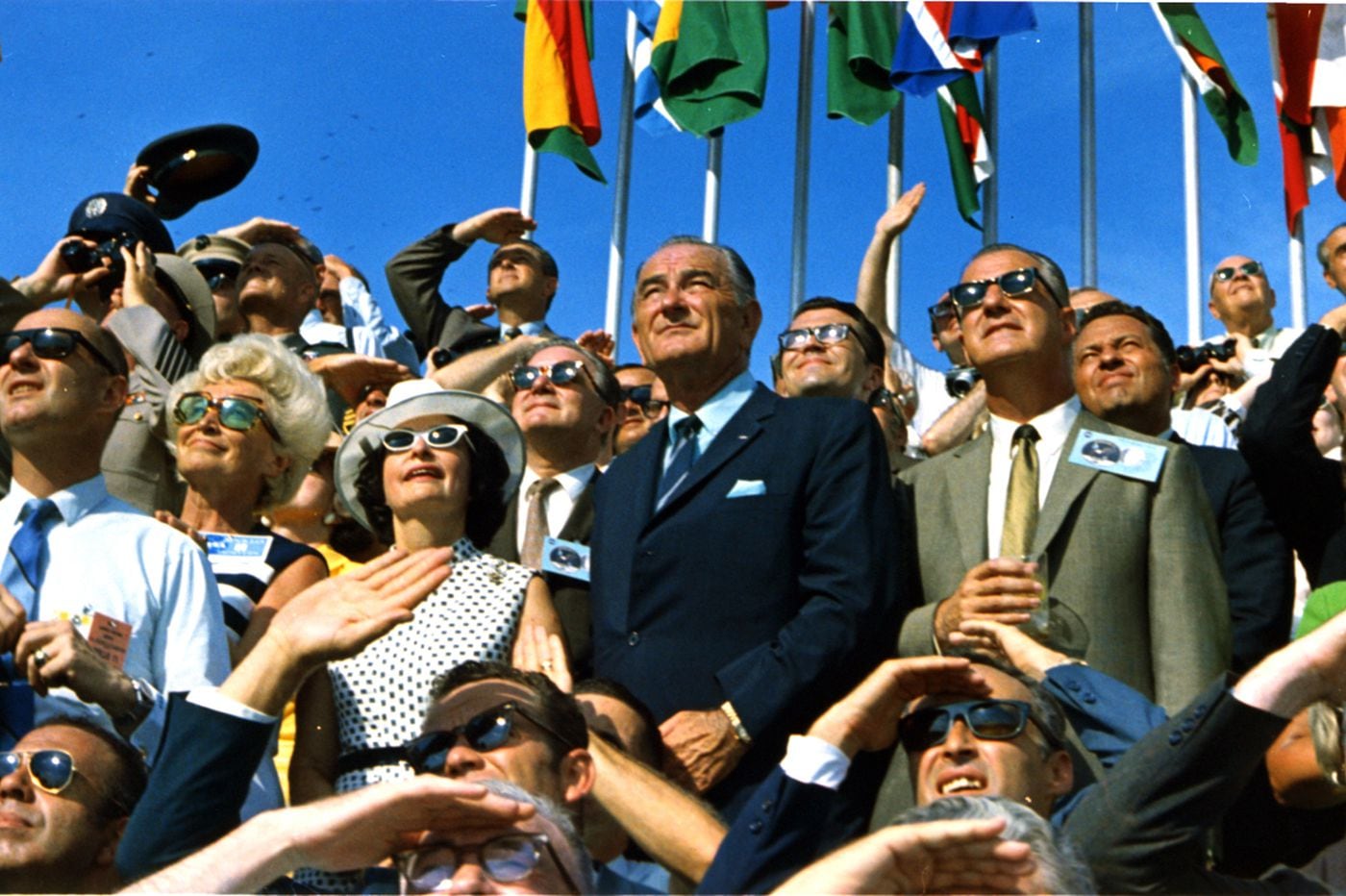
"Happy 54th birthday, Medicare and Medicaid. What has happened to you since President Lyndon Johnson signed both into law on July 30, 1965? You’ve grown! Today, 44 million Americans, approximately 15% of the population, are on Medicare (including yours truly). An even larger share of the population, 20%, amounting to about 75 million people, is in the Medicaid program.
Although they share a birthday, Medicare and Medicaid have different histories, funding sources, and eligibility standards. To qualify for Medicare you must be a citizen or a legal resident for at least five years, be 65 or older, and be eligible for Social Security. Or, be permanently disabled and receive benefits for at least two years, or have end-stage renal disease, or have amyotrophic lateral sclerosis (Lou Gehrig’s disease).
Medicaid is a means-tested state administered program that provides health coverage for some low-income people, families and children, pregnant women, the elderly, and people with disabilities. Although the Affordable Care Act extended eligibility to low-income adults, a Supreme Court decision made it optional for states to accept the funds to extend coverage and in 14 states, Medicaid has not been expanded. In our region, Pennsylvania, Delaware, and New Jersey have all expanded Medicaid eligibility.
Medicare and Medicaid emerged as part of Johnson’s War on Poverty — a broad-ranging effort that included increases in federal funding for elementary, secondary, and college education, Head Start, an expansion of Social Security, the Child Nutrition Act, environmental legislation, and support for the arts and humanities, among many other progressive bills.
Well into middle age, Medicare and especially Medicaid remain controversial pieces of legislation as measures to expand or curtail them are taken up in Congress. Currently, fights about expanding Medicare eligibility to provide coverage to the over 14% of Americans who lack health insurance are a critical political debate talking point in the run-up to the 2020 presidential election.
Many of the claims and counterclaims about expanding coverage echo those from over half a century ago. Opponents of the initial Medicare and Medicaid legislation charged that it was un-American “socialized medicine” and that the programs would lead to severe rationing. Ronald Reagan can be heard saying in a 1961 audio warning that a proposed bill to expand coverage to the elderly would lead directly to socialism and take away the freedom of Americans.
Today, while Medicare and Medicaid supporters are singing “Happy Birthday,” the old songs about socialism are being sung again. The chorus contains a verse about “government entitlements” and another about the growing costs of coverage. Missing are the verses about the folks who now have access to needed services and whose lives and health have improved because of these two programs.
Until the enactment of Medicare, the elderly were denied coverage by health insurers. Folks too old to work or lacking coverage from employers often found the costs of care out of reach. Medical expenses pushed other people into poverty or forced them to forgo necessities like food or heat in order to see a doctor or get hospital care. With the federal government paying some of the bill , Medicare, along with Social Security, lifted millions of our senior citizens out of poverty. Some facts are here.
Medicaid has expanded enormously since its founding and is now comprised of numerous programs with different eligibility rules. The programs have had an undeniable impact on the young, decreasing infant and child mortality and improving long-term health. Some facts are here. The American Medical Association (AMA), once a staunch opponent of both Medicare and Medicaid, also grew up in the past decades and changed its tune. The AMA now supports the idea, proven by numerous studies, that better coverage equals better health. The organization now argues that any new legislation should not result in people losing health coverage and that Medicaid needs to be strengthened.
The history of Medicare and Medicaid as well as the fact that they neither ushered in socialism nor bankrupted the nation will probably be overlooked during the upcoming political debates. Slogans, sound bites, and social media memes will probably drown out or overinflate the evidence provided by experts showing that both programs reduced poverty and improved health. Discussions of how to pay for expanded services will have economics experts dueling on television shows. Let’s hope a few historians are called to speak as well, not to sing happy birthday, but to offer an account of what has been accomplished over the past 54 years.
Janet Golden is professor emerita at Rutgers-Camden and a historian of U.S. medicine."
Happy Birthday to Medicare and Medicaid l Opinion
Trump’s Demagoguery Is an Old American Tradition

"Along rivers prone to overflowing, people sometimes talk of preparing for a 100-year flood—a dangerous surge of muddy, debris-filled water so overwhelming it appears only once a century.
In our political world, we are now seeing a 100-year flood of toxic debris. The sludge washing ashore includes President Trump’s continuing cries of “fake news!” and “traitors”; his rage at immigrants and refugees; his touting of an “invasion” at the southern border; and his recent round of attacks on “the squad,” four young congresswomen of color who, he raged, should “go back” to the “totally broken and crime infested places from which they came.” (Three of them, of course, were born in the United States.) When he talked about the fourth, Ilhan Omar of Minnesota, a legal immigrant from Somalia, the inflamed crowd at his July 17 reelection rally in North Carolina began spontaneously chanting, “Send her back! Send her back! Send her back!”
Donald Trump, of course, has a long history of disliking people of color, going back to the days when he and his father tried to keep them out of their New York real estate dynasty’s apartment buildings. Presidents, however, usually find it politic to keep such feelings under wraps. Nonetheless, Trump’s particular brand of xenophobia, racism, and media hatred isn’t completely unprecedented. The last time we had a similar outpouring from Washington was almost exactly 100 years ago and it, too, involved a flood of angry rhetoric and a fear of immigrants—and it included repression on an enormous scale.
Fear of Immigrants, 1917 Version
The 100-year flood I’m thinking of lasted for three violent years during the presidency of Woodrow Wilson—from early 1917 to early 1920. Except for lynchings in the Jim Crow South, it would prove to be the harshest burst of political repression and fear-mongering in either 20th- or 21st-century America. It began suddenly when the United States entered the First World War in support of England and France and against the Germany of Kaiser Wilhelm II.
Schools, colleges, and universities abruptly stopped teaching the “Kaiser’s tongue”—a move loudly backed by the ever-strident former president Theodore Roosevelt. Iowa forbade the use of German over the telephone or in public. In Shawnee, Oklahoma, a crowd burned German books to mark the Fourth of July. German music being out, marriages took place without Mendelssohn’s “Wedding March.” Berlin, Iowa, changed its name to Lincoln. Chicago’s Bismarck Hotel became the Hotel Randolf. Families named Schmidt became Smith and Griescheimer, Gresham. The hamburger became “the liberty sandwich.” German shepherds were redubbed Alsatian shepherds.
My grandfather was a Jewish immigrant from Germany and spoke German with his children. Now, however, they were terrified to do so on the street. In his 20s at the time, my father desperately tried to get into the Army, for a uniform was obvious protection from mob violence—and violence there was. In Collinsville, Illinois, for example, a crowd seized Robert Prager, a coal miner, and lynched him because he had been German-born. (He had tried to enlist in the Navy, but was turned down because of his glass eye.) In Washington, when a man failed to stand up as “The Star-Spangled Banner” was played, a sailor right behind him shot him dead.
Congress rushed the draconian Espionage Act to a vote two months after the country entered the war. It outlawed anything that would “cause insubordination, disloyalty, mutiny, or refusal of duty in the military.” There was, however, not the slightest danger of mutiny among American troops sent to the Western Front in France. Many were so eager to fight that their commanders found gung-ho rear-area soldiers “deserting to the front.” Nor was there much danger of espionage. In those years, only 10 people would be charged under the act with being German agents.
Current Issue
The president who oversaw this particular 100-Year Flood was no Donald Trump, not in his manner anyway. Rabid invective was hardly Woodrow Wilson’s style. He carefully kept his image as an above-the-fray idealist by outsourcing inflammatory rhetoric to others, such as his special emissary to Russia, Elihu Root.
A corporate lawyer and former secretary of war, secretary of state, and senator from New York, Root would prove the prototype of the “wise men” who moved between Wall Street and Washington to form the 20th-century foreign policy establishment. “Pro-German traitors” were threatening the war effort, Root declared to an audience at New York’s Union League Club in August 1917. “There are men walking about the streets of this city tonight who ought to be taken out at sunrise tomorrow and shot for treason.… There are some newspapers published in this city every day the editors of which deserve conviction and execution for treason.”
Fake news indeed! The actual bullying of those newspapers Wilson left to Postmaster General Albert Sidney Burleson, of Texas. The Espionage Act gave the Post Office great powers over the press. Newspapers were censored, editors jailed, and publications shut down, most famously Max Eastman’s The Masses, the Greenwich Village radical monthly that was one of the liveliest magazines this country has ever seen. Some 75 newspapers and periodicals either had specific issues banned or were forced to close entirely.
As today on the US-Mexico border, vigilante groups sprang up across the country. The largest was the American Protective League, an official auxiliary of the Justice Department, which even enjoyed the franking privilege of sending mail for free. With a membership that swelled to 250,000, its ranks were filled with men too old for the military who still wanted to do battle, at home if not abroad. So they regularly broke up anti-war meetings and, by the tens of thousands, beat up or made citizens’ arrests of suspected draft dodgers.
Such was the frenzy in the air that two policemen in Guthrie, Oklahoma, hearing a man reading something aloud that spoke of abuses and oppression, promptly arrested him. When he protested that it was the Declaration of Independence written by Thomas Jefferson, one cop responded: “Okay, where is this Jefferson? We want him, too!” When a leftist student at Rutgers University refused to speak at a rally to sell war bonds, he was stripped, blindfolded, covered with molasses and feathers, and paraded through town behind a sign that read: “This is what we do with pro-Germans!”
People who opposed the war were prosecuted by the hundreds. Among them were anarchist firebrand Emma Goldman and her comrade Alexander Berkman, put on trial for organizing against the draft. In court, addressing the “gentlemen of the jury,” Goldman asked, “May there not be different kinds of patriotism as there are different kinds of liberty?” Her own American patriotism, she explained, was like that of “the man who loves a woman with open eyes. He is enchanted by her beauty, yet he sees her faults.” The jury found her guilty and the pair was sentenced to two years in prison. “It took a world war,” The Wall Street Journal declared, “to put Goldman and Berkman where they should have been years ago.”
As in the age of Trump, deportation was used as a political weapon. The search for radicals who had never bothered to become American citizens lay behind the seizure of thousands of people in the notorious Palmer Raids orchestrated by Attorney General A. Mitchell Palmer. The government then deported as many of them as they legally could. Goldman and Berkman, for example, were among 249 deportees loaded onto a decrepit former troopship and sent off to Russia.
The ferocity of the moment was so extreme that people were prosecuted for things they said in private. Charles Schoberg, for example, was a 66-year-old cobbler in Covington, Kentucky. Although German-born, he had lived in the United States since childhood and had been both a police officer and city council member. In the spring of 1918, a suspicious local vigilante group, the Citizens Patriotic League, hired a private detective to put a microphone in his shoe shop. An eavesdropping detective, listening in from a nearby building, picked up Schoberg and two friends making sour and critical remarks to each other about the US armed forces. A typical comment was “You can’t hold the Germans back”—not an unreasonable observation at a moment when the Kaiser’s rapidly advancing army looked as if it was about to capture Paris. Schoberg was sentenced to 10 years in prison, one of his friends to seven years, and the other to five.
“The Christian Men to Whom God… Has Given the Control of the Property Interests of the Country.”
This patriotic delirium, however, was more than just an upwelling of public opinion. It was carefully stoked. Vigilante groups like the one that snooped on Charles Schoberg or the American Protective League were heavily funded by big business. And not because the country’s industrial and political elite particularly cared about catching German spies or outing pro-German Americans. They were focused on crushing the labor movement.
In the early 20th century, American workers and their unions had few legal rights and business wanted to keep it that way. During a coal miners’ strike in 1902, the president of a railroad declared that wages, hours, and union recognition should be decided “not by the labor agitators, but by the Christian men to whom God in His infinite wisdom has given the control of the property interests of the country.”
As the century went on, those “Christian men” felt increasingly threatened. The public imagination had been captured by the country’s most radical union, the Industrial Workers of the World (IWW), known to all as the Wobblies. It was led by Big Bill Haywood, a charismatic, one-eyed former miner famous both for using his fists in labor struggles and quoting long passages of Shakespeare by heart.
In 1912, Haywood and other Wobblies organized a strike of 25,000 textile workers in Lawrence, Massachusetts, which was victorious despite the police and militia murders of several strikers. A Wobbly-organized walkout of New York City hotel and restaurant waiters that same year, though less successful, still caused consternation when some 800 strikers blocked Fifth Avenue, a central artery of American capitalism. The police had to fire their revolvers into the air to disperse them. An uprising of Colorado coal miners saw more than 70 people killed before it ended in December 1914—and more strikes followed.
The war changed all that, though. Since almost any industry could now be deemed essential to the war effort, the powers that be had the perfect excuse to come down hard on labor. Previously, such battles, though numerous and violent, had been scattershot: the National Guard suppressing one strike, private detectives another, sheriffs’ deputies a third. Now, business had the pretext for a coordinated nationwide crackdown—and had the backing of the White House.
On September 5, 1917, federal agents raided every IWW office in the country as well as the homes of Wobbly activists. From the group’s Chicago headquarters alone, the raiders took five tons of material, including some of the ashes of the martyred Wobbly songwriter Joe Hill, shot by a Utah firing squad in 1915 after a murder conviction based on much-disputed evidence.
In police vehicles and sealed boxcars, more than 100 Wobblies were brought to trial in Chicago. With more defendants in the dock than at any other trial in American history, all the accused were found guilty on all counts. The judge passed out sentences totaling 807 years of prison time and fines of more than $2.4 million, which, of course, no Wobbly had the money to pay. Along with his comrades, Big Bill Haywood was packed off by special train to the federal prison in Leavenworth, Kansas. “We never won a hand,” that onetime saloon card dealer wrote to radical journalist John Reed. “The other fellow had the cut, shuffle, and deal all the time.”
The list of violent acts against American labor in these years would prove long indeed, but one of the most egregious was against a veteran Wobbly named Frank Little. He had helped organize a strike in Butte, Montana, after a fire in a local copper mine killed 164 miners. Two months later, on August 1, 1917, six masked men entered the boardinghouse where he was staying and seized the crutches he needed for a broken ankle. They then tied Little, still in his underwear, to the rear bumper of a car and dragged him to a railroad bridge at the edge of town, where they lynched him.
A note pinned to his body read: “Others Take Notice. First and Last Warning.” The police made a conspicuously minimal effort to find the killers. Vice President Thomas Riley Marshall cynically coined a pun on Little’s name. In solving labor problems, he quipped, “A Little hanging goes a long way.”
The Real War of 1917 and Today
The crackdown—including heavy press censorship—continued after the First World War ended in German defeat and the troops came home, for it had never really been about the war.
Instead, the 100-year flood of vituperation, threats, and arrests was part of another, much longer war, a struggle against those trying to rectify America’s staggering maldistribution of its bounty. In 1915, the richest 1 percent of the population owned 35.6 percent of the country’s wealth. The biggest threat to their position was the militant wing of the labor movement, hence the Wobblies were among the greatest victims of repression.
Today, the richest 1 percent owns an even greater slice of the pie: 40 percent of national wealth. Sadly, there’s not much of a labor movement left for them to crush, but the wealthy have other targets. Progressives are advocating many measures that would help rectify the gross inequalities of this America of ours, from health insurance for all to free college tuition to bigger taxes on the highest incomes to taxing wealth itself.
Suppressing such efforts is the central aim of Donald Trump and the people around him. And to do so, he has whipped up a new 100-year flood of venom against invasions of undocumented immigrants supposedly ready to steal American jobs, refugees, the “squad,” and black football players who take a knee, among others. His demagoguery has made skillful use of an old American tradition: employing differences of race to make people forget huge differences of wealth. It’s exactly what Southern plantation owners did when they got non-slave-owning whites to join them in fighting for the Confederacy.
Forty-plus percent of the country identifies with Trump, while the rest of us get outraged. He separates children from their parents at the border and puts people in squalid, overcrowded concentration camps and again the country divides into attacking or defending him. The louder the argument, the happier he is, for it keeps the attention off the real war: his ongoing campaign to put yet more wealth not just in the hands of the top 1 percent, but the top .01 percent. Americans who forget about this truly do become his apprentices.
While the rest of us are furiously disputing whether he’s a racist or a patriot, he and his friends are quietly reaping the rewards of a tax cut that was a massive giveaway to billionaires, and his administration is fast-tracking oil pipelines, opening up federal land to drilling and mining, boosting for-profit diploma mills that exploit the poor, and putting foxes in charge of every henhouse in sight from the Consumer Product Safety Commission to the Environmental Protection Administration. These are the issues that the hundred-year flood distracts us from."
Trump’s Demagoguery Is an Old American Tradition
Opinion | The Nuns Who Bought and Sold Human Beings

"By Rachel L. SwarnsAug. 2, 2019
Georgetown Visitation Preparatory School, one of the oldest Roman Catholic girls’ schools in the nation, has long celebrated the vision and generosity of its founders: a determined band of Catholic nuns who championed free education for the poor in the early 1800s.
The sisters, who established an elite academy in Washington, D.C., also ran “a Saturday school, free to any young girl who wished to learn — including slaves, at a time when public schools were almost nonexistent and teaching slaves to read was illegal,” according to an official history posted for several years on the school’s website.
But when a newly hired school archivist and historian started digging in the convent’s records a few years ago, she found no evidence that the nuns had taught enslaved children to read or write. Instead, she found records that documented a darker side of the order’s history.
Sign up for David Leonhardt's newsletter
David Leonhardt helps you make sense of the news — and offers reading suggestions from around the web — with commentary every weekday morning.
The Georgetown Visitation sisters owned at least 107 enslaved men, women and children, the records show. And they sold dozens of those people to pay debts and to help finance the expansion of their school and the construction of a new chapel.
Georgetown Visitation Convent, View from P Street Looking North, (detail) by James Alexander Simpson, 1846.
Georgetown Visitation Convent, View from P Street Looking North, (detail) by James Alexander Simpson, 1846.Georgetown Visitation Preparatory School and Monastery Collection
“Nothing else to do than to dispose of the family of Negroes,’’ Mother Agnes Brent, the convent’s superior, wrote in 1821 as she approved the sale of a couple and their two young children. The enslaved woman was just days away from giving birth to her third child.
Nuns disposing of black families? I have been poring over 19th-century church records for several years now and such casual cruelty from leaders of the faith still takes my breath away. I am a black journalist and a black Catholic. Yet I grew up knowing nothing about the nuns who bought and sold human beings.
For generations, enslaved people have been largely left out of the origin story traditionally told about the Catholic Church. My reporting on Georgetown University, which profited from the sale of more than 200 slaves, has helped to draw attention in recent years to universities and their ties to slavery. But slavery also helped to fuel the growth of many contemporary institutions, including some churches and religious organizations.
Historians say that nearly all of the orders of Catholic sisters established by the late 1820s owned slaves. Today, many Catholic sisters are outspoken champions of social justice and some are grappling with this painful history even as lawmakers in Congress and presidential candidates debate whether reparations should be paid to the descendants of enslaved people.
Their approaches vary in scope and some sisters have expressed misgivings, fearful that exposing the past may leave them open to criticism. But as they search their archives and reflect on the way forward, some religious women are developing frameworks that may serve as road maps for other institutions striving to acknowledge and atone for their participation in America’s system of human bondage.
The Georgetown Visitation sisters and school officials have organized a series of discussions for students, faculty, staff and alumnae, including a prayer service in April that commemorated the enslaved people “whose involuntary sacrifices supported the growth of this school.” They have published an online report about the convent’s slaveholding — an article by the school’s archivist and historian also appeared in the U.S. Catholic Historian this spring — and have digitized their records related to slavery, making them available to the public for the first time.
A monument to enslaved people at the cemetery near the Society of the Sacred Heart in Grand Coteau, La.Dana Scruggs for The New York Times
The Religious of the Sacred Heart, who owned about 150 enslaved people in Louisiana and Missouri, tracked down dozens of descendants of the people they once owned and invited them to a memorial ceremony in Grand Coteau, La. At the ceremony last fall, the nuns unveiled a monument to the slaves in the local parish cemetery and a plaque on an old slave quarters. They also announced the creation of a scholarship fund for African-American students at their Catholic school, which was built, in part, by enslaved laborers.
“It wasn’t just a question of looking at the past,’’ Sister Carolyn Osiek, the provincial archivist for the Society of the Sacred Heart United States/Canada, said. “It was: ‘What do we do with this now?’’’
Sister Osiek, who led the Society of the Sacred Heart’s committee on slavery and reconciliation, said her order wanted the descendants to know that their ancestors had played a vital role in developing and sustaining the convent and school.
“We couldn’t have done it without you,’’ she said, describing the message delivered to the descendants by the order’s provincial leader. “For so long we haven’t acknowledged you, and we’re sorry about that.”
But the soul searching has not been universally embraced. Some descendants declined to participate in the ceremony in Louisiana, finding it too painful. And some nuns have expressed unease about the decision to unearth the past.
Sister Margaret Caire, a member of the Society of the Sacred Heart, and Jonty Coco, a descendant of one of the families owned by the sisters, outside the former slave quarters in Grand Coteau, La.Dana Scruggs for The New York Times
“A lot of communities now are very committed to dealing with issues of racism, but the fact is their own history is problematic,’’ said Margaret Susan Thompson, a historian at Syracuse University who has examined Catholic nuns and race in the United States.
“They’re beginning to confront their own racism, and their own complicity in the racism of the past,’’ she said, “but it’s a very long road.”
Sister Irma L. Dillard, an African-American member of the Religious of the Sacred Heart, said that some white nuns felt reluctant to revisit this history because they feared “being seen as racist and bad.” She praised the steps taken by her order so far and said she hopes more will be done.
She said that only one scholarship has been given so far, a gesture that she described as “a token.”
And while she would like to see the order’s history of slaveholding incorporated into the curriculum of the schools they founded, few of those schools have publicly acknowledged their origins, she said, despite the extensive research that has been done.
“Not one of the school websites has anything about enslavement,’’ said Sister Dillard, who was also a member of the society’s committee on slavery, accountability and reconciliation. “We’ve whitewashed our history.”
At Georgetown Visitation, Susan Nalezyty, the school archivist and historian, discovered that the order’s ties to slavery were much deeper than had been previously publicized. None of the official histories described the extent of the sisters’ slaveholding or detailed the nuns’ profits from the sale of humans.
Sister Mary Berchmans, mother superior of the Georgetown Visitation Monastery and president emerita of the school, inside of a classroom at the Georgetown Visitation school in Washington.Tom Brenner for The New York Times
And for more than a decade, the school’s website hailed the Georgetown Visitation nuns for their “generosity of spirit” for teaching slaves to read, an anecdote that was passed down through oral tradition, school officials said. That language, which remains unsubstantiated, was removed from the website in 2017.
“The committee is happy, the school is happy to now have information so that we can speak on this history with authority based on what the documentary evidence tells us,” Dr. Nalezyty said.
It is history that has largely faded from our public consciousness, even among many of the three million black Catholics who account for about 3 percent of Catholics in the United States.
Growing up in New York City, I lived just blocks from a convent that ran a bookstore and a community festival that became a highlight of my childhood summers. Catholic nuns educated my mother, my aunts, three of my uncles and both of my sisters. My mother and her family, who emigrated from the Bahamas to Staten Island, even lived for a time on a farm run by Dorothy Day, the founder of the Catholic Worker movement and a candidate for sainthood. The church we knew tended to Irish and Italian immigrants, their children and grandchildren, and a smattering of black families. We never imagined that any of its religious orders had ties to slavery.
Darren W. Davis, a political scientist at the University of Notre Dame and a co-author of “Perseverance in the Parish?” about black Catholics, said that people often assume that most black Catholics are recent converts. But many belong to families that have passed down the faith from one generation to the next.
Some embraced the faith after landing in cities like Chicago and New York during the Great Migration that carried millions of African-Americans north, he said. Others have deeper roots. “Catholicism goes back centuries, especially in families from the South,’’ he said.
In the early decades of the American republic, the Catholic Church established its primary foothold in the South, in communities where slaveholding was considered a mark of wealth and prestige for parishioners, clergy and nuns. It was not unusual for American-born priests and nuns to grow up in slaveholding families, and many orders relied on slave labor, historians say.
The Jesuit priests, who founded and ran Georgetown, for instance, were among the largest slaveholders in Maryland. And as women began to enter the first Catholic convents in the late-18th- and early-19th-centuries, some brought their human property with them as part of their dowries, historians say. (I stumbled across this history during my reporting on Georgetown.)
Wealthy supporters and relatives of the nuns also donated enslaved people to the convents. Meanwhile, Catholic sisters bought, sold and bartered enslaved people. Some nuns accepted slaves as payment for tuition to their schools or handed over their human property as payment for debts, records show.
Mary Ewens, the author of “The Role of the Nun in Nineteenth Century America,’’ found that seven of the eight first orders of Catholic nuns established in the United States owned slaves by the 1820s. In a more recent study, Joseph G. Mannard revealed that an eighth order did as well, at least for a time.
“They really came to define Catholicism in the United States,’’ Dr. Thompson said of these early Catholic nuns. “Between 1810 and 1820, sisters came to outnumber priests in the United States. They set the foundational patterns for what sisters did in the U.S.”
Some nuns expressed distaste for slavery while others described their reluctance to sell the people they owned, and records document some efforts to keep families together.
Sisters from both Georgetown Visitation and Sacred Heart united families in which the husband was owned by the nuns and the wife was owned by someone else. In each case, the sisters purchased the wives to bring the family together. (The Georgetown Visitation nuns bought the family’s children as well.) The Carmelites of Baltimore cared for some elderly slaves when they grew infirm. The Sisters of Charity of Nazareth in Kentucky remained so connected to their former slaves that scores returned, with children and grandchildren, to celebrate the convent’s centennial in 1912.
People formerly enslaved by the Sisters of Charity of Nazareth returned with their families to celebrate the religious order’s centennial in 1912. The Sisters of Charity of Nazareth Archival Center
But Dr. Mannard, a historian at Indiana University of Pennsylvania, and other researchers have found that the nuns’ financial needs — and the appeal of unpaid labor — often trumped any reluctance to traffic in humans.
“In spite of my repugnance for having Negro slaves, we may be obliged to purchase some,’’ Rose Philippine Duchesne, who established the Society of the Sacred Heart in the United States, wrote in 1822. A year later, the Sacred Heart sisters in Grand Coteau purchased their first person, an enslaved man named Frank Hawkins, for $550.
In 1830, the Carmelite sisters cited concerns about having to undertake “the disposal of our poor servants” to help explain their reluctance to move to Baltimore from their plantation in rural Maryland. But they dropped those objections after learning that the sale would help pay off their debts and allow them to keep their rural estate. They sold at least 30 people, Dr. Mannard said.
Nearly a decade later, the Sisters of Charity of St. Joseph’s in Emmitsburg, Md., founded by Elizabeth Ann Seton, the first native-born American to be canonized as a saint, agreed to follow the counsel of their religious superior who told them they could sell their “yellow boys” at 10 to twelve percent profit “without doing an injustice to anyone.”
As for the Georgetown Visitation nuns, the profits from slave sales would become a vital lifeline during a period of expansion. In the 1820s, the sisters embarked on a building campaign, which left them saddled with debt. To ease the financial strain, they sold at least 21 people between 1819 and 1822, the records show.
When some buyers dawdled in making payments, the sisters took them to court, Dr. Nalezyty found.
A monument for the enslaved was erected in 2012 at the cemetery of the Sisters of Charity of Nazareth in Nazareth, Ky.Aaron Borton for The New York Times
The Sisters of Charity of Nazareth in Kentucky, who owned 30 people at Emancipation, were among the first sisters to seek to make amends. They joined with two other orders — the Dominicans of Saint Catharine and the Sisters of Loretto — to host a prayer service in 2000 where they formally apologized for their slaveholding. In 2012, the Sisters of Charity of Nazareth erected a monument at a cemetery where many of the enslaved people were buried. So far, they have identified three descendants of the people they once owned.
“Their contributions had been ignored,’’ said Sister Theresa Knabel, who researched the order’s history and reached out to descendants. ‘’We needed to know who they were, know their names, know their story and make them visible.”
Roslyn Chenier, an African-American software consultant in Atlanta, learned that her forbears had been owned by the Religious of the Sacred Heart when she was contacted by Sister Maureen J. Chicoine, who has researched the history of the order and has identified dozens of descendants.
“I was amazed, amazed,’’ said Ms. Chenier, who attended the ceremony organized by the sisters in Grand Coteau last September. “It was very emotional.”
Ms. Chenier gave up practicing many years ago. But some of her relatives remain devout. Learning that their ancestors were owned by nuns astonished them. But it hasn’t shaken their faith, she said. It hasn’t shaken her strong Catholic identity, either.
That doesn’t surprise Father Gregory C. Chisholm, a black priest who heads the St. Charles Borromeo, Resurrection and All Saints parish in Harlem. He has had a number of conversations about Catholic slaveholding. The conversations are often painful, he said, but few black people are surprised to hear about racism among the clergy.
Older people still remember the days of segregated pews and segregated churches, he said. Others have encountered racism within their own parishes and within their own religious orders, even as they cherish the blessings that Catholicism brings to their lives.
Sister Theresa Knabel, right, and Sister Adeline Fehribach at the monument for the enslaved at the cemetery of the Sisters of Charity of Nazareth in Nazareth, Ky.Aaron Borton for The New York Times
“This whole thing reveals the ways in which the religion has failed us in some way,’’ said Father Chisholm, who says he is encouraged by the church’s recent efforts to acknowledge its past. “It’s hard. It’s difficult. But it’s good. It’s a way for our church to be renewed and that’s what it has to be. It has to be renewed.’’
In November, the U.S. Conference of Catholic Bishops addressed slavery in a pastoral letter that discussed racism within the church and asked for forgiveness. In 2017, Father Timothy P. Kesicki, president of the Jesuit Conference of Canada and the United States, apologized for the 1838 sale of enslaved people that helped keep Georgetown University afloat.
The sisters say they still have work to do. At Georgetown Visitation, a committee is focusing on embedding the history more deeply into their school curriculum. The Sisters of Charity of Nazareth are creating a permanent exhibit on their campus that will highlight the contributions of African Americans to their congregation. The Religious of the Sacred Heart are weighing additional steps to promote inclusion and diversity and to eradicate racism within their order and in the schools they sponsor.
Sister Dillard and other members of her committee have already visited some of the schools founded by their order, sharing the history that their sisters have unearthed and urging young people to commit themselves to combating systemic racism.
She wants to make sure that students no longer grow up, as I did, without learning about the enslaved people who helped to build the church. She wants to make sure that we all know their names."
Opinion | The Nuns Who Bought and Sold Human Beings

Subscribe to:
Posts (Atom)