A collection of opinionated commentaries on culture, politics and religion compiled predominantly from an American viewpoint but tempered by a global vision. My Armwood Opinion Youtube Channel @ YouTube I have a Jazz Blog @ Jazz
and a Technology Blog @ Technology. I have a Human Rights Blog @ Law
Dr. Carroll is the chief health officer of Indiana University and often writes on health policy.
Sign up for the Opinion Today newsletter Get expert analysis of the news and a guide to the big ideas shaping the world every weekday morning.
This past April, Georgia passed legislation that allows the barring oftransgender girls from participating in girls’ sports. This was a devastating blow for transgender people across the country, as yet another state made it clear that they would be considered different.
In response, Californiabanned all state-funded travel to Georgia. With the addition of Georgia,23 statesare now subject to AB 1887, the 2016 California statute that prohibits state-sponsored travel to states with laws that discriminate against L.G.B.T.Q. people. In addition to preventing any public employee from being required to travel there, the law prohibits approving any “request for state-funded or state-sponsored travel.” This includes, with some exceptions, anyone who works for or receives funding from a public university.
It’s easy to see why California leaders might think a law like AB 1887is needed. They don’t want residents to be forced to travel for work to states that discriminate against them. They also feel that it’s California’s policy to “promote fairness and equality and to combat discrimination,” and they don’t want to reward states with discriminatory laws through economic activity.
While California bans travel to the most states for this purpose, it’snot the only state to do so. Washington, New York, Vermont, Minnesota and Connecticut have all issued measures restricting employees from official travel to certain states, including North Carolina, in response to laws considered anti-L.G.B.T.Q. — although several of these bans have since been rescinded.
When it comes to research and education, though, such laws can do more harm than good.
At arecent meetingin San Francisco, I metTerrell Winder, a University of California Santa Barbara assistant professor of sociology. One of his ethnography projects focuses on spirituality in Black communities. He planned to attend a conference New Orleans that focuses on nontraditional forms of worship. But since Louisiana is on the banned travel list for California, he was told that he couldn’t use his public university funds to go.
He is also working on a project using qualitative research to better understand how Black, queer men navigate what it means to be gay in a Black-majority city. Before Louisiana fell under the ban, he had conducted 20 interviews with such men in Louisiana and looked forward to returning to the South to interview new participants and follow up with former ones. AB 1887 changed all that.
“My work depends on building relationships and trust with participants, many of whom understandably can be suspicious of research agendas,” Dr. Winder said. “When you have an ongoing project like this, and you make commitments to visit that have to be broken, it hurts the relationship.”
Preventing the use of university funds by faculty to do research in those states is bound to backfire. If states like California don’t allow researchers like Dr. Winder to easily travel to states that discriminate against L.B.G.T.Q. people, research into the ramifications of such policies, by many who might want to conduct it, will be prevented. More than half of African Americans live in the South. It’s likely that a large proportion of Black L.B.G.T.Q. people live there, too.
In addition to cutting off many people whom AB 1887 is intended to help, it’s also putting the careers of faculty members, especially junior ones, at risk by making it much harder to do their jobs and network.
Defenders of the law argue that educators and researchers can use other, nonstate funds to pay for travel. As a more established professor, I, for instance, have external grants and access to other sources of funding that I can dip into. But junior faculty members are much more dependent on university funds to kick-start their careers.
To achieve promotion with tenure, an assistant professor usually needs to show significant success in education, service and research. One of the ways a professor does that is by presenting at national conferences and establishing a reputation as an expert in his or her field. If such conferences are held in states that are on the no-travel list, however, some are stuck.
Jon Goodwin, anassistant professor of counseling, clinical and school psychologywho also works at U.C. Santa Barbara, is interested in how to support unusually gifted students. He recently had a proposal accepted at the National Association for Gifted Children Annual Convention, the must-attend event in his field. He looked forward to presenting his work and networking with other like-minded individuals.
Unfortunately, the conference was held in Indianapolis this year. Because Indiana is on the banned list forpassing a law similar to Georgia’s(overriding Gov. Eric Holcomb’s veto), he could not travel there using work funds. He wound up paying about $1,700 out of pocket to participate in the meeting. Colleagues from other states could use their work funds for travel.
“These types of travel restrictions disproportionally affect those who work in the social and behavioral sciences,” Dr. Goodwin told me. “They prevent us from interacting with communities that are adversely impacted by discriminatory laws. We can’t disseminate our work to them or learn anything new about them.”
Next year’s conference is in Florida, another state on the banned travel list.
“I don’t think the law is doing anything productive,” Brandon Robinson, thechair of gender and sexuality studiesat University of California, Riverside, told me. Much of Dr. Robinson’s research takes place in Texas, following L.G.B.T.Q. youth to study how family dynamics, and acceptance of their gender and sexuality, play into issues like housing stability and safety. In addition to having a more difficult time doing this work in person, Dr. Robinson also can’t attend many conferences, like that of the Southern Sociological Society, and can’t travel using university funding to present research locally in Texas, where it might do the most good.
“I don’t know how banning us from traveling is going to affect how local legislators vote in Texas,” Dr. Robinson said. “There’s no evidence the law is doing anything that people could claim is ‘working.’”
Recently there’s been much justified concern over states that seem to be impinging on academic freedom. Florida’s “don’t say gay” law is an example of how legislation can restrict what educators can do and also discriminate against L.G.B.T.Q. people. Other states have seen lawmakers and school boards become increasingly involved in efforts toban books,restrict educational activitiesandmore.
Laws like AB 1887 are also a restriction on academic freedom, though. They dictate where faculty members can go to learn, teach and research. Such laws should draw the ire of those who profess to hold academic freedom dear. They also don’t seem to have meaningful impact, as Dr. Robinson noted. In July, The Los Angeles Times’s editorial boardcalled for the repeal of California’s law, writing that the ban is “clearly not discouraging red states from passing discriminatory laws, since the list of prohibited states has grown from four when the boycott began to 22 today.”
The approach by California and other states seems like using a sledgehammer when a scalpel might be more appropriate. And the instinct goes beyond academia. As someone who lives in the Midwest, I’m amazed at how often people in blue states seem willing to cut off red states when they disagree with them. This is despite the fact that many people who live in red states like mine don’t agree with discriminatory policies or are affected by them and are working to change them. Severing relationships over politics only isolates people further.
Abortion rights are changing across the country, for example. Do people in blue states believe it’s not worth funding study into how that might affect people? Many policies — including those that focus on food security, health insurance, taxation and road safety — are regulated at the state level. Why doesn’t California see value in funding research into what other states might be doing in those areas? Does California really believe its housing policies, and those who make them, might not benefit from some travel to other states to see what they might be doing better?
When we look across the country, an awful lot of research spending is by blue states. Many advocacy organizations are situated in blue states as well. If the goal is to improve life for Americans, especially those at risk of discriminatory laws, you will fail if your answer is to build a wall around those who might benefit from your help and resources.
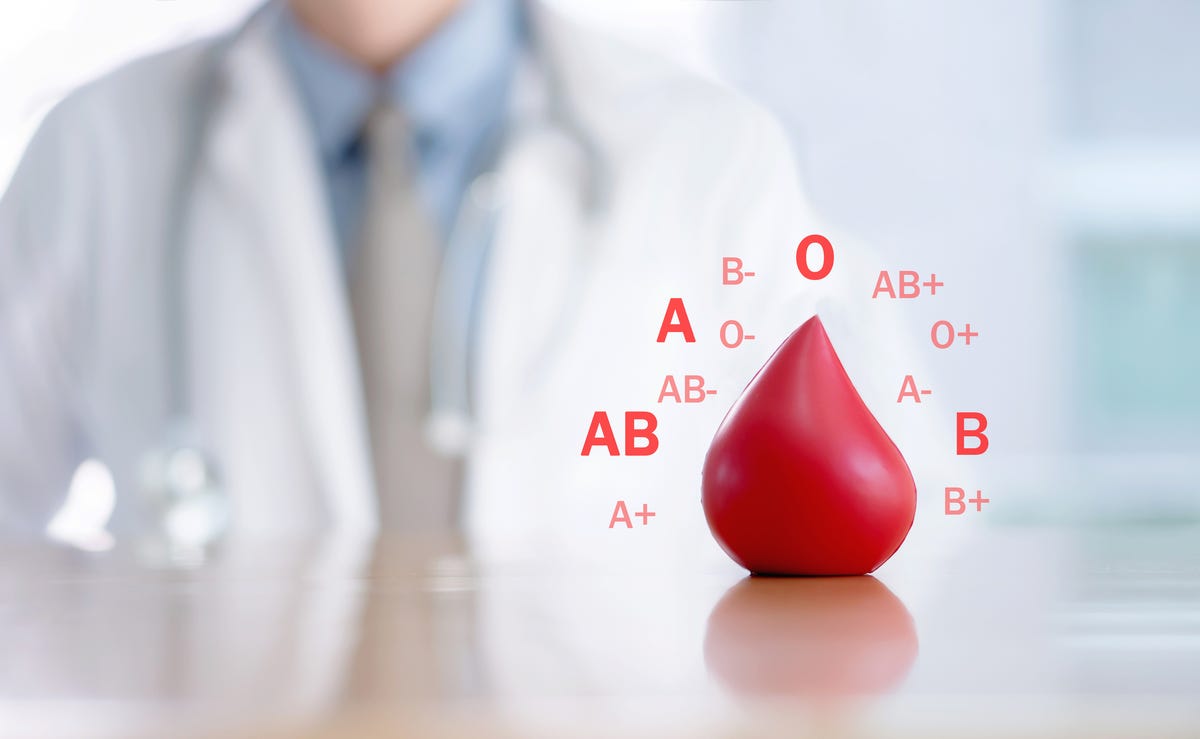
You wouldn't know it from looking at us, but inside the blood coursing through our veins are tiny variations that categorize every human into one of these blood-type groups: A-positive, A-negative, B-positive, B-negative, O-negative, O-positive, AB-positive and AB-negative.
Often, these minute differences don't matter until they really matter and you're in the hospital in need of a blood transfusion, or after you've donated blood and you learn which type you have. Some people find out during pregnancy, when special treatment is required for someone with a negative blood type.
Knowing your blood type not only can be crucial in an emergency, but it can also offer some important insight into your health. Ongoing research into blood types suggests they may matter more than we give them credit for -- at least when assessing risk for certain health conditions, especially heart disease. These invisible differences in the blood may give some people an edge at staving off cardiovascular problems, and may leave others more susceptible.
What does blood type really mean?
The letters A, B and O represent various forms of the ABO gene, which program our blood cells differently to form the different blood groups. If you have type AB blood, for example, your body is programmed to produce A and B antigens on red blood cells. A person with type O blood doesn't produce any antigens.
Blood is said to be "positive" or "negative" based on whether there are proteins on the red blood cells. If your blood has proteins, you're Rhesus, or Rh, positive.
The ABO system is the best known way of classifying blood types.
Ekachai Lohacamonchai/EyeEm/Getty Images
People with type O-negative blood are considered "universal donors" because their blood doesn't have any antigens or proteins, meaning anyone's body will be able to accept it in an emergency.
But why are there different blood types? Researchers don't fully know, but factors such as where someone's ancestors are from and past infections which spurred protective mutations in the blood may have contributed to the diversity, according to Dr. Douglas Guggenheim, a hematologist with Penn Medicine. People with type O blood may get sicker with cholera, for example, while people with type A or B blood may be more likely to experience blood clotting issues. While our blood can't keep up with the different biological or viral threats going around in real time, it may reflect what's happened in the past.
"In short, it's almost like the body has evolved around its environment in order to protect it as best as possible," Guggenheim said.
People with type O blood may have a lower risk of cardiovascular events.
Arctic-Images/Getty Images
The blood types most at risk for heart disease
People with type A, type B or type AB blood are more likely than people with type O to have a heart attack or experience heart failure, according to the American Heart Association.
While the increased risk is small (types A or B had a combined 8% higher risk of heart attack and 10% increased risk of heart failure, according to one large study) the difference in blood clotting rates is much higher, per the AHA. People in the same study with type A and B blood were 51% more likely to develop deep vein thrombosis and 47% more likely to develop a pulmonary embolism, which are severe blood clotting disorders which can also increase the risk of heart failure.
A reason for this increased risk, according to Guggenheim, might have to do with inflammation that happens in the bodies of people with type A, type B or type AB blood. The proteins present in type A and type B blood may cause more "blockage" or "thickening" in the veins and arteries, leading to an increased risk of clotting and heart disease.
Guggenheim also thinks this may describe the anecdotal (but currently inconclusive) decrease in risk of severe COVID-19 disease in people with type O blood, which has inspired research. Severe COVID-19 disease often causes heart problems, blood clotting and other cardiovascular issues.
There are four main blood groups (types of blood): A, B, AB and O.
Peter Dazeley/Getty Images
Other consequences of blood type
People with type O blood enjoy a slightly lower risk of heart disease and blood clotting, but they may be more susceptible to hemorrhaging or bleeding disorders. This may be especially true after childbirth, according to a study on postpartum blood loss, which found an increased risk in women with type O blood.
People with type O blood may also fare worse after a traumatic injury due to increased blood loss, according to a study published in Critical Care.
Other research has found people with type AB blood might be at an increased risk for cognitive impairment when compared to people with type O. Cognitive impairment includes things like trouble remembering, focusing or making decisions.
Should I change my lifestyle based on my blood type?
While research available now shows that blood type can tip the scale in terms of someone's risk of developing heart disease, big factors such as diet, exercise or even the level of pollution you're exposed to in your community are the major players in determining heart health.
Guggenheim says that for patients trying to keep their heart healthy, there's no special recommendation that he'd make other than a good heart-healthy diet that lowers inflammation, regardless of someone's blood type.
Lean proteins, healthy fats, fruits, vegetables and whole grains are all part of a heart-healthy diet.
Lina Darjan/500px/Getty Images
But, he notes, future research could offer more definitive ways doctors treat patients based on their blood type. All factors considered equally, a patient with healthy cholesterol levels and type A blood may benefit from taking aspirin each day whereas it might not be necessary for a person in the same boat with type O blood.
"A well-balanced, heart-healthy diet in general is going to be what any physician is going to recommend, and I would say that ABO doesn't change that," Guggenheim said.
"I don't think there's a protective benefit from just having type O blood that contributes to being scot-free," he added.“
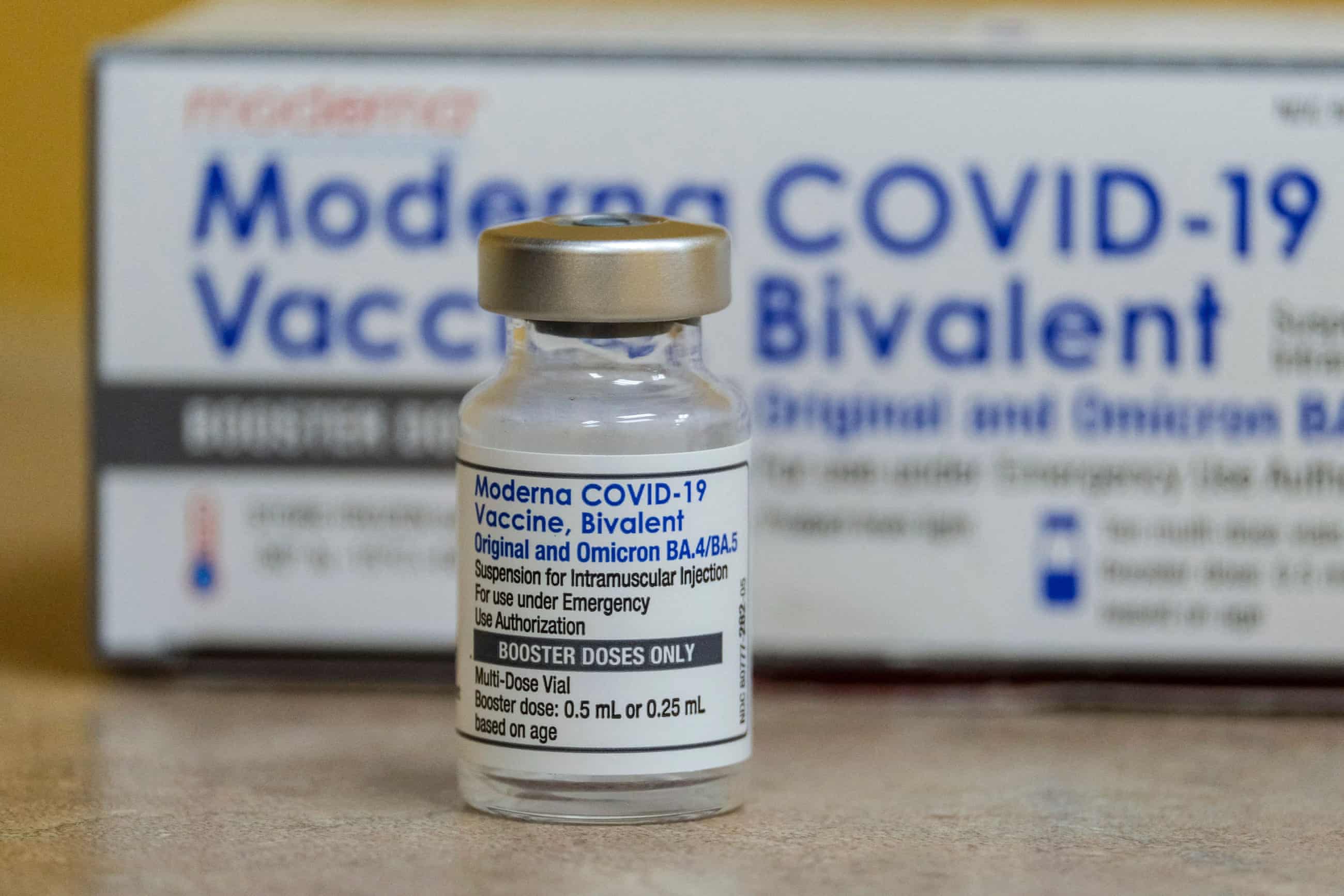
A vial of the Moderna bivalent Covid-19 vaccine.Photograph: Ringo Chiu/AFP/Getty Images
"Joe Biden was wrong to declare the coronavirus pandemic over in the US, one of the country’s leading experts on the virus has told the Guardian.
Dr Peter Hotez, co-director of the Center for Vaccine Development at Texas Children’s hospital and dean of the National School of Tropical Medicine at Baylor College of Medicine, said that the US president’sstatementin September, that “the pandemic is over”, was mistaken and a poor message to send to the American public.
“Well, it’s certainly not [over],” Hotez said in an interview with the Guardian. “We’re still in 200-300 deaths per day. [Covid-19] is still the third or fourth leading cause of death in the United States. It’s definitely the wrong message to give, given the fact that we’re desperately trying to persuade the American people to take this [bivalent] booster.”
Hotez said that getting the bivalent booster shot is the one of the most important things people can do to protect themselves against Covid. So far, only 14.1% of the total US population above age five has received the bivalent booster shot, according to the Centers for Disease Control.
“For instance, here in Texas, where I’m based, only 7% of Texans have gotten their bivalent [booster].”
Hotez – who is nominated for a Nobel peace prize along with his colleague Dr Maria Elena Bottazzi for their work developing Corbevax, a Covid-19 vaccine they refused to patent so it could be replicated by middle- and lower-income countries – also issued a chilling warning about the future of this pandemic or any others.
“The next big coronavirus pandemic is coming – the fourth one. I can’t tell you if it’s going to be next year or five years or 10 years, but it’s coming,” he warned.
On assessing where the US stands in comparison with other nations now, Hotez was not able to offer any good news.
“I think the US is not doing well. I think we failed to persuade a third of the country to get vaccines at all, maybe a quarter. And of those who’ve gotten two doses, we’re only persuading around a third [of them] to get their booster,” Hotez said. “So the anti-vaxxers have won this victory. We’re still losing too many lives.”
Since the pandemic began, more than 1 million people have died from Covid-19 in the US – the country with the 16th highest mortality rate per 100,000 people. The current weekly average of new cases in the US is 65,067, a slight 2.9% decrease from the previous weekly average of 67,034.
“I call it the greatest self-immolation in American history,” Hotez said. “It’s just so tragic.”
But the US is not alone in its poor Covid response performance rating.
“The US remains vulnerable. Canada, less so. Australia, less so. Maybe European countries, less so. But the US, India and China, of course, are extremely vulnerable, because China is getting vaccines that don’t protect nearly as well against the variants, and the Chinese refuse to afford effective boosters against BA.5 – either our vaccine or the mRNA vaccines,” Hotez said.
China in particular has taken a drastic approach to its pandemic response by implementing a zero-Covid policy that saw extreme lockdowns. A surge in infections led to President Xi Jinping’s strict policy. A harrowing result of that policy was thedeathsof 10 people from the far western region of Xinjiang, who perished in a fire that engulfed a high-rise residential building they were unable to escape in time due to the lockdowns last month.
But unprecedented mass protests across the country, especially in cities such as Beijing and Shanghai, demanding the zero-Covid policy’s end and Xi’s resignation, resulted in a policy shift away from such restrictive measures.
Dr Peter Hotez has been nominated for a Nobel prize for jointly developing with a colleague a Covid vaccine that he refused to patent so that poorer countries could replicate it.Photograph: John Mone/AP
That relaxation was a good sign, according to Hotez, who said harsher does not necessarily mean better when it comes to dealing with the virus.
“China has relied primarily on aggressive lockdowns and that is a failed strategy,” he said. “So they have tremendous vulnerability, because its population is immunologically naive and they don’t have the ICU infrastructure to handle a big surge. So they have, I think, the single greatest vulnerability right now.”
He added: “[China] kept it down to very crude and primitive means. They didn’t take advantage of the technology that was available.”
So what lies ahead for the pandemic? In the immediate future, the winter season is a playground for illnesses like the flu, the increasingly common respiratory syncytial virus (RSV) and variants of Covid-19.
“Right now, we’re in a bit of a holding pattern, wanting to know what happens with these new variants,” Hotez said. “In the past, you know, we’ve had these series of catastrophic waves from individual variants. We had the big, horrible Alpha wave in the winter of 2021. In the last half of 2021, we had the Delta wave, and then we had BA. 1, Omicron in early 2022, then BA.212, and then BA.5.”
“We have seen these bumps in Europe and my prediction is we’ll see one in the US this winter. And maybe we’re seeing the beginning of it right now. How bad it’s going to be is hard to know. We still are seeing 200-300 deaths a day, which is a pretty serious, deadly disease. It’s still something far worse than the flu. Maybe not as bad as it has been. But the key is to get Americans to take two or three appropriate protective measures.”
In addition to masking up and continuing to practice good hygiene, Hotez encourages another protective measure: tuning out anti-science conspiracy theories.
“The globalization of anti-vaccine activists is such a deadly force. Because of the far-right members of Congress, and the CPAC [Conservative Political Action Coalition] conference, and Fox News – and now that’s a globalizing force. So anti-science activism and aggression is now, as societal forces, killing more Americans than gun violence or global terrorism.
The wave of Covid-19 misinformation doesn’t just end on US soil.
“Now you’re seeing all the same style anti-vaccine rhetoric in sub-Saharan African countries, south Asia … It’s a deadly force that we still haven’t even begun scratching the surface of combating and countering,” Hotez said.
“That’s why I get so annoyed at all the phoney-baloney Covid origin stories, because it takes our eyes off the prize – that we’re not actually doing the surveillance needed to determine when the next big one’s going to erupt.”
According to Hotez, the key to preventing the next big pandemic can be found within one animal in particular – bats, which can host myriad viruses, from the coronavirus to Ebola.
“We need to have a thorough landscaping exercise of bats across the face of Asia, especially east Asia – going from China into south-east Asia, Cambodia, Japan – where these coronaviruses are, as well as the Middle East and even parts of Latin America,” he said. “The reason why we’re seeing more and more of this is, in part, because of climate change and urbanization – human migrations encroaching into territories where bats are. It’s a combination of climate change with other social determinants.”
All hope is not lost – yet. In order to get ahead of the next pandemic, Hotez said it will also take a combination of the right technological and political infrastructure.
“We have vaccine technologies at an unprecedented level. We have the technology to solve this. What we lack is the political will to empower low- and middle-income countries to really investigate these outbreaks. Modern technology has outpaced our social and political infrastructures. We have the technical support, but we are not willing to implement it,” he said."
Opinion | Adam Schiff: My Fellow Members of the Jan. 6 Committee and I Don’t Want You to Forget About ‘the Republican Congressmen’
Adam Schiff: My Fellow Members of the Jan. 6 Committee and I Don’t Want You to Forget About ‘the Republican Congressmen’
Mark Peterson/Redux, for The New York Times
ByAdam B. Schiff
Mr. Schiff is a representative from California and a member of the Jan. 6 committee.
On Dec. 27, 2020, more than six weeks after losing re-election, an infuriated President Donald Trump telephoned his acting attorney general, Jeffrey Rosen. Mr. Trump’s former attorney general, Bill Barr, had announced his resignation less than two weeks earlier, after telling the president that the claims of election fraud Mr. Trump had been trumpeting were — as Mr. Barr laterbluntly put it in testimony— “bullshit” and publicly affirming that there was no fraud on a scale that would affect the outcome of the election.
With Mr. Rosen’s deputy, Richard Donoghue, also on the line, Mr. Trump launched into the same tired, disproved and discredited allegations he had propagated so often at rallies, during news conferences and on social media. None of it was true, and Mr. Donoghue told him so.According to Mr. Donoghue, Mr. Trump, exasperated that his own handpicked top appointees at the Justice Department would not affirm his baseless allegations, responded: “Just say that the election was corrupt and leave the rest to me and the Republican congressmen.”
It was a remarkable statement, even for a president who had serially abused the powers of his office. Having been told by the very department that had investigated his claims of fraud that they were untrue, Mr. Trump told the acting attorney general and his deputy to lie about it and said he would take it from there.
That Mr. Trump was willing to lie so baldly about a matter at the heart of our democracy — whether the American people can rely on elections to ensure the peaceful transfer of power — now seems self-evident, even unremarkable, when we consider the violent attack on the Capitol he incited days later. But Americans shouldn’t lose sight of how this behavior indicts the former president, and not just the former president but the Republican members of Congress whom he knew would go along with his big lie.
The report released Thursday from the Jan. 6 committee, on which I served, makes abundantly clear that there were multiple lines of effort to overturn the 2020 election. Some involved attempts to pressure state legislatures to declare the loser to be the winner. Others involved a fake electors plot, pressure on the vice president to violate his constitutional duty and efforts toforce an elections officialto “find” thousands of votes that didn’t exist. It was only when all of these other efforts failed that the president resorted to inciting mob violence to try to stop the transfer of power.
But one line of effort to overturn the election is given scant attention, and that involved the willingness of so many members of Congress to vote to overturn it. Even after Capitol Police and Metropolitan Police put down the insurrectionat great cost to themselves,the majority of Republicans in the House picked up right where they left off, still voting to overturn the results in important states.
At one of our Jan. 6 committee hearings, the committee vice chair Liz Cheney, a Republican, called out her colleagues in Congress for their duplicity in the most searing terms: “There will come a day when Donald Trump is gone, but your dishonor will remain.”
With our work on the committee largely concluded, it will now fall to the Justice Department to ensure a form of accountability that Congress is not empowered to provide, and to vindicate the rule of law in a manner beyond our reach: through prosecution. Multiple laws were violated in the course of a broad attempt to overturn the election, and not just by the foot soldiers who broke into the Capitol building that day and brutally assaulted police officers, but also by those who incited them, encouraged them and, when it was all over, gave them aid and comfort. Bringing a former president to justice who even now calls forthe “termination” of our Constitutionis a perilous endeavor. Not doing so is far more dangerous.
There is a growing disdain for the law and for our country’s institutions, and a frightening acceptance of the use of violence to resolve political disputes. Mr. Trump’s big lie has been one of the most powerful instigators of political violence, since it persuaded millions of people that the election they lost must have been rigged or fraudulent. If people can be convinced of that, what is left but violence to decide who should govern? The attack on the Capitol was an all too foreseeable consequence of Mr. Trump’s relentless effort to alienate the people from their government and from the most important foundation of governance: their right to vote.
Even the Constitution cannot protect us if the people sworn to uphold it do not give meaning to their oath of office, if that oath is not informed by ideas of right and wrong, and if people are unwilling to accept the basic truth of things. None of it will be enough.
But if we allow ourselves to be guided by facts — not factions — and if we choose our representatives based on their allegiance to the law and to the Constitution, then we should have every confidence that our proud legacy of self-government will go on. It is our hope that this report will make a small contribution to that effort. Our country has never before faced the kind of threat we documented. May it never again.
Jan. 6 Panel Issues Final Report, Placing Blame for Capitol Riot on ‘One Man’
"The report expanded on this summer’s televised hearings, describing in detail what it called former President Donald J. Trump’s “multipart plan” to overturn the 2020 election.
The report from the House committee investigating the Capitol riot recommended that Congress consider whether to bar former President Donald J. Trump and his allies from holding office.Haiyun Jiang/The New York Times
WASHINGTON — Declaring that the central cause of the Jan. 6, 2021, attack on the Capitol was “one man,” the House committee investigating the assault delivered its final report on Thursday, describing in extensive detail how former President Donald J. Trump had carried out what it called “a multipart plan to overturn the 2020 presidential election” and offering recommendations for steps to assure nothing like it could happen again.
It revealed new evidence about Mr. Trump’s conduct, and recommended that Congress consider whether to bar Mr. Trump and his allies from holding office in the future under the 14th Amendment’s ban on insurrectionists.
“The central cause of Jan. 6 was one man, former President Donald Trump, whom many others followed,” the report said. “None of the events of Jan. 6 would have happened without him.”
The release of thefull reportwas the culmination of the panel’s 18-month inquiry and came three days after the committee voted to formallyaccuse Mr. Trump of inciting insurrection, conspiracy to defraud the United States, obstruction of an act of Congress and one other federal crime as it referred him to the Justice Department for potential prosecution. While the referrals do not compel federal prosecutors to take any action, they sent a powerful signal that a select committee of Congress believes the former president committed crimes.
“Our institutions are only strong when those who hold office are faithful to our Constitution,” Representative Liz Cheney, Republican of Wyoming and the vice chairwoman of the committee, wrote in the report, adding: “Part of the tragedy of Jan. 6 is the conduct of those who knew that what happened was profoundly wrong, but nevertheless tried to downplay it, minimize it or defend those responsible.”
The report contains the committee’s legislative recommendations, which are intended to prevent future presidents from attempting a similar plot. The panel has already endorsedoverhauling the Electoral Count Act, the law that Mr. Trump and his allies tried to exploit on Jan. 6 in an attempt to cling to power. The House is scheduled to give final approval to that overhaul on Friday.
Among committee recommendations were a possible overhaul of the Insurrection Act and strengthening the enforcement of the 14th Amendment’s ban on insurrectionists holding office.
The panel also said Congress should consider legislation to bolster its subpoena power and increase penalties against those who threaten election workers. And it said bar associations should consider whether any of the lawyers who aided Mr. Trump’s attempts to overturn the election should be punished.
In addition to its focus on Mr. Trump’s actions, the report went into great detail about a supporting cast of lieutenants who enabled him. Mark Meadows, his final chief of staff, and the lawyersJohn Eastman, Rudolph W. Giuliani,Jeffrey Clarkand Kenneth Chesebro were named as potential “co-conspirators” in Mr. Trump’s various attempts to cling to power.
Mr. Trump bashed the report on his social media site, Truth Social, calling it “highly partisan.”
In a statement, Mr. Clark dismissed the committee’s report as a “last gasp” of a panel that is set to dissolve as Republicans take control of the House in January.
“This committee is now largely dead and will be fully dead on Jan. 2, 2023,” said Mr. Clark, whose phone was seized as part of a criminal investigation by the Justice Department in connection with his role in aiding Mr. Trump’s efforts.
The committee had already released the report’sexecutive summary, a lawyerly, 154-page narrative of Mr. Trump’s relentless drive to remain in power after he lost the 2020 election by seven million votes.
The report that follows the summary was largely an expanded version of the panel’s widely watched set of hearings this summer — which routinely drew more than 10 million viewers — with its chapter topics mirroring the themes of those sessions.
Those included Mr. Trump’s spreading of lies about the election, the creation offake slates of pro-Trump electorsin states won by President Biden, and the former president’spressure campaignagainst state officials, the Justice Department and former Vice President Mike Pence. The committee’s report documents how Mr. Trump summoned a mob of his supporters to Washington and then did nothing to stop them as they attacked the Capitol for more than three hours.
The committee’s report is the result of an investigation that included more than 1,000 witness interviews and a review of more than one million pages of documents, obtained after the panel issued more than 100 subpoenas.
It documented how, at times, even Mr. Trump did not believe or take seriously some of the outlandish claims about election fraud being promoted by him and his allies. During a conference call two weeks after Election Day, the lawyer Sidney Powell asserted that “communist money” had flowed through countries like Venezuela, Cuba and perhaps China to interfere with the election.
According to testimony provided to the committee by Hope Hicks, a former top aide to Mr. Trump, he “muted his speakerphone and laughed at Powell, telling the others in the room, ‘This does sound crazy, doesn’t it?’”
At the same time, it showed how Mr. Trump encouraged his most extreme supporters to back him as he energized protesters massing in Washington on Jan. 6, with an organizer of his rally that day noting that he “likes the crazies.”
The committee on Wednesday and Thursday also released more than 40 witness testimony transcripts, a few of which provided extensive new detail about the investigation while others showed nearly three dozen witnessesinvoking their Fifth Amendment right against self-incrimination. More of them will be released before the end of the year.
The nine-member panel was made up of seven Democrats and two Republicans, all of whom gained new prominence through the tightly scripted and highly produced televised hearings, which redefined the way in which congressional investigations could be presented to the public.
“Our country has come too far to allow a defeated president to turn himself into a successful tyrant by upending our democratic institutions, fomenting violence and, as I saw it, opening the door to those in our country whose hatred and bigotry threaten equality and justice for all Americans,” Representative Bennie Thompson, Democrat of Mississippi and the committee’s chairman, wrote in a foreword to the report.
Among those who received significant criticism in the report was Mr. Giuliani, Mr. Trump’s personal lawyer, whom he assigned to find ways to stop Mr. Biden from assuming power and Mr. Trump from losing it.
The committee’s report traced Mr. Giuliani’s postelection behavior from the moment Mr. Trump put him in charge of legal strategy shortly after the election to his efforts to directly pressure officials in battleground states, in some cases after the election had been certified.
“Rudy was just chasing ghosts,” the report quotes Mr. Trump’s former deputy campaign manager, Justin Clark, as saying of the earliest days after the election.
In one of the more glaring examples of Mr. Giuliani’s pressure, the report cites a call he placed to an official in Maricopa County, Ariz., asking for a return call. “Maybe we can get this thing fixed up,” he said in his message. “You know, I really think it’s a shame that Republicans sort of are both in this, kind of, situation. And I think there may be a nice way to resolve this for everybody.”
The committee also took note of state officials willing to be particularly helpful to Mr. Trump’s cause, such as Doug Mastriano, a Pennsylvania state senator who later became the Republican nominee for governor. Mr. Mastriano’s emails suggest that he spoke with Mr. Trump over three days at the end of December, and that Mr. Trump’s assistant told the White House legislative affairs director that Mr. Trump wanted letters from state senators asking Republican congressional leaders to reject the Pennsylvania electoral votes.
The bulk of the report is made of eight chapters intended to tell a narrative story of Mr. Trump’s efforts to hang on to power.
“The Big Lie,” the first chapter, recounts how Mr. Trump engaged in a premeditated plan starting on election night to falsely claim that he had won and claim that outstanding votes were fraudulent — and that he went on making those claims for months even after being informed repeatedly by his aides that he was wrong and had lost. Attorney General William P. Barr told the committee that Mr. Trump never showed any “indication of interest in what the actual facts were.”
“Donald Trump was no passive consumer of these lies,” the report said. “He actively propagated them. Time and again President Trump was informed that his election fraud claims were not true. He chose to spread them anyway. He did so even after they were legally tested and rejected in dozens of lawsuits.”
Chapter 2, titled “I Just Want to Find 11,780 Votes,” recounts how Mr. Trump sought to pressure officials in Georgia to find the votes he needed to swing the state, which had been won by Mr. Biden, into his column. It goes on to explore Mr. Trump’s largely unsuccessful pressure campaign on a wide array of officials in other swing states he had lost to find ways to reverse the outcome.
At one point, the report says, the White House switchboard left a message for the chairman of the Maricopa County board of supervisors to call Mr. Trump, who was pushing for investigations into voting machines there. (The chairman decided not to return the phone call from the president of the United States.)
Subsequent chapters cover the genesis of the so-called fake electors scheme, in which Mr. Trump and his allies sought to promote alternative slates of electors from states he had lost to try to block or delay certification of Mr. Biden’s victory, and Mr. Trump’s campaign to pressure Vice President Mike Pence into using his role overseeing the congressional certification process as president of the Senate to bring the fake elector plan to fruition.
Mr. Trump was largely reliant on Mr. Eastman to provide legal justification for Mr. Pence in effect unilaterally deciding whether to accept the outcome of the election, but the report shows that he turned to other aides to help make the case as well. It says that either Mr. Trump or Mr. Meadows “tasked John McEntee, the director of the Presidential Personnel Office, with researching the matter further. Though McEntee was one of President Trump’s close advisers, he was not a lawyer and had no relevant experience.”
As Mr. Pence resisted and Mr. Trump castigated him publicly, officials became increasingly concerned about the vice president’s safety. On the morning of Jan. 6, the report says, “an agent in the Secret Service’s intelligence division was alerted to online chatter “regarding the V.P. being a dead man walking if he doesn’t do the right thing.’”
Chapter 6, called “Be There, Will Be Wild!,” recounts how Mr. Trump “summoned a mob for help” through a Twitter post on Dec. 19 that promoted a pro-Trump protest scheduled for Jan. 6 in Washington — a message, the report said, that “focused his supporters’ anger on the joint session of Congress” that would take place that day.
Far-right groups like the Oath Keepers and the Proud Boys mobilized, as did adherents of the QAnon conspiracy theory, the report said. One of the hosts on Alex Jones’s Infowars show told viewers in late December that they might have to end up “storming right into the Capitol.”
The report documents how some of the protesters came to Washington believing that Mr. Trump would march with them to the Capitol on Jan. 6. “Trump speaking to us around 11 am then we march to the capital and after that we have special plans that I can’t say right now over Facebook,” one member of a militia-affiliated group in Texas posted early that day.
The report goes on to describe Mr. Trump’s three hours of inaction as violence swept across Capitol Hill and some of his supporters called for Mr. Pence to be hanged.
At one point, Mr. Trump was informed that the Capitol Police had shot a rioter, later identified asAshli Babbitt. “1x civilian gunshot wound to chest @ door of House chaber,” read a note on a White House pocket card that was preserved by the National Archives and seen by a White House employee on the table in front of Mr. Trump as he watched the riot unfold on television, the report said.
The eighth chapter analyzes the attack on the Capitol itself, showing how the Proud Boys and Oath Keepers appeared to storm the building in a deliberate, organized fashion, and how many individual protesters came to Washington with firearms. Eleven minutes after protesters breached the Capitol building, Mr. Trump tweeted angrily about Mr. Pence. The violence would continue for hours.
The committee later asked Mr. McEntee about Mr. Trump’s demeanor during a phone call between the two of them at the end of the day after the violence had been quelled — and specifically about whether Mr. Trump expressed sadness. “No,” Mr. McEntee said, according to the report. “I mean, I think he was shocked by, you know, it getting a little out of control, but I don’t remember sadness, specifically.”
The report contains four appendices that the committee’s investigative staff argued to include. Two are the work of the panel’s “Blue Team,” which investigated law enforcement failures and the delayed response of the National Guard to the riot.
The first detailed the flood of threats about the potential for violence that law enforcement officials received before Jan. 6, and concluded that the failure to share and act on those threats “jeopardized the lives of the police officers defending the Capitol and everyone in it.”
More than 150 officers were injured during the day’s bloody assault.
For instance, on Dec. 26, 2020, the Secret Service received a tip about the Proud Boys having “a large enough group to march into D.C. armed and will outnumber the police so they can’t be stopped.”
It stressed, “Their plan is to literally kill people,” adding: “Please, please take this tip seriously and investigate further.”
The report also documented the growing frustration inside the D.C. National Guard as soldiers were forced to sit on the sidelines while rioters were storming the Capitol.
At one point, the guard’s commander, Maj. Gen. William J. Walker, now theHouse sergeant-at-arms, blurted out: “Should we just deploy now and resign tomorrow?”
A third appendix, the work of the committee’s “Green Team,” focused on how Mr. Trump and his allies raised millions off the lie of a stolen election, and a fourth investigated the extent to which foreign actors played a role in the events surrounding the 2020 election, concluding that investigators found no “interference” but that Mr. Trump’s lies were a benefit to Russia and its president, Vladimir V. Putin.
The final report did not include information about some of the panel’s witnesses, including Virginia Thomas, the wife of Justice Clarence Thomas. Ms. Thomas was among allies of Mr. Trump who promoted efforts aimed at overturning the results even as the Supreme Court was considering cases related to the election. The committee’s investigators had largely viewed Ms. Thomas as a tertiary figure who was not central to the events of Jan. 6."