Contact Me By Email

Contact Me By Email

Monday, November 28, 2022

Garland Shifts as Justice Dept. Grapples With Trump Inquiries - The New York Times

Covid deaths skew older, reviving questions about ‘acceptable loss’

"The pandemic has become a plague of the elderly, with nearly 9 out of 10 deaths in people 65 or older

Dozens of people take part in the second annual Covid March to Remember in New York City on Aug. 6, to honor the victims as well as survivors of the pandemic. (Spencer Platt/Getty Images)
Dozens of people take part in the second annual Covid March to Remember in New York City on Aug. 6, to honor the victims as well as survivors of the pandemic. (Spencer 

President Biden may have declared the coronavirus pandemic “over,” but from John Felton’s view as the Yellowstone County health officer in Billings, Mont., it’s not over, just different.

Now, more than ever, it is a plague of the elderly.

In October, Felton’s team logged six deaths due to the virus, many of them among vaccinated people. Their ages: 80s, 60s, 70s, 80s, 90s, 90s. They included Betty Witzel, 88, described by her family as a tomboy who carried snakes in her pocket as a child and grew up to be a teacher, mother of four, grandmother of nine and great-grandmother of five. And there was Nadine Alice Stark, 85, a ranch owner who planted sugar beets and corn.

Yellowstone County made the decision early in the crisis to recognize each death individually, and Felton said that is as important as ever to acknowledge the unrelenting toll on a still-vulnerable older generation, while most everyone else has moved on.

“I think about someone’s grandfather — the plays they wouldn’t watch, the games on the football field they wouldn’t see,” he said.

More than 300 people are still dying each day on average from covid-19, most of them 65 or older, according to data from the Centers for Disease Control and Prevention. While that’s much lower than the 2,000 daily toll at the peak of the delta wave, it is still roughly two to three times the rate at which people die of the flu — renewing debate about what is an “acceptable loss.”

And while older Americans have consistently been the worst hit during the crisis, as evident in the scores of early nursing home deaths, that trend has become more pronounced. Today, nearly 9 in 10 covid deaths are in people 65 or older — the highest rate ever, according to a Washington Post analysis of CDC data.

Some epidemiologists and demographers predict the trend of older, sicker and poorer people dying at disproportionate rates will continue, raising hard questions about the trade-offs Americans are making in pursuit of normalcy — and at whose expense. The situation mirrors the way some other infectious diseases, such as malaria and polio, rage in the developing world while they are largely ignored elsewhere.

S. Matthew Liao, a professor of bioethics, philosophy and public health at New York University, argued that it is possible to keep the economy open while still aggressively pursuing a national booster campaign and requiring masks in health-care settings and nursing homes, for example. But U.S. leaders have chosen not to do so, he said. That worries him.

“There’s a bit of ageism, so to speak, attached to it,” he said, adding, “People, even if they are older, they still have as much claim to live as me.”

In an open letter published Oct. 7 in the BMJ, formerly the British Medicine Journal, Gregg Gonsalves, an associate professor at the Yale School of Public Health, and about a dozen other experts emphasized that “pandemics do not end with a flip of the switch.”

“Despite the widespread belief that the pandemic is over, death and disruption continue,” they wrote.

CDC Director Rochelle Walensky and other officials have justified their pandemic reset by emphasizing that Americans have more tools to fight the coronavirus than they did a year or two ago. This includes not only vaccines, booster shots and rapid tests, but antiviral pills that can be taken at home and have been shown to greatly reduce severe illness and death if taken early.

“We can now prevent almost all of the deaths that are happening,” she said at a news briefing this month.

However, Walensky acknowledged that deaths among the elderly, especially those with multiple chronic conditions, is “a real challenge.”

“An additional infection,” she said, referring to covid-19, “is something that may turn something they are able to stably live with to something they are not.”

Epidemiologists tend to divide the pandemic into three distinct periods. In the first year, from March 2020 to March 2021, the United States experienced about 500,000 deaths. The toll was about the same the following year. In the third year, the nation is on track to lower that count significantly, to 150,000 to 175,000 deaths — barring a curveball in the form of a new variant.

That means that coronavirus is likely to rank third as a cause of death this year. By comparison, heart disease and cancer kill roughly 600,000 people each year; accidents, 170,000; stroke, 150,000; and Alzheimer’s, 120,000. Flu, in contrast, kills 12,000 to 52,000.

A recent CDC report on covid-19 mortality contained more good news — most notably, a rapid drop in deaths beginning in March that led to a relatively stable period from April through September when there were 2,000 to 4,500 deaths weekly.

But the reduced death toll has not been experienced equally among all age groups.

Unlike flu, which impacts both the very young and the very old, the coronavirus appears to put mostly older people at higher risk of severe disease and death. The proportion of deaths among those 65 or older has fluctuated from eight out of 10 in the first few months of the pandemic, to a low of 6 out of 10 when the delta wave struck in the summer of 2021, to a high of 9 out of 10 today.

Last month, people 85 and older represented 41.4 percent of deaths, those 75 to 84 were 30 percent of deaths, and those 65 to 74 were 17.5 percent of deaths, according to a Post analysis. All told, the 65-plus age group accounted for nearly 90 percent of covid deaths in the United States despite being only 16 percent of the population.

The vulnerability of older people to viruses is neither surprising, nor new. The more we age, the more we accumulate scars from previous illness and chronic conditions that put us at higher risk of severe illness.

When it comes to the coronavirus, though, deaths in Americans over 65 fell dramatically after the arrival of the original series of vaccines since seniors were the most likely to get them. But booster rates for older Americans are now lagging: According to the CDC, 98 percent of those ages 65 to 74 and 96 percent of people 75 and over completed an initial two-shot course. Those rates fall to 22 and 25 percent respectively for the new omicron-specific booster.

To minimize further loss of life ahead of a feared winter surge, the White House announced Tuesday that it was launching a six-week push to increase booster uptake in seniors and other groups that have been disproportionately affected.

“The final message I give you from this podium is that please, for your own safety, for that of your family, get an updated covid-19 shot as soon as you’re eligible, to protect yourself, your family and your community,” Anthony S. Fauci, the president’s chief medical adviser, said during the briefing, billed as his last before he retires next month.

The issue of age and the pandemic has been a source of tension throughout the pandemic.

When hospitals were hit with a crush of patients in the spring of 2020, some of the debates about allocating scarce resources centered on age. In documents drafted by some medical institutions, “stage of life,” a proxy for age, was sometimes recommended to be used as a tiebreaker in decisions about who should get a ventilator or a bed.

A number of experts, including Liao, expressed discomfort with such rankings. “I really disagree with that view,” he said. “You can imagine a 70-year-old who can do everything — can enjoy friendship, read books and go to movies.”

Jo Rowland, parish nurse at the Harvest Church in Billings whose job includes supporting congregation members and their families through covid illness and death, said society failed many of its elderly in another way, too: through safety protocols at the beginning of the pandemic that left them to die alone.

As more continue to fall victim to the virus, she said, we need to be more thoughtful about how to celebrate their lives and treat their deaths with dignity. “It’s a different type of grief losing an older person,” she said.

While some fault covid-19 policies for not doing enough to protect the elderly, others criticize age-based policies implemented elsewhere. In the United Kingdom, for example, a matrix of recommendations based on age left some seniors feeling they were being discriminated against. Even as stores and restaurants began to open in the summer of 2020, the National Health Service still advised people 70 and older to stay home or “shield.” In Colombia, the government sought to protect older people by closing centers that offered activities for them through August 2020. The policies became controversial for restricting freedom of movement.

Elfriede Derrer-Merk, a geriatric nurse from the University of Liverpool, and others wrote in a journal article in August that many older people felt angry and frustrated that their individuality was ignored.

The “undifferentiated way in which especially the role of age as a risk factor was discussed, and the inclusion of all people above the age of 65 into one homogeneous risk group, often neglected … the diversity of older people and their characteristics and thus drew criticism for fueling ageism in society,” the authors wrote.

Tara Swanigan’s father was in the first wave of deaths that occurred in 2020.

Charles Krebbs had celebrated his 75th birthday shortly before he was infected in July. He had retired from his job as an appraiser in Phoenix and was spending his time reading, gardening, picking up his grandson from school and accompanying him to his football games. He was strong and extraordinarily healthy, Swanigan recalled, but the virus nonetheless ravaged his lungs and he had to be put on a ventilator. He died that August.

Swanigan said she was heartened to hear about President Biden’s campaign to encourage older Americans to get booster shots. But she and other members of Marked by Covid, a nonprofit founded by two women who lost parents to the virus, advocate for more protections for people who are vulnerable, such as additional coronavirus testing. She continues to be shocked by how callous some people have been when she has talked about her father’s death. “Well, your dad was super old,” she recalled one man telling her on social media.

“For seniors and the immunocompromised, it’s almost like we’re saying, ‘You don’t matter. We’d rather just not be inconvenienced,’” she said.

Masks are a particular pain point.

“I was hugely disappointed when they took away the mask mandates for airplanes and other public transportation,” she said.

Given the minimal disruption to daily life from face coverings, and their major impact on curbing transmission, according to studies, she does not understand why public health leaders have stopped promoting their use.

Even one of the most recognizable seniors during the pandemic, Fauci, the National Institutes of Health scientist who is 81, no longer wears a face covering in many public appearances. In pictures from 2020, Fauci was always seen with a mask. Even when he threw the ceremonial first pitch that year on MLB Opening Day between the New York Yankees and the Washington Nationals, and was outdoors and 60 feet away from another human being, he was masked.

But last month, when the infectious-disease doctor accompanied TV host Stephen Colbert to a Walgreens in New York City to get a booster shot, neither wore a face covering.

Fauci, through his office, declined to comment on that decision. But in a White House briefing on Tuesday, he talked about face coverings as just one of “multiple interventions and multiple actions” people can take to protect themselves, saying each individual should evaluate their own risks, as well as those of the people around them.

Given the scripted nature of such photo opportunities, the decision to forgo masks horrified Andrew Noymer, a public health professor at the University of California at Irvine. “The message is ‘don’t bother masking,’ ” he said in an interview. “We have given up, and the fact we’ve given up means we don’t care about a certain amount of deaths.”

Noymer, who studies covid-19 mortality, argued that the notion that we can prevent almost all deaths given the pullback of mitigation policies is disingenuous.

“I don’t think they are being totally candid” about the number of deaths the country will face, he said of U.S. officials. “I think it is bleak, and I am trying to steel myself for the winter to come.”

Fenit Nirappil contributed to this report."


Garland Shifts as Justice Dept. Grapples With Trump Inquiries - The New York Times

Garland Shifts as Justice Dept. Grapples With Trump Inquiries - The New York Times

Turning Point for Garland as Justice Dept. Grapples With Trump Inquiries

"After months of an already hyperpartisan political environment, the attorney general appears to be acknowledging that his approach has to be recalibrated.

Attorney General Merrick B. Garland walking onto a stage at the Justice Department.
Attorney General Merrick B. Garland, who appointed a special counsel this month, has shown a growing willingness to operate outside his comfort zone in the Trump investigations.Doug Mills/The New York Times

WASHINGTON — Attorney General Merrick B. Garland, a stoic former federal judge intent on restoring rule-of-law order at the Justice Department, gradually came to accept that he would need to appoint a special counsel to investigate Donald J. Trump if the former president ran for the White House again.

But that did not mean he liked doing it.

Mr. Garland made it clear from the start that he was not inclined to tap outsiders to run investigations and indicated that the department was perfectly capable of functioning as an impartial arbiter in the two criminal inquiries involving Mr. Trump, according to several people familiar with the situation.

But the appointment of a special counsel, Jack Smith, on Nov. 18, and a painstakingly planned rollout of the announcement, signaled a significant, if subtle, shift in that approach. Mr. Garland has shown a growing willingness to operate outside his comfort zone — within the confines of the rule book — in response to the extraordinary circumstance he now finds himself in: investigating Mr. Trump, a top contender for the 2024 nomination of a party that is increasingly rallying around the charge that Mr. Garland has weaponized the Justice Department against Republicans.

“There is a political dimension that can’t be ignored — this is an investigation that is being used by the target and his allies as a mobilization moment in a political campaign,” said Daniel C. Richman, a former federal prosecutor and a law professor at Columbia University. “That’s why you are seeing the department leaning forward in making these moves, and getting as much detailed information about an ongoing investigation out there as it can.”

In studying how to proceed, Mr. Garland has tried to steer clear of issuing the unusual public statements favored by the former F.B.I. director James B. Comey during the investigation of Hillary Clinton’s emails, believing that those actions, and political meddling during the Trump administration, violated department protocols.

The department’s leaders have, however, tried to counter Mr. Trump’s claims that they are engaged in a partisan witch hunt intended to destroy him.

Top officials, led by Deputy Attorney General Lisa O. Monaco, have leveraged Mr. Trump’s court challenges in the investigation into his handling of sensitive government documents as an opportunity to broadcast previously hidden details, while adhering to department policy.

The Justice Department did not officially support the effort to unseal the affidavit used to obtain the warrant for the search of Mr. Trump’s Mar-a-Lago club and residence in August. But when Mr. Trump’s lawyers did not oppose that bid, department officials seized the moment, and used the filing to offer a detailed timeline of Mr. Trump’s actions that established the public narrative of the case.

After Mr. Trump sought an independent review of documents retrieved from Mar-a-Lago, department lawyers discussed sharing several photographs of the seized records to provide visual proof that Mr. Trump had not fully complied with a subpoena in May that required the documents’ return, according to people familiar with the situation.

Mr. Garland signed off on the decision to release a single picture of the files, some bearing high-level classification markings, arrayed on the floor of Mr. Trump’s office — now the defining image of the investigation.

He cast the appointment of Mr. Smith as voluntary, but compulsory, dictated by the section of the law that allows an attorney general to install a special counsel under “extraordinary circumstances.”

Mr. Garland appears to view Mr. Smith as more of an internal decision maker than a public buffer: The attorney general intends to follow the letter of the statute, and will most likely accept Mr. Smith’s findings unless his conclusions are “inappropriate or unwarranted” under the department’s precedents, a person familiar with his thinking said.

Already, Mr. Garland is dealing with two comparable cases, both inherited from the Trump administration, and in each he has appeared inclined to abide by the decisions of the special counsels overseeing the investigations.

Mr. Garland did not, for instance, overrule John H. Durham, appointed under Attorney General William P. Barr to investigate the F.B.I.’s inquiry into the Trump campaign’s links to Russia, when he brought two criminal cases, now widely seen as flimsy, that resulted in acquittals. He has also kept an arm’s length from the investigation of President Biden’s son Hunter by a Trump appointee, David C. Weiss, the top federal prosecutor in Delaware, even though he rejected the idea of appointing a special counsel.

Mr. Smith, who once led the department’s public integrity unit, will oversee the day-to-day operations of the documents investigation, and of the investigation into Mr. Trump’s bid to cling to power after his electoral defeat in 2020. He will make recommendations on whether to prosecute and could produce a report, which the attorney general may make public.

Appointing a special counsel was briefly considered under a menu of options by prosecutors handling the case in the fall of 2021, when the U.S. attorney’s office in Washington began examining Mr. Trump’s involvement in the Jan. 6 attack, according to people familiar with the situation.

It was taken up more seriously after F.B.I. agents searched Mr. Trump’s residence on Aug. 8, but Mr. Garland and his aides intensively discussed the option as the midterm elections neared. The final decision was prompted by Mr. Trump’s announcement this month that he planned to run again, and Mr. Biden’s suggestion that he would seek re-election.

Mr. Smith has been on the Justice Department’s radar for a while. One former official described him as a “golden unicorn” — a former prosecutor with three decades of experience investigating politicians and war criminals who is registered as an independent.

Another selling point: Mr. Smith’s time abroad during most of Mr. Trump’s administration. Since 2018, he has worked as a war crimes prosecutor in The Hague and can credibly claim to be approaching the investigations with an outsider’s perspective.

The appointment also merged two sprawling investigations, involving dozens of prosecutors operating on separate tracks, under a single supervisor, Mr. Smith.

Department officials emphasized that Mr. Smith would not start from scratch but would bring existing investigations to their conclusion and develop potential links between the two lines of inquiry.

The documents case appears to be proceeding more quickly than the Jan. 6 investigation. Public filings and interactions between law enforcement officials and defense lawyers indicate that a lot of work remains, and law enforcement officials with knowledge of the investigation emphasized that the department was unlikely to sign off on charges unless it was convinced that it would prevail in court.

Evidence made public points to a case based on a section of the Espionage Act, which makes it a crime to mishandle closely held national defense information — and a potential obstruction of justice charge stemming from the former president’s refusal to comply with the subpoena in May.

“The obstruction charge looks more and more to be the most compelling charge for the government to bring,” said David H. Laufman, the former chief of the counterintelligence unit of the Justice Department, which is leading the Mar-a-Lago investigation.

One of the biggest questions Mr. Smith is likely to face is whether prosecutors would consider bringing only an obstruction case without addressing the underlying possibility of an Espionage Act violation. Some prosecutors see that as the most straightforward path to a prosecution. Mr. Garland’s announcement of a special counsel referred to obstruction three times.

If Mr. Smith’s appointment shifted operational responsibility for the investigation, it did little to take the pressure off Mr. Garland.

The appointment is likely to offer limited protection from a coming partisan siege. The new Republican majority in the House has pledged to investigate what it has described as the “politicization” of the Justice Department, including “the department’s unprecedented raid on President Trump’s residence.”

Mr. Trump wasted little time trying to undermine confidence in Mr. Smith’s impartiality after it was disclosed that his wife served as a producer on a Michelle Obama documentary and donated $2,000 to Mr. Biden’s 2020 campaign.

It is, at least, a familiar position for Mr. Garland: Few public figures have been so tempest-tossed by the politics of the moment, and few have tried so hard to rise above the hyperpartisan environment in Washington.

Senate Republicans blocked his nomination to the Supreme Court in 2016 in a brazen power play that helped Mr. Trump cement a conservative supermajority. Ron Klain, Mr. Biden’s chief of staff, backed his selection as attorney general in early 2021, believing Mr. Garland would be the best person to restore order at the Justice Department after the Trump administration.

For his part, Mr. Biden believed Mr. Garland deserved an important position after the Supreme Court debacle, as did several key Republicans, ensuring his confirmation.

Other factors might have played a part in his selection, according to several Democratic aides. Political advisers to Mr. Biden believed that picking someone with whom the incoming president had a closer relationship, like the former Alabama senator Doug Jones, would be seen by critics as an attempt to control the department’s long-running investigation of Hunter Biden.

In public, Mr. Garland has forcefully rejected suggestions that external political forces have influenced any of his decisions, and he has gone to extremes to avoid the slightest appearance of partisanship.

In October, he initially pulled out of a convention of police chiefs in Dallas when his staff flagged concerns that it could be interpreted as a violation of his ban on political speech in an election year, according to a person involved in organizing the event. He eventually attended, but only after his aides reconsidered the decision.

Mr. Garland’s critics on the left have also expressed concerns about Mr. Smith’s appointment, contending it would delay a decision on the cases until after the 2024 campaign.

Mr. Garland resisted that characterization, and Mr. Smith, who is recovering from a knee injury in the Netherlands, issued an even more emphatic statement, saying that the “pace of the investigations will not pause or flag under my watch.”

If the rollout seemed to outsiders like a typically scripted statement, it was seen by the attorney general’s allies as a sign, albeit a modest one, that he is willing to make adjustments to confront the challenges ahead.

Mr. Garland waited three days before delivering a brief public explanation for the search of Mr. Trump’s Florida estate in August, giving the former president’s supporters time to spread vitriol and conspiracy theories.

When he appeared before cameras to announce Mr. Smith’s appointment three months later, he seemed determined not to repeat the delay, offering a far more expansive statement an hour after he had signed the order.

“Appointing a special counsel here is the right thing to do,” Mr. Garland said.

Reporting was contributed by Alan Feuer, Maggie Haberman, Michael S. Schmidtand Adam Goldman."

Garland Shifts as Justice Dept. Grapples With Trump Inquiries - The New York Times

Sunday, November 27, 2022

Early Voting Underway In GA Senate Runoff Between Warnock And Walker

‘They will bend the knee’: Lincoln project cofounder cautions against dismissing Trump | Republicans | The Guardian

‘They will bend the knee’: Lincoln project cofounder cautions against dismissing Trump

"Rick Wilson, a veteran Republican strategist, suggests the ex-president still holds sway despite multiple crises

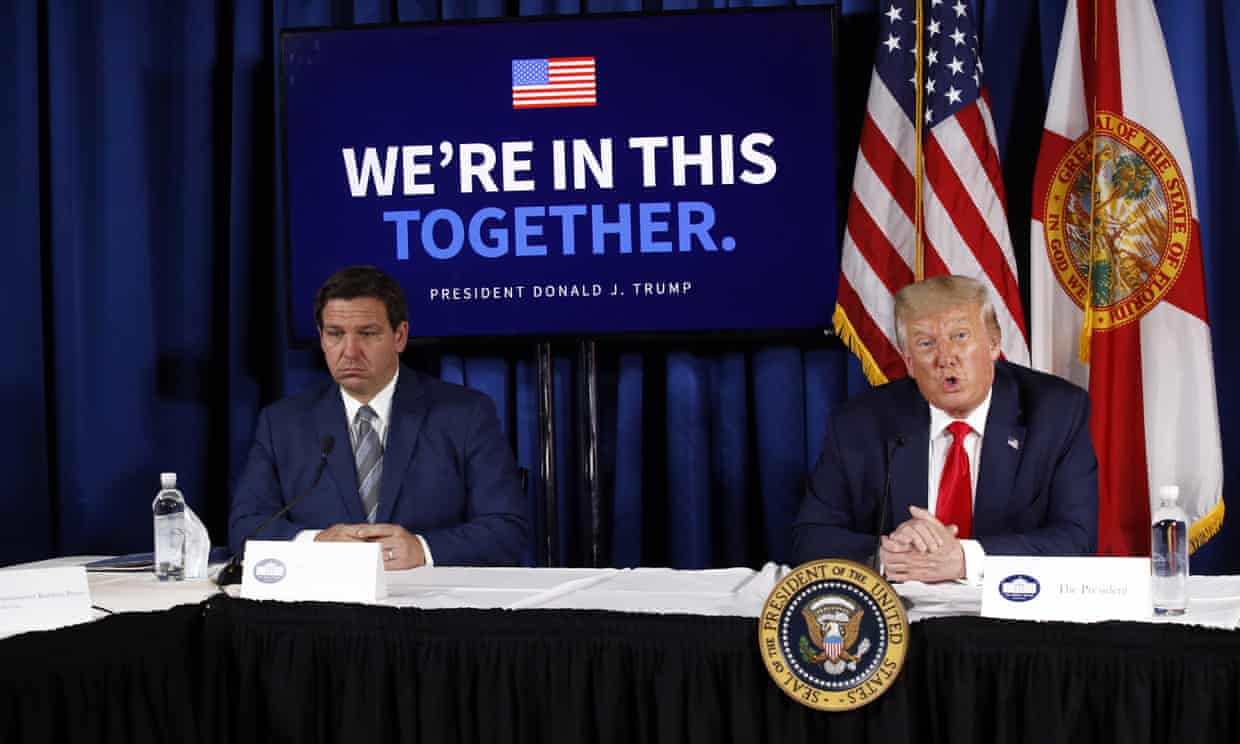
Ron DeSantis and Donald Trump sitting together at a table
Troubling times ahead for Trump? Not really, says Rick Wilson. Photograph: Patrick Semansky/AP

Donald Trump, the former US president, is all washed up. Ron DeSantis, the governor of Florida, is poised to dethrone him. This is the view currently in vogue among many in Washington.

Not so fast, argues Rick Wilson, a veteran Republican strategist and co-founder of the Lincoln Project, an anti-Trump group that shot to prominence with go-for-the-jugular advertisements before becoming mired in scandals of its own.

“The greatest danger in American politics is not recognising that there are great dangers,” Wilson, who lives in Florida, says in a phone interview. “The same people in 2015 and 2016 were confidently asserting Donald Trump could never, ever under any circumstances win the Republican nomination, and there were never any circumstances where Donald Trump could beat Hillary Clinton, and then he could never have almost a million people die because of his mishandling of Covid and on and on and on and on.

“I know that the Republicans who right now are acting very bold and the donors who are acting very frisky – as Trump starts winning primaries, they will bend the knee, they will break, they will fall, they will all come back into line.”

When Trump scheduled his announcement of a third run for the White House this month, he had hoped to ride a “red wave” of midterm election successes and sweep aside potential rivals within the Republican party. But the red wave ebbed and his anticlimactic campaign launch had the opposite effect.

With Trump at arguably his weakest point since last year’s January 6 insurrection, senior Republicans are criticising his losing habit, Rupert Murdoch’s media empire is ridiculing him and big money donors such as Ken Griffin and Stephen Schwarzman are deserting what they perceive as a sinking ship.

The new conventional wisdom – or wishful thinking – among numerous pundits is that, after surviving crisis after crisis, Trump has finally met his Waterloo. A slew of federal, state and congressional investigations and opinion polls showing DeSantis ahead or level lend credence to this view.

Some have noted, however, that Trump maintains an iron grip on his base and, just as in 2016, that might be enough to win a Republican primary race in which the anti-Trump vote is split among several candidates.

Wilson, 59, author of the books Everything Trump Touches Dies and Running Against The Devil: A Plot To Save America from Trump and Democrats From Themselves, says: “He controls a quarter, at the minimum, of the Republican base. Even if it’s 15% and he goes into Iowa, New Hampshire and South Carolina, and he wins primaries because he has 15% going in, that’s the ballgame. It’s over. It’s done. Everybody else, it’s all over bar the crying.”

Supporters watch as Donald Trump arrives to announce he is running for president on Tuesday at Mar-a-Lago.
Supporters watch as Donald Trump arrives to announce he is running for president on Tuesday at Mar-a-Lago. Photograph: Andrew Harnik/AP

He adds: “Right now they’re all talking so much shit: ‘I’m not going to get with Trump. I’m going to be with the hot new number, DeSantis.’ When DeSantis gets his ass handed to him, when he gets his clock cleaned in a debate or forum or just by Trump grinding away at him, eating him alive mentally for weeks on end, and suddenly Donald Trump’s numbers start posting up again, all the conservative thinkers who are right now like, ‘We will never vote for Trump again, we have integrity!’ will find themselves some excuse. ‘Well, you know, we don’t like Trump’s tweets, but otherwise it’s pure communism!’

“It’s all bullshit, it’s all a fucking game, and that game is going to play out in a way that does not result in the outcome that the donor class thinks they’re going to get.”

Wilson, who began his career on the 1988 presidential campaign of George HW Bush, worked as a consultant and political ad maker for numerous candidates and state parties. In December 2019 he and other Republican operatives founded the Lincoln Project, a political action committee that assailed Trump with a punch-in-the-mouth brio eschewed by “when they go low, we go high” Democrats.

Some of the co-founders have acknowledged their part in the Republican party’s descent into bloodsport, hypocrisy and extremism. Wilson told an audience at the group’s launch event: “We have, as the great political philosopher Liam Neeson once said, a particular set of skills. Skills that make us a nightmare for people like Donald Trump.”

He produced slick advertisements that got under the president’s skin and helped make the Lincoln Project the best known of the so-called Never Trump groups, raising tens of millions of dollars.

But its meteoric rise was followed by an equally spectacular fall. The group’s co-founder John Weaver was revealed to have sent sexually charged messages to multiple men, sometimes with offers of employment or advancement. There were allegations of opaque accounting and financial impropriety that Wilson and others adamantly deny. A glut of high-profile figures resigned.

But the Lincoln Project has survived in slimmed down form and continued to wage war on Trump and Trumpism in the midterms. Paradoxically, its continued relevance partly depends on Trump’s own; without him, it loses the principal reason for its creation. It has already launched attacks on DeSantis as a “new ultra-Maga megastar” who poses his own threat to American democracy.

Living in the Florida state capital, Tallahassee, Wilson is ideally placed to take stock of the governor, a former US navy lawyer and congressman whose own brand of conservative populism and “anti-wokeness” helped him win re-election by nearly 20 percentage points over the Democrat Charlie Crist.

He says: “Ron DeSantis won an election in Florida against a three-time loser, a campaign that was run by the best Republican party in the country, and I mean that because I’m a guy who helped over many years elect many people in the great state of Florida. The quality of our operation here made it look easy.

“Has Ron DeSantis been to the rodeo? Has he been out there in the fight? Has he actually faced up against a full campaign of the brutality and the cruelty that Donald Trump will level against him? He has not. It’s like he’s walked on to the field on to third base and thought he hit a grand slam home run. It’s easy for Republicans to win in Florida. It’s how it’s supposed to be: we built it that way. In a Republican primary against Trump, even Trump in a weakened state still has an innate feral sense of cruelty and cunning that Ron DeSantis does not have. How does Trump know that? He watched the debate.”

Wilson is referring to a gubernatorial debate in which Crist asked his opponent to commit to another full four-year term in the governor’s mansion; like a rabbit caught in headlights, DeSantis, 44, struggled to answer directly.

desantis behind podium
Ron DeSantis in Las Vegas last week. Photograph: Caroline Brehman/EPA

“It was nine seconds of the gears moving in his head and you could see the agony on his face, like ‘I don’t know what to say.’ Trump never has a doubt. He may be an asshole but he never has a doubt. Ron is over-intellectualising it and I’m telling you: this guy has a glass jaw.”

This, Wilson predicts, will become apparent on the debate stage, a setting where Florida Republicans such as Jeb Bush and Marco Rubio struggled against Trump in 2016. “All of a sudden, all that donor money is going to go, ‘Oh, fuck,’ and then they’re going to call Ron’s people and go, ‘Hey, listen, we love Ron but we’re worried. We’re gonna have to sit this one out for a little while. Let’s see what it looks like in a month.’

“And then a month will pass and all of a sudden Donald Trump is the nominee. That’s how it’s going to go and I don’t say this out of any joy; I say this because I’ve just been to this fucking party too many times now.”

Wilson also suggests that DeSantis may lack the personal touch and knack for retail politics that is crucial in a Republican primary. A recent New Yorker magazine profile noted several people describing “his lack of curiosity about others, his indifferent table manners, his aversion to the political rituals of dispensing handshakes and questions about the kids”.

Wilson opines: “You’re telling me you’re going to send Ron DeSantis to New Hampshire where he has to go and sit in a diner with the Merrimack county GOP chairman and that 79-year-old codger is going to want to talk to Ron DeSantis about the gold standard or whatever and Ron DeSantis is going to sit there and get bored and restless and leave or be angry? I’m sorry. Sell me another fantasy of Ron DeSantis the perfect candidate.”

Congratulations on being one of our top readers globally – you've read 99 articlesin the last year

The midterm elections have been hailed as a victory for democracy. Prominent 2020 election deniers who peddled Donald Trump’s “big lie” lost key races. Americans voted resoundingly in favor of reproductive rights. In much of the country, the electorate repudiated lies and extremism.

Nonetheless, the far-right forces that threaten democracy have not been vanquished. Trump’s announcement of his third run for the presidency heralds a new season of inflammatory rhetoric and misinformation. Abortion rights have been wiped out in much of the country. The supreme court is enforcing its own agenda – often in opposition to public opinion. It would be a mistake to unnecessarily amplify Trump’s campaign; it would also be a mistake to ignore it entirely. "

‘They will bend the knee’: Lincoln project cofounder cautions against dismissing Trump | Republicans | The Guardian

Georgia voters headed to the polls Saturday for Senate runoff - The Washington Post

Early voters in Georgia head to the polls Saturday for Senate runoff

Voters in Marietta, Ga., line up on Saturday. (Elijah Nouvelage/For The Washington Post)
"Voters in Marietta, Ga., line up on Saturday. (Elijah Nouvelage/ For The Washington Post)

Save

CARTERSVILLE, Ga. — Georgia voters flocked to the polls Saturday to cast their ballots in the Senate runoff, taking advantage of an extra day of voting brought about by a lawsuit filed by Sen. Raphael G. Warnock (D), who is defending his seat against Republican Herschel Walker.

In more than two dozen counties across the state, thousands of voters from both parties came out to vote, some waiting for hours in lines stretching around the block for the chance to cast their ballot early for the Dec. 6 runoff.

The secretary of state’s office reported that at least 70,000 people voted Saturday. The first Saturday of early voting for the general election drew 79,682 people, more than double the 2018 number. Early voting will continue through Friday.

Those taking advantage of Saturday voting included college students visiting home for Thanksgiving, police officers and ambulance workers with busy work schedules, lifelong voters who make it a point to always cast their ballots on the first day they are allowed, and retirees just seeking an escape from holiday guests.

“We got a house full of company. This gave me a good excuse to get out for a little,” said Bill Chapel, a Walker supporter from Bartow County, who said he typically votes early.

Chapel said he hopes that Saturday voting ends up helping Walker more than Warnock, who filed the lawsuit that resulted in the polls here being open a day earlier than had been planned by state elections officials. Democrats have organized more around the Saturday early vote and have promoted the option this past week more than Republicans.

A total of 27 counties conducted Saturday voting, giving greater opportunities to cast a ballot for voters who may be occupied during the week. The participating counties, which include most the state’s major metropolitan areas and several rural counties, ensured that just over half the state’s population had the opportunity to vote on Saturday.

Although Warnock received about 35,000 more votes than Walker in the Nov. 8 general election, he did not meet the 50 percent threshold for an outright win, triggering a runoff and prolonging one of the most expensive Senate races in the midterms. A poll released last week by AARP had Warnock ahead of Walker, 51 percent to 47 percent, within the margin of error of 4.4 percentage points.

Warnock, a senior pastor at Ebenezer Baptist Church in Atlanta, won the Senate seat in a special runoff election in January of 2021 and is seeking a full, six-year term. If he wins on Dec. 6, Democrats will hold 51 seats in the Senate.

Walker, who won the Heisman Trophy in 1982 as a running back for the University of Georgia, was encouraged to run for the seat by former president Donald Trump. His candidacy has generated headlines about his past, including allegations of domestic violence and that he pressured and paid for two former girlfriends to have abortions. Walker has campaigned as a staunch opponent of abortion, saying he would support a national ban on the procedure.

Initially, the Georgia secretary of state said counties would be allowed to hold Saturday voting in runoff elections but reversed course after deciding that a part of Georgia’s election code barring voting two days after a holiday banned Saturday voting under the new compressed timeline for a runoff election mandated by the new law.

Democrats, led by Warnock’s campaign, sued the state, arguing that the policies in question didn’t apply to runoff elections. A judge in Fulton county sided with Warnock, the state Democratic Party and the Democratic Senatorial Campaign Committee in the case. The state’s Republican attorney general, as well as the state and national Republican parties, lost their appeals in state courts.

In a fundraising email, Walker’s campaign told supporters that the decision to allow Saturday voting “is like coming out after halftime and learning the referees have changed the rules for the rest of the game.”

Then, the decision of whether to hold Saturday voting fell to the counties. In Bartow County, located northwest of Atlanta, the board of elections decided to do so at a single polling location in Cartersville. Walker won the county by 50 points earlier this month.

Peggy Brown, a Democratic member of the Bartow Board of Elections, noted the irony that the two Democrats and one independent on the five-seat board pushed for Saturday voting in the deep-red county while the two Republicans on the board voted against it.

“They didn’t think it was worth the money to do it and that there would not a very good turnout, but I think we’re gonna prove them wrong,” said Brown, as a steady line of voters — both Republicans and Democrats — circled through the polling location at the municipal building.

The additional day of voting cost $1,100, said Brown, and the board was uncertain at first whether they’d have enough workers, given holiday travel and people hosting guests from out of town.

All counties in Georgia are required by the state’s 2021 election law to hold early voting from 9 a.m. to 5 p.m. in the weekdays before a runoff election. Several counties, including many of the state’s most populous, had planned on holding Sunday voting on the weekend before required early voting begins and passed trigger policies to fund Saturday voting if it was found to be legal.

The public debate and litigation over Saturday voting is the latest clash over the state’s election laws, which were overhauled by a controversial 2021 voting law that had a significant effect on policies concerning absentee ballots, runoff elections, early voting and election administrative policy. The 2022 midterms are the first test of the Election Integrity Act, also known as SB 202. How the law interacts with other parts of Georgia’s election code have led to confusion as the law was put into practice.

Some voters said they didn’t want to take any chances by waiting until Election Day to cast their ballot.

“If there are any glitches or anything like that on that day, then you’re kind of, you know, screwed,” said Douglas Edwards, a dentist from Cartersville supporting Warnock. “Today if there’s something we could always come back on Tuesday.”

A number of students cited concerns over their absentee ballots and the ease of Saturday voting aligning with them being home for Thanksgiving.

“I am currently doing an internship out of state, and I didn’t receive my absentee ballot in time to vote for the midterms, which I was quite upset about,” said Katie Poe, a masters student. “I’m in town for the holidays, and voting this Saturday is my only chance to actually vote in person, and maybe vote at all reliably.”

“I’ve had a lot of trouble in the past with absentee voting. It’s kind of disheartening to only be able to vote when I’m here, because it’s so important to me, ” she added.

“I’m a college student in school in Boston, and this is pretty much my only opportunity to vote in person. So I had to get out and vote, it’s a long line, but we’re waiting as best we can,” said Catherine McBride, a senior in college from Cobb County visiting home for Thanksgiving.

McBride said she voted absentee earlier in the month in the general election but had to wait two or three weeks for her ballot and was concerned it wouldn’t make it to her in time for the general. So she decided to vote in person Saturday at the Cobb County Board of Elections and Registration polling location in Marietta.

Kavita Kar, a first year student at Stanford University from Marietta voting at the same location, cited similar fears around absentee voting.

“I’m going back to college tomorrow,” Kar said of her decision to vote on Saturday. “For the last election, a lot of my friends didn’t receive their ballots from Cobb County on time.”

Several hundred voters waited in line to vote at the Cobb location on Saturday afternoon, waiting around two hours to cast their ballots. Warnock won Cobb County by 16 points.

Although a Democratic-led effort, Republicans and Democrats alike praised Saturday voting for making it easier to vote around work and travel plans.

“It’s hard to get off during the week when you’re moving dirt,” said Kevin Tomlin, a Republican and heavy equipment operator from Bartow County.

“With my worth schedule, we always vote early,” said Bill Stahl, a police officer from Taylorsville supporting Walker. “It gives everybody a chance to get out. It’s not going to help one particular party.”

“I work for an ambulance company and I do 12 hour days, and this election was really important,” said Delores Flanagan, a Warnock supporter. “So I knew that I wanted to vote at the first opportunity.”

“I normally do absentee voting. But the last time I attempted to do that, it took forever to actually get the ballot, and I was concerned that I might not be able to vote,” Flanagan said of her willingness to wait in the two hour long line to vote in Cobb County.

Sandi Griffin, a Walker supporter from Aragon, noted it was “kind of strange” that each county got to decide if it would do early voting. And so it was kind of hard to keep track of when ours was gonna open up,” she said.

Griffin said she and her husband had made travel plans before the runoff was called, so they welcomed the ability to vote on Saturday. “We’re leaving town, we needed to vote on early voting today and I’m glad they opened it up finally.”

Still, Griffin, a Republican, said she is concerned that the extra day will help Democrats.

“I’m afraid it will. It is a fear, and Sunday also, because then they can bus the church people,” she said.

Voters who spoke with The Washington Post said they’re used to the long lines, and having to return to the polls for a runoff — with Saturday voting just another chance to participate in the seemingly never-ending election season.

“We’ll do it again and again and again,” said Robert Schofer, a Warnock supporter from Kennesaw. “And again.”

Matt Brown contributed to this report."

Georgia voters headed to the polls Saturday for Senate runoff - The Washington Post