Contact Me By Email

Contact Me By Email

Tuesday, October 24, 2017

Trump’s mindless cruelty to a soldier’s widow speaks to the core of his character - The Washington Post

NewImage

 "One person who obviously didn’t know “what he was signing up for” is President Trump. Others include Trump voters who believed they were electing a decent human being to be commander in chief.

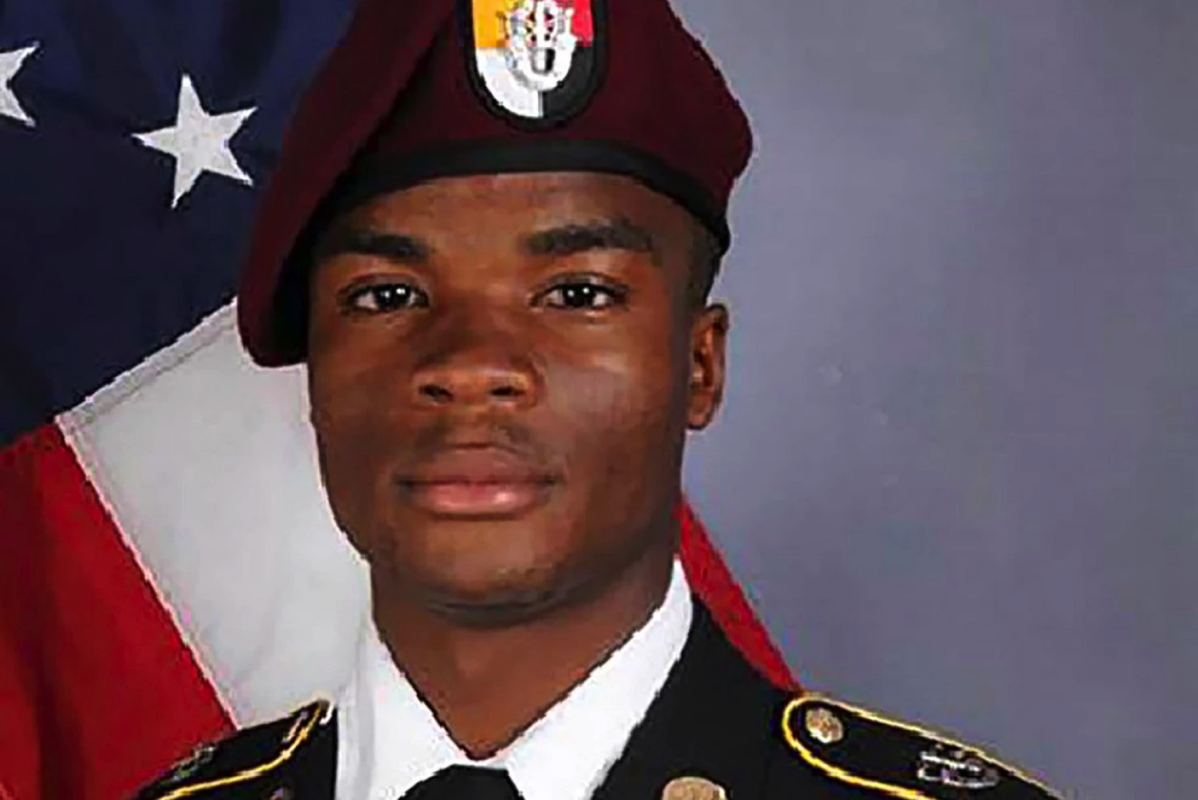
What Trump reportedly said to the grief-stricken widow of Sgt. La David T. Johnson, who gave his life for his country, is not some kind of minor miscue or media-fueled distraction. It speaks to the core issue of Trump’s character and demonstrates, as clearly as any incident to date, his unfitness for the office he holds — and dishonors.


Johnson and three other U.S. soldiers — Staff Sgt. Jeremiah “J.W.” Johnson, Staff Sgt. Bryan C. Black and Staff Sgt. Dustin M. Wright — were killed Oct. 4 in Niger, apparently ambushed by Islamic State-affiliated militants. Exactly what happened is unclear, and Congress should be as dogged in investigating these deaths as it was in probing Benghazi.

For 12 days, Trump said nothing, not even a tweet, about the four Americans killed in action, and had no contact with the loved ones they had left behind. Pressed by reporters to explain his silence, Trump reacted by slandering his predecessors, especially President Barack Obama, falsely claiming that they, too, neglected to console the families of the fallen.

Trump then placed a phone call to Myeshia Johnson, La David Johnson’s widow. The truism “better late than never” is not always true.
According to two people who overheard the call, Trump told Johnson that her husband “knew what he was signing up for” although his death must still be painful. One witness who confirms these were Trump’s words is the woman who raised Johnson as a son, Cowanda Jones-Johnson. The other is Rep. Frederica S. Wilson (D-Fla.) , who was with the family when Trump called. Wilson was so dumbfounded and angry that she quickly called Trump out publicly for what he had said.

Trump tweeted a denial and said he had “proof,” but of course produced none. The president has shown himself to be such a liar that it’s impossible to take his word over almost anyone else’s.
Wilson was furious because instead of lessening Myeshia Johnson’s grief, Trump had deepened it. Surely that was not his intent. But mindless cruelty is still cruel.

Offering succor to the families of service members killed in the line of duty is one of the most solemn exercises a president must undertake. It is a task requiring, above all, a sense of humility. “In the hope that it may be no intrusion upon the sacredness of your sorrow, I have ventured to address you this tribute to the memory of . . . your brave and early fallen child,” Abraham Lincoln wrote to the parents of a deceased Union soldier.

Unlike true leaders, however, Trump seems to associate humility with weakness. When confronted with an error, big or small, he never just says, “I’m sorry, I made a mistake, I apologize,” and leaves it at that. He always seeks to deflect responsibility. Somebody else is really at fault. Others who came before him have done worse. Bad people in the media are treating him unfairly.


Trump is a weak, narcissistic man in a job that requires strength and empathy. I’m not sure that empathy is a concept he even understands. He acts as if he believes that feeling someone else’s pain is strictly for losers, not winners.

None of this is a surprise. We learned a lot about Trump during the campaign when he attacked the Khan family, who lost a son in Iraq, for having the temerity to criticize him politically. We have a president who believes that making the ultimate sacrifice for the nation is less important than supporting or opposing Trump.

The Post reported Wednesday that earlier this year, Trump phoned the father of Army Sgt. Dillon Baldridge, who was killed June 10 in Afghanistan. In the course of the conversation, Trump offered to send the father a personal check for $25,000 — but did not follow through. The check was finally sent this week only after The Post asked about it.

Sadly, that’s typical Trump. He makes a grand promise, which allows him to feel big and generous — which is the whole point. Even in interactions with Gold Star families, it’s all about him. Later, having played the role of Trump the Munificent, he forgets about it and goes in search of the next opportunity to shore up his fragile ego.

No one should expect him to grow in office. He’s 71. At that age, either you have compassion, self-knowledge and a conscience, or you don’t.
Read more from Eugene Robinson

Trump’s mindless cruelty to a soldier’s widow speaks to the core of his character - The Washington Post

Small Montana firm lands Puerto Rico’s biggest contract to get the power back on - The Washington Post

"Whitefish Energy is based in Whitefish, Mont., the home town of Interior Secretary Ryan Zinke. Its chief executive, Andy Techmanski, and Zinke acknowledge knowing one another — but only, Zinke’s office said in an email, because Whitefish is a small town where ‘everybody knows everybody.’ One of Zinke’s sons ‘joined a friend who worked a summer job’ at one of Techmanski’s construction sites, the email said. Whitefish said he worked as a ‘flagger.’"

(Via.).  Small Montana firm lands Puerto Rico’s biggest contract to get the power back on - The Washington Post:

Trump meets with Republicans as Corker slams him for ‘untruths,’ ‘debasing’ the country - The Washington Post

"

(Via.)

Sen. Jeff Flake of Arizona will retire, citing direction of GOP under Trump - The Washington Post

"

(Via.). Sen. Jeff Flake of Arizona will retire, citing direction of GOP under Trump - The Washington Post

Bias, not behavior, holding women back at work, study says - CNET

"In a report published Monday in the Harvard Business Review, data analysts from McKinsey & Co. and workplace analytics company Humanyze said they decided to test the argument that women just behave differently than men.

To do that, they issued 100 'sociometric badges' across 'all five levels of seniority' in a company at a large, multinational strategy firm that's overwhelmingly male. Over four months, those badges measured 'movement, proximity to other badges, and volume of tone of voice when speaking. They can tell us who talks with whom, where people communicate, and who dominates conversations,' the researchers wrote.

They then anonymized the data, although they still knew each person's gender, role in the workplace and number of years working at the office."

(Via.) Bias, not behavior, holding women back at work, study says - CNET:

There’s a ‘poisonous dynamic among white people’ over who’s to blame for racism - The Washington Post

NewImage

 Duh!  But plenty of the White middle class voted for Trump so you are continuing the divide and conquer narrative.

To further my education in the political motivations of the white working-class and their support of President Trump, I read “White Working Class: Overcoming Class Cluelessness in America” by Joan C. Williams. I’m so used to discussing the role race played in his election, the uncorked enmity of whites towards black and brown Americans and others, that I didn’t anticipate Williams’s twist in the conventional wisdom.
For more conversations like this, subscribe to “Cape UP” on Apple Podcasts or Stitcher.


“White people who are not privileged feel belittled. They feel stereotyped. They feel openly ridiculed and they are really, really angry because of what elite white people are doing to them,” Williams told me in the latest episode of “Cape Up.” “Now, because of this poisonous dynamic among white people, guess who’s paying the price?”


Williams devotes an entire chapter in her book to teasing out the difference between white working-class racism and the racism practiced by the “professional managerial elite,” or PME. “There’s an element here of privileged whites distancing themselves from racism by displacing the blame for racism onto less-privileged whites,” she writes. But Williams exposes a modern-day version of the wedge intentionally driven between “a cross-race coalition of the disenfranchised” that developed in the years after the Civil War.[The real reason working-class whites continue to support Trump]
“The idea of the way to control working-class whites is to deflect their anger onto immigrants or onto blacks or other people of color. This has been going on . . . This is a glorious American tradition,” Williams told me on the podcast. She further clarifies in her book. “Working-class whites, whose claims to privilege rest on morality and hard work, stereotype black people by conflating hard living and race,” she notes. “Professional-class whites, whose claims to privilege rest on merit, stereotype black people as less competent than whites.”


“There’s enough blame for racism to go around,” Williams told me on the podcast.
Photo by: Jonathan Capehart/The Washington PostBut there’s more going on with the white working-class than racial animosity. Class plays a major role in the present toxic dynamic. The worldview of the working class and the PME reflects a night-and-day existence and forms the basis of questions Williams asks in her book and that we discussed on the podcast. “Why doesn’t the working class just move to where the jobs are?” and “Don’t they understand that manufacturing jobs aren’t coming back?” are just two of them.


[Dignity: The improbable word Arthur Brooks says explains why Trump won]
Listen to the podcast to hear Williams explain why the working-class admire the super rich they see on television but can’t stand the professionals they interact with everyday. Part of it has to do with the glib condescension of the elite. “We call them rednecks with plumber’s butt in flyover states. And then they get offended,” Williams said. “Gee, why would that be? Because we’re insulting them.”

There’s a ‘poisonous dynamic among white people’ over who’s to blame for racism - The Washington Post: ""

(Via.)

Duh!
“This is a really poisonous dynamic in this country between white people.”
To further my education in the political motivations of the white working-class and their support of President Trump, I read “White Working Class: Overcoming Class Cluelessness in America” by Joan C. Williams. I’m so used to discussing the role race played in his election, the uncorked enmity of whites towards black and brown Americans and others, that I didn’t anticipate Williams’s twist in the conventional wisdom.
For more conversations like this, subscribe to “Cape UP” on Apple Podcasts or Stitcher.
“White people who are not privileged feel belittled. They feel stereotyped. They feel openly ridiculed and they are really, really angry because of what elite white people are doing to them,” Williams told me in the latest episode of “Cape Up.” “Now, because of this poisonous dynamic among white people, guess who’s paying the price?”
Williams devotes an entire chapter in her book to teasing out the difference between white working-class racism and the racism practiced by the “professional managerial elite,” or PME. “There’s an element here of privileged whites distancing themselves from racism by displacing the blame for racism onto less-privileged whites,” she writes. But Williams exposes a modern-day version of the wedge intentionally driven between “a cross-race coalition of the disenfranchised” that developed in the years after the Civil War.[The real reason working-class whites continue to support Trump]
“The idea of the way to control working-class whites is to deflect their anger onto immigrants or onto blacks or other people of color. This has been going on . . . This is a glorious American tradition,” Williams told me on the podcast. She further clarifies in her book. “Working-class whites, whose claims to privilege rest on morality and hard work, stereotype black people by conflating hard living and race,” she notes. “Professional-class whites, whose claims to privilege rest on merit, stereotype black people as less competent than whites.”
“There’s enough blame for racism to go around,” Williams told me on the podcast.
Photo by: Jonathan Capehart/The Washington PostBut there’s more going on with the white working-class than racial animosity. Class plays a major role in the present toxic dynamic. The worldview of the working class and the PME reflects a night-and-day existence and forms the basis of questions Williams asks in her book and that we discussed on the podcast. “Why doesn’t the working class just move to where the jobs are?” and “Don’t they understand that manufacturing jobs aren’t coming back?” are just two of them.
[Dignity: The improbable word Arthur Brooks says explains why Trump won]
Listen to the podcast to hear Williams explain why the working-class admire the super rich they see on television but can’t stand the professionals they interact with everyday. Part of it has to do with the glib condescension of the elite. “We call them rednecks with plumber’s butt in flyover states. And then they get offended,” Williams said. “Gee, why would that be? Because we’re insulting them.”

Want to increase black turnout? Make the fight for voting rights a core campaign issue

NewImage


 "If Democrats want to win elections—which is how we’ll be able to make positive changes and make America a more just place—we need to connect the dots. Two articles came out this week about black voters. One looked back to voter suppression in 2016, while the other was about black turnout in upcoming elections this fall. In order to achieve those electoral victories, we need to link these two subjects.

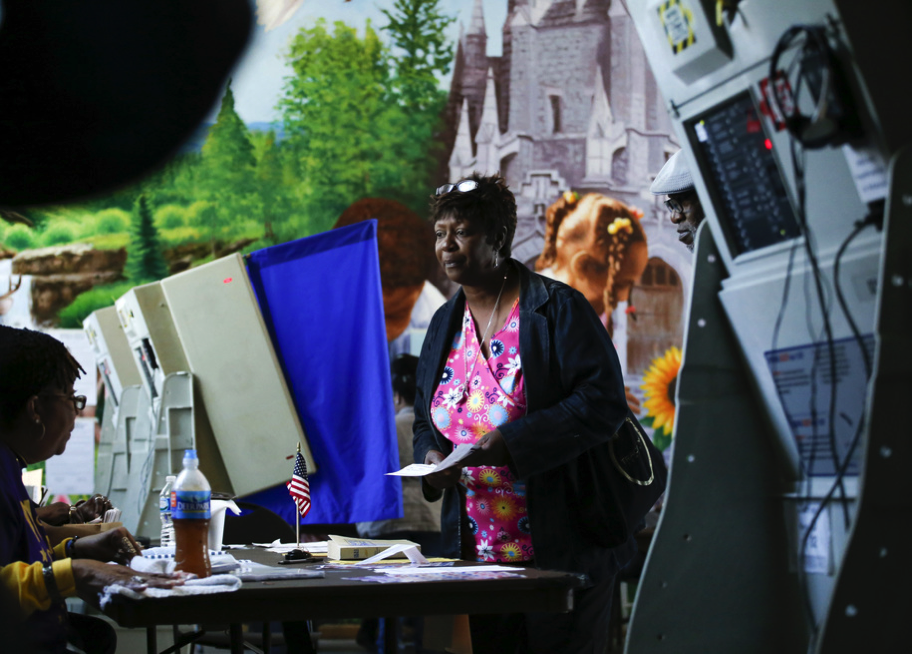
Mother Jones has a terrific piece of journalism by Ari Berman, who has been focused for some time on voter suppression, and who wrote a book on the struggle for voting rights since the passage of the Voting Rights Act. His article highlights the experience of Andrea Anthony, an African-American woman who should have been able to cast her vote last fall in Milwaukee, but was stymied by that state’s draconian voter ID laws, which were passed by Republicans with the specific intent of suppressing the votes of poor and minority voters. A backer of the law, former state senator and now-Congressman Glenn Grothman, said openly that the law would help Republicans win elections: “and now we have photo ID, and I think photo ID is going to make a little bit of a difference as well.”


After talking about Ms. Anthony’s story, Berman examined the broader data her story represents and concluded that there was enough voter suppression in Wisconsin to throw the state from Hillary Clinton to Donald Trump. Yes, there were other factors, and without Comey it wouldn’t have even been close enough to matter. But there was Comey, and it was close enough to matter. And voter suppression swung the state.

Want to increase black turnout? Make the fight for voting rights a core campaign issue

The Last Word with Lawrence O'Donnell on MSNBC


The Last Word with Lawrence O'Donnell on MSNBC

Don Lemon's open letter to Donald Trump: 'Please stop'