Contact Me By Email

Contact Me By Email

Saturday, May 03, 2025

Jeremy Renner and the Science of Extraordinary Near-Death Experiences - The New York Times

Jeremy Renner and the Science of Extraordinary Near-Death Experiences

"A little over two years ago, the actor was run over by a snowplow. Like thousands of others, he then felt an “exhilarating peace.” Why?

A black-and-white photograph of Jeremy Renner lying down with his hands behind his head. His eyes are closed and he is wearing a black T-shirt.
In a new memoir, the actor Jeremy Renner writes that after he was run over by a snowplow, he could see his entire life at once, and felt an “exhilarating peace.” Ryan Pfluger for The New York Times

A little over two years ago, the actor Jeremy Renner was run over by a seven-ton snowplow. In a new memoir, he wrote that as he lay near death, he experienced something extraordinary.

He could see his entire life at once, and felt an “exhilarating peace” and a connection to the world. He also saw family and friends arrayed before him, telling him not to let go.

“What I felt was energy, a constantly connected, beautiful and fantastic energy,” Mr. Renner wrote. “There was no time, place or space, and nothing to see, except a kind of electric, two-way vision made from strands of that inconceivable energy, like the whipping lines of cars’ taillights photographed by a time-lapse camera.”

What Mr. Renner described is “classic for near-death experiences,” the term researchers use for such events, said Dr. Jeffrey Long, the founder of the Near-Death Experience Research Foundation.

Dr. Long’s foundation has collected more than 4,000 accounts similar to Mr. Renner’s. Some people who have come close to death have recounted a sense of energy, peace and absence of time, as Mr. Renner did. Some have also described watching their body from above, moving through a tunnel toward a light and even meeting God.

The general public may be familiar with these events through a genre of memoirs that present near-death experiences as proof of a Christian afterlife. But they have been reported across countries, demographics and religions, as well as by atheists, and have been a subject of scientific research for decades.

There is no scientific consensus on what causes near-death experiences. But whatever their cause, they can change people’s lives. Some lose all fear of death; others change careers or leave relationships. The reactions to near-death experiences seem to outstrip what researchers have seen in people who nearly die but don’t have such an experience.

For those people, “usually it’s like, yeah, you almost died, so you become more appreciative of life,” said Marieta Pehlivanova, a research assistant professor of psychiatry and neurobehavioral sciences at the University of Virginia School of Medicine’s Division of Perceptual Studies, which researches near-death experiences.

But, Dr. Pehlivanova said, “the changes we see in these people who almost died but didn’t have an N.D.E. are much more subtle and do not continue over such a long period of time.”

Why do these experiences happen?

Near-death experiences are hard to study because the catastrophic injuries and illnesses that can lead to them don’t lend themselves to controlled experiments. But neuroscientists have proposed a range of theories as to what causes them, and many believe the experiences stem from a complex cascade of neurological and physiological processes.

In a paper published in March, seven researchers proposed an explanation that linked near-death experiences to a burst of brain chemicals called neurotransmitters, and an activation of specific receptors in the brain that produces a sense of calm and vivid imagery. The paper also posits that near-death experiences might occur when partly conscious people go through aspects of rapid-eye-movement sleep, which is when the most robust and complex dreaming happens.

Other scientists’ theories include one that involves the same neural receptors that facilitate the effects of ketamine.

Another suggests aspects of N.D.E.s might arise from dysfunction in the area of the brain responsible for combining sights, sounds, motion and our innate sense of where we are into a single sensory experience.

That might explain one of the most curious parts of near-death experiences: that some people later say they watched their body from above, and are able to describe details of what was happening around them that it seems as if they shouldn’t be able to know.

Dr. Kevin Nelson, a professor of neurology at the University of Kentucky who was an author of the March study, noted that people might be able to hear even when apparently unresponsive, and that patients’ eyelids were often open during resuscitation efforts.

So they might take in sight and sound in real time but, because their brain is disrupted by a lack of blood flow, recall it as coming from a perspective above their body.

Processing a life-altering experience

Some researchers — and a great number of people who have had near-death experiences — believe that none of the proposed scientific explanations can account for all the elements, and that these experiences are true encounters with an afterlife.

That idea is anathema to many neuroscientists for whom a fundamental precept is that consciousness arises from the brain.

“Faith and science often get confused on this topic, in part because it has such a profound emotional valence,” Dr. Nelson said. But, he added, “There is no scientific evidence that we can have human experience outside of the brain.”

But Dr. Long, whose medical training and practice are in radiation oncology, believes people’s consciousness does leave their bodies during near-death experiences in a way that neuroscience can’t account for. He is particularly convinced that science cannot explain the accuracy and detail of what patients recall seeing and hearing from outside their body.

Dr. Pehlivanova and her colleagues at the University of Virginia institute also believe the experiences could involve a real separation between consciousness and the brain, though they have not dismissed the possibility of neurological or physiological explanations.

Dr. Bruce Greyson, a professor emeritus of psychiatry and neurobehavioral sciences in that institute, has studied near-death experiences for 50 years. These days, he is mostly focused not on causes but on how medical professionals could best help people who go through these experiences process what they experienced.

Doctors and nurses tend to be the first people to whom patients describe their experiences, hoping to “get some perspective on it,” Dr. Greyson said. And sometimes, those professionals respond dismissively.

“For almost all near-death experiencers, they regard this as one of the most important things, if not the most important thing, that’s ever happened in their lives,” he said. “And while it may seem inconsequential to the health care worker, it’s not at all to the experiencer.”

Maggie Astor covers the intersection of health and politics for The Times."

Jeremy Renner and the Science of Extraordinary Near-Death Experiences - The New York Times

Friday, May 02, 2025

Elon Musk admits Tesla’s imminent collapse and seeks urgent exit: “I’ve run out of options”

Elon Musk admits Tesla’s imminent collapse and seeks urgent exit: “I’ve run out of options”

“Tesla reported a 9% drop in sales and a 71% collapse in net income, raising concerns about its long-term viability. The company’s market share has dropped to 43% due to intense competition from Chinese and American automakers, as well as public backlash against Elon Musk. Amidst rumors of a CEO search, Tesla denied these claims and emphasized Musk’s continued leadership.


In December, the company’s stock reached $479, but by the close of trading yesterday, it had fallen to $282.

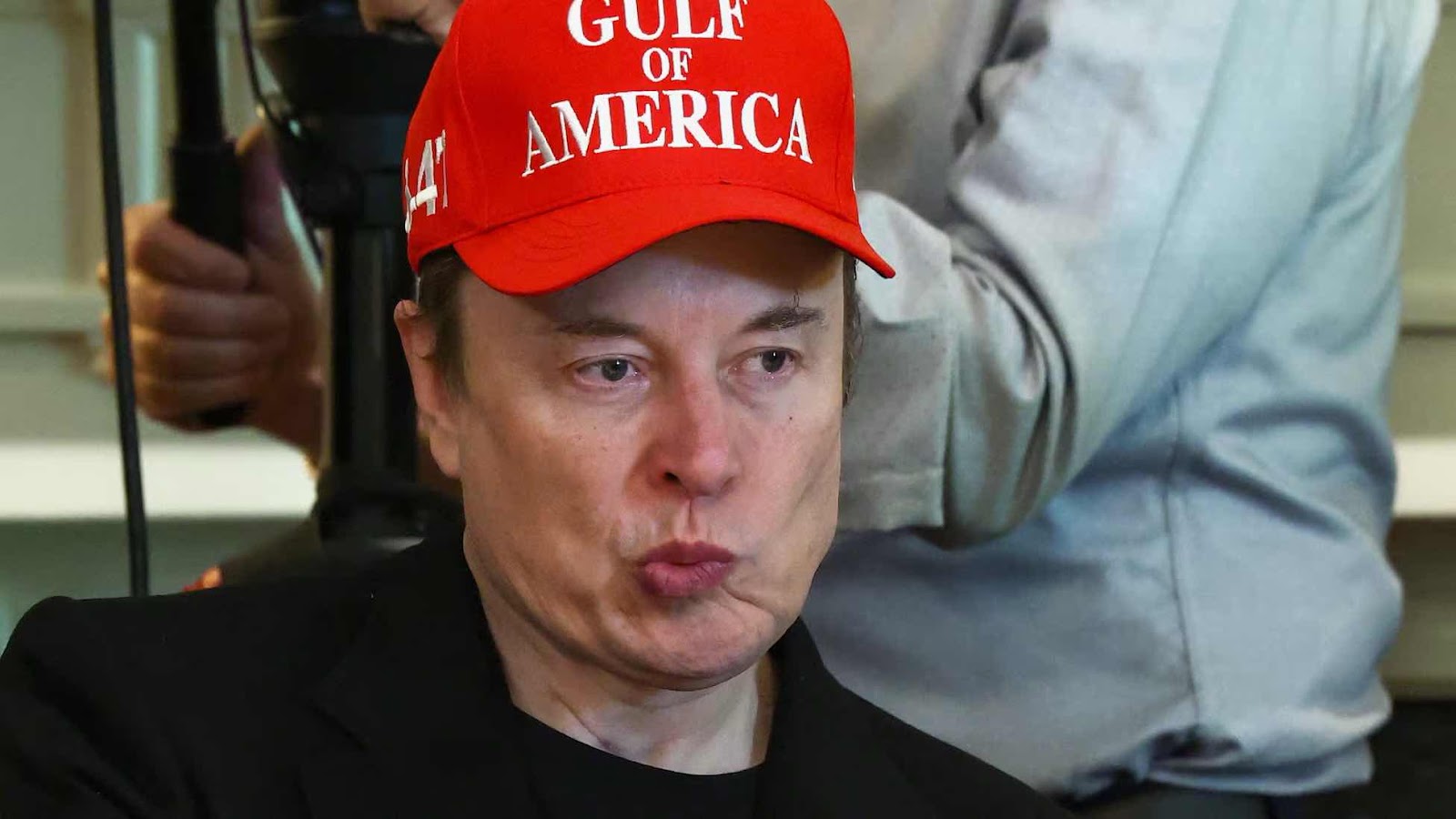
Tesla CEO Elon Musk attends a cabinet meeting held by U.S. President Donald Trump at the White House in Washington, D.C., U.S., April 30, 2025. REUTERS/Evelyn Hockstein
Evelyn Hockstein

Elon Musk is actively seeking solutions to revitalize electric vehicle salesamid growing competition. Tesla reported a 9% drop in sales and a staggering 71% collapse in net income, raising concerns about its long-term viability.

Tesla’s brand image has been tarnished by Elon Musk’s political controversies, which are affecting how the company is perceived in key markets. The backlash against anything associated with Musk is becoming increasingly apparent.

Within the industry, Tesla’s market share has dropped to 43%, as it faces intense competition from both Chinese and American automakers. Adding to the pressure, U.S. tariffs threaten the competitiveness of Tesla’s battery production, making local manufacturing more crucial than ever.

And this challenge is at the heart of the issue. “Trade tensions exacerbated by tariffs imposed during the Trump administration are complicating matters,” analysts noted. As a result, it’s becoming difficult to make clear sales forecasts for the remainder of the year amid such uncertainty.

At the moment, there are no new Tesla models planned. Musk’s return to daily operations months later was seen as a major development, but the company is clearly under pressure. There are multiple issues to resolve, and it’s unclear how to address them effectively.

The first and foremost issue is public perception: surveys show that 60% of consumers hold an unfavorable opinion of Musk, which directly affects how people view the EV brand. This is particularly troubling in key markets like California and Europe, where Tesla was once highly popular—but is now facing organized backlash.

In such a tense climate, rumors abound. Early this morning in Europe—late night in the U.S.—Tesla denied reports that it was searching for a new CEO, a story originally published by The Wall Street Journal that gained more traction than expected. The company officially refuted the claim.

Meanwhile, competitors are seizing the moment. Chinese manufacturers like BYD, American giants like General Motors, and Korean automakers such as Hyundai are launching new, innovative models. Tesla’s market share dropped to 43% in Q1, compared to 75% just three years ago. The coming months are expected to be critical—not just for Tesla, but for the entire EV market.

Get your game on! Whether you’re into NFL touchdowns, NBA buzzer-beaters, world-class soccer goals, or MLB home runs, our app has it all.

Dive into live coverage, expert insights, breaking news, exclusive videos, and more – plus, stay updated on the latest in current affairs and entertainment. Download now for all-access coverage, right at your fingertips – anytime, anywhere.“

Trump Seeks to Eliminate the National Endowment for the Arts

Trump Seeks to Eliminate the National Endowment for the Arts

(Trump came from a trashy family that never exposed him to the arts.)


“President Trump’s budget proposal for the next fiscal year includes eliminating the National Endowment for the Arts (NEA), the National Endowment for the Humanities (NEH), and the Institute of Museum and Library Sciences. This proposal, which aims to decrease the size of the federal government, has faced opposition from Democrats who vow to fight for the NEA’s funding. The NEA, established in 1965, supports arts organizations and projects across the country, with a budget of $207 million in 2024.

The president’s budget proposal also called for getting rid of the National Endowment for the Humanities and the Institute of Museum and Library Sciences.

A building exterior with several signs of federal agencies, including the National Endowment for the Arts and the National Endowment for the Humanities.
The president’s budget calls for elimination the endowments for the arts and the humanities, as well as the Institute of Museum and Library Sciences. Kayla Bartkowski/Getty Images

President Trump proposed eliminating the National Endowment for the Arts and the National Endowment for the Humanities in the budget he released Friday, taking aim once again at two agencies that he had tried and failed to get rid of during his first term.

The endowments, along with the Institute of Museum and Library Sciences, were among the entities listed in a section titled “small agency eliminations” in his budget blueprint for the next fiscal year. The document said that the proposal was “consistent with the president’s efforts to decrease the size of the federal government to enhance accountability, reduce waste, and reduce unnecessary governmental entities” and noted that Mr. Trump’s past budget proposals had “also supported these eliminations.”

In 2017, during his first term, Mr. Trump proposed eliminating both the arts and the humanities endowments. But bipartisan support in Congress kept them alive, and in fact their budgets grew during the first Trump administration.

Since Mr. Trump returned to office this year, his administration has taken aim at the National Endowment for the Humanities and the Institute of Museum and Library Services, canceling most of their existing grants and laying off a large portion of their staffs. But the arts agency had yet to announce major cuts.

The proposal to eliminate the endowments drew a quick and furious reaction from Democrats. One, Senator Jack Reed of Rhode Island, vowed to fight the plan to eliminate the N.E.A. “tooth and nail.”

Representative Chellie Pingree of Maine, who serves as the top Democrat on the House subcommittee overseeing the N.E.A., said in an interview that Mr. Trump was “making a broad-based attack on the arts, both for funding and content.” She cited his proposals to eliminate the endowments as well as his takeover of the John F. Kennedy Center for the Performing Arts in Washington and his efforts to influence the Smithsonian Institution.

“We were able to restore the funding last time,” she said, “but as you know, based on the first 100 days of this administration, they’re in no mood to keep much of government alive anymore, and their attack is focused on everything, and the arts have already got a bull’s-eye on their back.”

At the Kennedy Center, the new leaders installed by Mr. Trump have worked to cut costs and reduce staff. On Friday they dismissed another 21 employees in several departments, according to two people with knowledge of the firings. Since Mr. Trump took over the center, roughly 40 of its staff members have lost their jobs.

The Kennedy Center did not immediately respond to a request for comment on Friday

The N.E.A. supports arts organizations and projects in every congressional district in the country, which has traditionally made it popular with lawmakers in both major parties. Many of its individual grants are modest in size. But they can be important, particularly for smaller organizations, where they make up a larger percentage of the budget. The grants are often seen as marks of distinction, which can help attract potential donors from the private sector.

The arts endowment has been without a permanent leader since Maria Rosario Jackson, who was appointed by former President Joseph R. Biden Jr., resigned when Mr. Trump took office. Mary Anne Carter, who served as the agency’s chair during the first Trump administration, has been overseeing the agency this year, with the title of senior adviser.

The Trump administration had already upended the endowment’s distribution of grants. Shortly after the second term began, the N.E.A. announced it was eliminating grants this year from a program supporting projects for underserved groups and communities.

Then the agency announced that it would require grant applicants to promise not to promote “diversity, equity and inclusion” or “gender ideology” in ways that run afoul of President Trump’s executive orders — creating confusion and concern among arts groups applying for grants. Both requirements were put on hold as court challenges were considered, and recently the agency posted a notice suggesting that it would no longer require grant applicants to certify that they will not promote gender ideology but will expect the agency’s chair to review grant applications in accord with statutory requirements.

The arts endowment, established in 1965, is a federal agency that distributes grants to arts organizations and state arts agencies across the country. Its budget was $207 million in 2024, and its financial report that year said it had provided more than $163 million in grants

Even as it moves to shut down the arts endowment in fiscal year 2026, the Trump administration is moving to redirect some of its already appropriated funding.

Last month, the National Endowment for the Humanities announced that it and the arts endowment would each contribute $17 million to build President Trump’s proposed National Garden of American Heroes, a patriotic sculpture park that is central to his plans for commemorating the 250th anniversary of American independence next year.

Javier C. Hernández and  Jennifer Schuessler contributed reporting.

Michael Paulson is the theater reporter for The Times.“

Republicans Wrestle With Trump’s Demands for Tax Cuts

Republicans Wrestle With Trump’s Demands for Tax Cuts

“Congressional Republicans are struggling to incorporate former President Trump’s tax proposals into legislation, including not taxing tips, overtime pay, and Social Security benefits. While Republicans acknowledge the need to pass some of Trump’s proposals, they are concerned about the cost and are trying to limit the scope of the tax breaks. The leading proposal for not taxing tips would limit the break to certain industries and exclude gig workers, while Republicans are considering a more general tax break for older Americans to address Trump’s wish to not tax Social Security benefits.

House Republicans are planning to include several of President Trump’s campaign promises in the first draft of the bill, which they hope to release soon.

Congressional Republicans are straining to incorporate several of President Trump’s novel tax plans into legislation.Pete Marovich for The New York Times

It was easy to miss, but last weekend President Trump floated a fundamental rewrite of the American tax code. In a social media post, and again in remarks to reporters, Mr. Trump suggested the United States could stop taxing income under $200,000 and instead rely on revenue from his extensive tariffs.

“It’ll take a little while before we do that, but we’re going to be cutting taxes, and it’s possible we’ll do a complete tax cut,” Mr. Trump told reporters on Sunday. “Because I think the tariffs will be enough to cut all of the income tax.”

The idea was news to Republicans on Capitol Hill already in the throes of translating Mr. Trump’s impulses for cutting taxes into law.

Senator Mike Crapo, a Republican from Idaho who leads the Finance Committee, said he had not heard from Mr. Trump or his staff about the proposal. “So I just don’t know what that’s referencing,” he said.

Likewise in the House, where Republicans are preparing to release their first stab at the tax bill in the coming days. “We aren’t having that discussion at all — it’s never come up,” Representative Lloyd Smucker, a Republican from Pennsylvania and a member of the Ways and Means committee, said of not collecting income taxes on earnings under $200,000.

Even if they take a pass on Mr. Trump’s most recent notion, congressional Republicans are straining to incorporate several of his previous tax proposals into the legislation. Those include not taxing tips, overtime pay or Social Security benefits, three of Mr. Trump’s campaign pledges that the White House has continued to push in his second term.

House Republicans are planning to include those ideas in their version of the bill, though their proposals are expected to be narrower than the blanket tax exemptions Mr. Trump has advertised, according to lawmakers, staff and lobbyists after the talks. Mr. Trump’s other ideas from the campaign trail, like allowing Americans to deduct the cost of buying a generator, seem very likely to fall by the way side.

While Republicans acknowledge they’ll now probably have to pass at least a couple of Mr. Trump’s tax proposals, some still grouse about them.

“My beef with what’s being proposed right now, there’s no guiding principle other than, ‘well, this is what President Trump promised on the campaign,’” said Senator Ron Johnson, a Republican from Wisconsin. “I understand the political message there, but let’s keep our tax code simple. I’d much rather lower the rates and keep it simple, rather than do another little special carve-out deal.”

As with all of the tax cuts Republicans are considering, a chief concern about Mr. Trump’s ideas is their cost. Without steps to curb their reach, the cost of the campaign promises could balloon into the trillions, according to estimates from the Committee for a Responsible Federal Budget.

Republicans are trying to limit how much they add to the deficit with the legislation, forcing a parallel and politically treacherous negotiation over cuts to spending on Medicaid and other programs that help low-income Americans. How far Republicans can cut taxes, and what Mr. Trump’s ideas look like in practice, will depend on how much in spending Republicans can ultimately agree to cut.

“I want to make sure that we get tax relief for hardworking Americans, which seems to be the focus of those, but there is a finite amount of money as well,” Senator Roger Marshall, a Republican from Kansas, said of Mr. Trump’s campaign promises. “So I think the big debate is: How much money does the House want to save?”

The leading proposal for not taxing tips — a bill crafted by Senator Ted Cruz, Republican of Texas, and Representative Vern Buchanan, Republican of Florida — would take a number of steps to limit the scope of the tax break.

Under their bill, Americans making more than a threshold that rises annually, set at $160,000 this year, would still have to pay taxes on their tipped income. People making under that limit would avoid income taxes only on the first $25,000 in tips they receive, though they would still owe payroll taxes. To prevent all types of workers from trying to claim the tax break, the bill tasks the Treasury Department with limiting it to people in industries that traditionally receive tips.

It also excludes gig workers from the tax break. Some companies, including the food-delivery service DoorDash, are lobbying for lawmakers to expand the tax break to independent contractors. The company has invited its drivers, who work as independent contractors rather than traditional employees, to write to members of Congress about the issue, with nearly 40,000 of them doing so already.

“This is a matter of basic fairness — tips are tips,” Max Rettig, global head of public policy at DoorDash, said in a statement.

While the details for not taxing tips are up in the air, Republicans expect their bill to ultimately include limitations similar to what Mr. Cruz and Mr. Buchanan had in their bill. Lawmakers said they were also trying to make sure the tax exemption for overtime pay was targeted toward middle-and-low income Americans — and would not create a gold rush in tax dodging for rich Americans. To hold down costs, Republicans may approve the tax breaks only for the duration of Mr. Trump’s term.

Mr. Trump’s wish to not tax Social Security benefits is more complicated. Republicans are using a special procedure called reconciliation to pass the tax legislation without Democratic support. Reconciliation requires lawmakers to follow a series of rules, one of which is that bills considered under the process cannot affect Social Security’s finances.

To work around that prohibition, House Republicans, rather than directly changing how Social Security benefits are taxed, are preparing to offer a more general tax break to older Americans. Americans over 65 are already eligible for a slightly larger standard deduction, and Republicans have considered a further expansion.

“If we can do a deduction that erases the tax burden that our seniors pay on their Social Security income, for people within a certain income threshold, it equates to the same thing,” said Representative Nicole Malliotakis, a New York Republican and member of the Ways and Means Committee. “It’s eliminating their tax burden.”

Andrew Duehren covers tax policy for The Times from Washington.“

Thursday, May 01, 2025

Trump Strikes Peace Deal Between DRC and Rwanda—Right After Accepting Mi...


Exclusive-US Pushes Congo, Rwanda for Peace Accord and Billion-Dollar Mineral Deals

Reuters

"DOHA (Reuters) -The U.S. is pushing Congo and Rwanda to sign a peace accord at the White House in about two months, accompanied by bilateral mineral deals that would bring billions of dollars of Western investment to the region, President Donald Trump's senior advisor for Africa told Reuters on Thursday.

"When we sign the peace agreement ... the minerals deal with the DRC (Democratic Republic of Congo) will be signed on that day, and then a similar package, but of a different size, will be signed on that day with Rwanda," Massad Boulos said in an interview in the Qatari capital, Doha.

A U.S.-backed peace accord would come amid an unprecedented advance by Rwandan-backed M23 rebels in Congo, the latest cycle of violence in a decades-long conflict, in a region rich in minerals including tantalum and gold. Rwanda denies backing the group.

Rwanda and Congo are expected to submit separate drafts of a peace agreement on Friday, according to a peace process agreed in Washington last week as part of diplomatic efforts to end violence in eastern Congo.

The Congolese government did not immediately respond to Reuters' request for comment.

In mid-May U.S. Secretary of State Marco Rubio will meet in Washington with the Rwandan and Congolese foreign ministers in an effort to agree on a final draft peace accord, Boulos said.

But before that accord can be signed, Boulos said, Rwanda and Congo must finalise bilateral economic agreements with Washington that will see U.S. and Western companies invest billions of dollars in Congolese mines and infrastructure projects to support mining in both countries including the processing of minerals in Rwanda.

"The (agreement) with the D.R.C. is at a much bigger scale, because it's a much bigger country and it has much more resources, but Rwanda also has a lot of resources and capacities and potential in the area of mining as well ... not just the upstream, but also midstream and downstream to processing and refining and trading," Boulos said.

Boulos said U.S. and Western companies have told Washington they would make multi-billon dollar investments in the region once the bilateral minerals deals are signed.

Boulos also said before the White House signing ceremony can go ahead, Washington expects both countries to address a number of security concerns. For example, Rwanda must pull its troops out of Congo and end its support for M23 rebels. Congo must address Rwanda's security concerns with militias such as the Democratic Forces for the Liberation of Rwanda (FDLR).

Boulos said that on Wednesday a follow-up committee was appointed to monitor both countries' progress towards the peace deal, which includes the U.S., Qatar, France and Togo, which is representing the African Union.

(Reporting by Andrew MillsEditing by Robbie Corey-Boulet and Peter Graff and Sandra Maler)

Copyright 2025 Thomson Reuters."

The Chilling Truth About America's Strategy for Africa — You Need to Hea...

Namibia Just Made History — Here’s Why It Changes Everything!! #Namibia ...

A Flashing Economic Warning and a Sharp Political Jolt

A Flashing Economic Warning and a Sharp Political Jolt

“The first-quarter GDP contraction, coupled with a decline in stock prices, poses a significant political challenge for President Trump. His aggressive trade war, characterized by steep tariffs, has created uncertainty among businesses and consumers, potentially leading to higher prices and supply chain disruptions. While Trump remains optimistic about negotiating trade deals and bringing manufacturing back to the U.S., the timing of his strategy’s impact and the potential for economic pain raise concerns about his handling of the economy.

The report that the economy contracted in the first quarter underscored how much President Trump has at risk as he pursues an aggressive trade war.

The nation’s gross domestic product contracted in the first three months of the year, a reflection of the costs of Mr. Trump’s chaotic off-and-on approach to steep tariffs.Ashley Gilbertson for The New York Times

By David E. Sanger

David E. Sanger has covered six American presidencies and served as both a business and national security correspondent in Asia during a previous era of trade wars with the United States. He reported from Washington.

President Trump took office 101 days ago after a campaign in which voters bought his argument that he could skillfully manage the economy and that his policy prescriptions could both bolster growth and eradicate inflation.

So the news on Wednesday that the nation’s gross domestic product had contracted in the first three months of the year was a sharp political jolt as well as a blinking economic warning.

It came at the end of a quarter in which stock prices were down sharply, Wall Street’s worst performance at the start of a new presidential term since Gerald R. Ford tried to steer the country out of scandal and inflation 51 years ago. And it only added to the widespread uncertainty among businesses and consumers about what the rest of the year might hold as Mr. Trump pursues a trade war that is already choking off supply chains and threatening to push prices up and lead to shortages of critical components and products on shelves.

It is too soon to predict where the American economy is headed for the rest of the year, and Mr. Trump remains insistent that he will produce a flurry of trade deals that will bring manufacturing back to the United States and usher in a new age of prosperity.

But the first-quarter figures brought the political risks for him into focus. For Mr. Trump, what is at stake is a question of fundamental competence on an issue that he has always used to define himself.

If the report proves to be a harbinger of an extended slowdown or recession, the situation could become the economic analog of President Joseph R. Biden Jr.’s fumbled withdrawal from Afghanistan four years ago this summer. Mr. Biden’s job approval ratings never recovered from that early debacle. Nothing he did later — not the millions of jobs created, not the big legislative victories, not the rapid response to Russia’s invasion of Ukraine — could restore the sense among voters that he could be trusted to carry out the job with the skill they assumed he brought to it.

Mr. Trump stood in the Rose Garden on April 2, what he called “liberation day,” and rolled out a broad and punitive set of tariffs on trading partners. He has promised that other countries will come begging for a deal to roll back those levies and other tariffs he has imposed.

A substantial number of Americans appear skeptical. In a New York Times/Siena College poll last week, 55 percent disapproved of Mr. Trump’s handling of the economy, with 43 percent approving. About half of voters disapproved of Mr. Trump’s handling of trade.

Some of Mr. Trump’s economic advisers now recognize that the timing and execution of his tariff announcements could prove to be colossal mistakes, even if they applaud the underlying strategy. That is why, every few days, they are announcing new exceptions, most recently to relieve the pain for American carmakers. 

“On April 2, standing in arguably the most powerful place in the world, President Trump thought he was projecting American strength,” said Matthew P. Goodman, who runs the geoeconomics center at the Council on Foreign Relations and served under Presidents George W. Bush and Barack Obama. “But he discovered that trade is complicated, that you need to be more surgical, and he has had to tack back from that ever since.”

Mr. Trump, the billionaire real estate investor, has acknowledged that his strategy will bring some temporary pain to Americans, but seemed to argue on Wednesday that it would hardly be noticed by ordinary Americans, at least at toy stores.

“Well, maybe the children will have two dolls instead of 30 dolls, you know?” he said. “And maybe the two dolls will cost a couple of bucks more than they would normally.”

Whatever the cost of a Barbie, Mr. Trump is facing a fundamental timing problem. It will take years for the huge investments he predicts will flow into the United States to unfold and bring about the industrial renaissance he has promised. Building the most cutting-edge semiconductor fabrication plant, for example, can easily take five years.

“Those chips, those beautiful chips, make those suckers in the U.S.A.,” Mr. Trump said in the White House on Wednesday as he addressed executives and called out how much each had committed to spending on new facilities in the country.

It is too early to know how quickly those investments will take off, including Apple’s commitment, hailed again by Mr. Trump on Wednesday, to invest $500 billion, including a chunk of its manufacturing capability, in the United States over the next four years.

But the economic pain of the tariffs could start within months, with upward pressure on prices and shortages of both industrial and consumer products made abroad.

Much of Mr. Trump’s political problem lies in that disconnect. For many of the products Americans will be paying more for — especially Chinese-made products — there is no American alternative. And for many more, producing them in the United States may make no sense.

For all his downplaying of economic concerns, Mr. Trump is clearly sensitive to the prospect of being blamed for rising prices. When reports began to circulate this week that an Amazon subsidiary was thinking about posting the tariffs customers would be paying on every product, Mr. Trump called Jeff Bezos, Amazon’s founder, to complain.

Giving consumers a breakdown of how much tariffs are costing them, the White House said, would be a “hostile and political act.” Amazon quickly said it had never fully approved the plan, and that it would not go into effect.

But many business leaders are rattled by the environment, saying they have no way of projecting their earnings for the second quarter because the economic environment has never been more opaque.

“I keep telling them not to underestimate Donald Trump,” said David McIntosh, the president of the Club for Growth, the anti-tax advocacy group whose members almost unanimously cheered Mr. Trump’s return to office.

Mr. McIntosh said he is optimistic that Mr. Trump will be successful at negotiating down tariffs with Western-style democracies that rank among America’s biggest trading partners. “I run into a lot of executives who ask, ‘OK, how does Donald Trump do this?’ And my answer is to wrap their minds around ‘The Art of the Deal,’ that he is negotiator in chief.”

The way to calm the markets now, he said, is to “get Congress to get the tax cut bill done,” and to extend the tax cuts Mr. Trump got enacted in his first term.

Mr. McIntosh is pressing to expand that tax cut, specifically by permitting businesses to write off the cost of building new production facilities immediately, rather than depreciate those costs over decades.

Mr. Trump may score some early wins. Treasury Secretary Scott Bessent said on Tuesday that “we are very close on India.” He added that South Korea was “sending its A-team” to negotiate and that a deal was also possible soon with Japan. Mr. Trump said on Wednesday that Canada’s new prime minister, Mark Carney, had called him the day before and said “‘Let’s make a deal.’”

Perhaps so, but Mr. Carney also had this to say on Tuesday after winning the Canadian election: “Our old relationship with the United States, a relationship based on steadily increasing integration, is over. The system of open global trade anchored by the United States, a system that Canada has relied on since the Second World War, a system that, while not perfect, has helped deliver prosperity for a country for decades, is over.”

Mr. Carney has vowed to reduce Canada’s dependence on its huge neighbor, no easy assignment since bilateral trade amounts to about a fifth of the country’s economy. China, the most powerful player in Mr. Trump’s trade wars, has been pursuing a similar strategy. And its leader, Xi Jinping, has every incentive to make the next few months as politically painful for Mr. Trump as possible.

Mr. Xi has largely maintained radio silence since Mr. Trump announced an escalating set of tariffs on Chinese goods, settling at 145 percent after several angry moves and countermoves with Beijing. That rate is so high that it essentially freezes trade; already there are reports of freighters loaded with goods that are being turned around, so that importers do not have to pay those tariffs.

Mr. Trump’s bet is that Mr. Xi will blink first because the pain for the Chinese economy will be so great that he will have to strike an accommodation that will, over time, allow the United States to get back to something approaching normal. Mr. Xi is betting the opposite: that Mr. Trump has overreached, and can’t withstand bad G.D.P. numbers, rising inflation or plummeting polls.

Only one of them is right.

David E. Sanger covers the Trump administration and a range of national security issues. He has been a Times journalist for more than four decades and has written four books on foreign policy and national security challenges.“

Pete Seeger - "L'Internationale"