Contact Me By Email

Contact Me By Email

Saturday, November 24, 2018

Opinion | Looking Forward to Reconstruction


America doesn’t need a liberal Trump; it needs precisely the opposite of that.


By Charles M. Blow

Opinion Columnist

Nov. 18, 2018


"Make no mistake: The 2020 presidential race has already begun. It began before the ballots were fully counted from the midterms, and for some presidential hopefuls, it started even earlier.


People are already making the obligatory pilgrimages to Iowa and New Hampshire.


In fact, NBC10 Boston and New England Cable News have been tracking visits to New Hampshire by politicians who might run in 2020, and by their count, as of Nov. 13, Maryland Congressman John Delaney, who has already declared his candidacy and already has a campaign website, leads the pack with 35 visits (each city visited counts as a separate visit, even if it’s on the same day as another city).


Next on that list of visitors are Jeff Merkley, a Democratic senator from Oregon; former Maryland governor and 2016 candidate Martin O’Malley; the former Missouri secretary of state, Jason Kander; Ohio Congressman Tim Ryan; Senator Bernie Sanders; and Julián Castro, Barack Obama’s housing secretary.


As Politico reported in June, nine prospective candidates, including Senators Sanders and Elizabeth Warren, as well as former Vice President Joe Biden and the former Massachusetts governor, Deval Patrick, had met with Obama in one-on-one meetings.


Loyalists are prodding reluctant candidates and also-rans to enter the fray or return to it. Last week, Mark Penn, a pollster and adviser to Bill and Hillary Clinton in previous elections, co-wrote an opinion piece in The Wall Street Journal under the headline “Hillary Will Run Again.”


As the article put it:


Get ready for Hillary Clinton 4.0. More than 30 years in the making, this new version of Mrs. Clinton, when she runs for president in 2020, will come full circle — back to the universal-health-care-promoting progressive firebrand of 1994. True to her name, Mrs. Clinton will fight this out until the last dog dies. She won’t let a little thing like two stunning defeats stand in the way of her claim to the White House.


Other people are looking at another side of the field: Money. Donald Trump has already raised an unprecedented amount of money for his re-election bid. According to a report last month from the Center for Responsive Politics, “Since January 2017, Trump’s fund-raising efforts totaled $106 million, and the president finished September with nearly $47 million on hand.”


For comparison, the group pointed out how this outpaces Trump’s predecessors:


“President Barack Obama raised $4 million and only had $2.3 million on hand at the halfway point of his first term in 2010. In 2002, President George W. Bush raised $3.2 million and had $2.8 million.”


As The Washington Post reported in July:


More than two dozen people are in the process of exploring campaigns to take out President Trump, but only a handful have the relationships with wealthy donors, significant personal wealth or small-dollar fund-raising apparatus to raise the early money needed to mount a traditional campaign. The early advantage goes to those who hail from wealthy states, with broad networks of donors, such as California and New York, and those who will start the race with a national brand and large email lists of supporters.


Five Thirty Eight last month lined up the people they said were “basically running right now” even if “some of them end up never launching full-blown campaigns.” Names on that list were:


Lawyer Michael Avenatti; South Bend, Ind., Mayor Pete Buttigieg; Montana Gov. Steve Bullock; Mr. Biden; New Jersey Senator Cory Booker; Mr. Castro; Colorado Gov. John Hickenlooper; Los Angeles Mayor Eric Garcetti; New York Senator Kirsten Gillibrand; California Senator Kamala Harris; Former Attorney General Eric Holder; former New Orleans Mayor Mitch Landrieu; Senator Merkley; Mr. O’Malley; Representative Seth Moulton of Massachusetts; Representative Ryan; Senator Sanders; Representative Eric Swalwell of California; businessman and pro-impeachment activist Tom Steyer; Senator Warren.


Throngs are considering a candidacy. We understand the ambitions, but what about what the country actually needs?


We are in the middle of nothing short of an ideological civil war in this country. People’s interests, inclinations and sources of information are so divergent that they are diametrically opposed.


Not all of that can be healed, but some of it must be. We can’t continue with half the nation viewing the other half as enemies.


Yes, we need someone to restore truth, decency and decorum to the presidency, but we also need someone who can lead a post-Trump reconstruction of civil society in which those who are willing can walk away from Trumpism and back into a more normal political reality.


Welcoming back prodigal partisans, those who have excused or forgiven or even cheered hatred, misogyny, racism and division, is easier said than done, and requires a special caliber of leader. The natural inclination of many, somewhat understandably, is simply to be a tougher Trump than Trump, but that inevitably reduces the candidate and the country.


America doesn’t need a liberal Trump; it needs precisely the opposite of that. Before we in our parlor games settle on who has the best shot of winning, let’s examine our lists for the candidates who represent our best hope for restoration."


Opinion | Looking Forward to Reconstruction

Ocasio-Cortez Makes Cuomo Look Dumb For 'How Do You Pay' Question

Friday, November 23, 2018

The Long, Entwined History of America First and the American Dream | The Nation

NewImage

"Whenever Trump and his allies rally around that phrase, pundits have been quick to point out that it originated in the isolationist movement before the Second World War. To be sure, the America First Committee popularized the saying in its campaign to keep the United States out of another “European war,” with celebrity pilot Charles Lindbergh serving as its spokesman and conservative publisher William Randolph Hearst throwing his weight behind it: The slogan “America First Should Be Every American’s Motto” soon ran across the masthead of every newspaper he owned. But as Churchwell writes, the isolationists’ campaign represented not the birth of “America First,” as many have claimed, but its death. (Or, at least, its death until Trump resurrected it.)

The phrase had appeared more than half a century before World War II to assert American independence and isolationism. By the mid-1890s, the Republican Party had adopted it as a campaign slogan: “America first; the rest of the world afterward.” The term appeared sporadically over the next few decades before emerging as a national catchphrase during the First World War, beginning with President Woodrow Wilson’s 1915 declaration that “our whole duty, for the present, at any rate, is summed up in the motto: ‘America First.’” Indeed, the phrase proved so popular that both parties’ candidates claimed it in 1916. Republican nominee Charles Evans Hughes ran on a slogan of “America First and America Efficient,” while Wilson stuck with the more efficient “America First.”

While the slogan called for isolationism in foreign affairs (a policy that Wilson would soon abandon in 1917), it also signaled a similar retreat from cosmopolitan politics at home. As the United States drifted into the First World War, nativists increasingly became concerned over the “hyphenates” in their midst: those who called themselves German-American, Irish-American, Italian-American, and the like. It was time, Wilson insisted in 1915, for every immigrant “to declare himself, where he stands. Is it America first or is it not?” Less than a decade later, the United States embraced drastic restrictions on immigration through the National Origins Act of 1924. As a Republican supporter in Congress explained, the policy simply reflected “the doctrine of America first for Americans.”

Not surprisingly, the Ku Klux Klan employed “America First” in much the same way, using it to demand nothing less than “100% Americanism”—which for the group meant 100 percent white Americanism. In 1921, a circular listed the “ABCs” of the KKK: “America first, benevolence, clannishness.” While the Klan was often called the “American Fascisti” during this era, the same arguments were advanced by more openly fascist organizations like William Pelley’s Silver Shirts, an American counterpart to Mussolini’s blackshirts and Hitler’s brownshirts. “The various colored shirt orders—the whole haberdashery brigade who play upon sectional prejudice—are sowing the seeds of fascism,” the writer James Waterman Wise warned. “It may come wrapped in a flag or a Hearst newspaper,” he added, with “America First” on the masthead.

The use of the two phrases came to a head with the advent of World War II. As Churchwell writes, the America First Committee used the exceptionalism of the American dream to argue for isolation from the rest of the world. “Americans! Wake Up!” one of the group’s ads implored. “In 1776, three million Americans dared to sign a Declaration of Independence, unsupported by any foreign navy, unafraid of any foreign economy. And the ‘American Dream’ was born.”

But even as the two phrases came together, they were soon riven apart. Weeks after Pearl Harbor, the America First Committee folded, with Lindbergh and its other leaders promising support for the coming conflict. While some Americans, a newspaper noted, were “still America Firsting” during the war, the phrase and the isolationist policies it represented quickly fell out of favor. By the end of the war, both had been largely discredited."

The Long, Entwined History of America First and the American Dream | The Nation:

You Can't Get Conservative White Women To Change Their Minds. The great electoral opportunity of 2020 is not in converting Trump voters. It’s motivating the large numbers of Americans who don’t vote at all. | The Nation

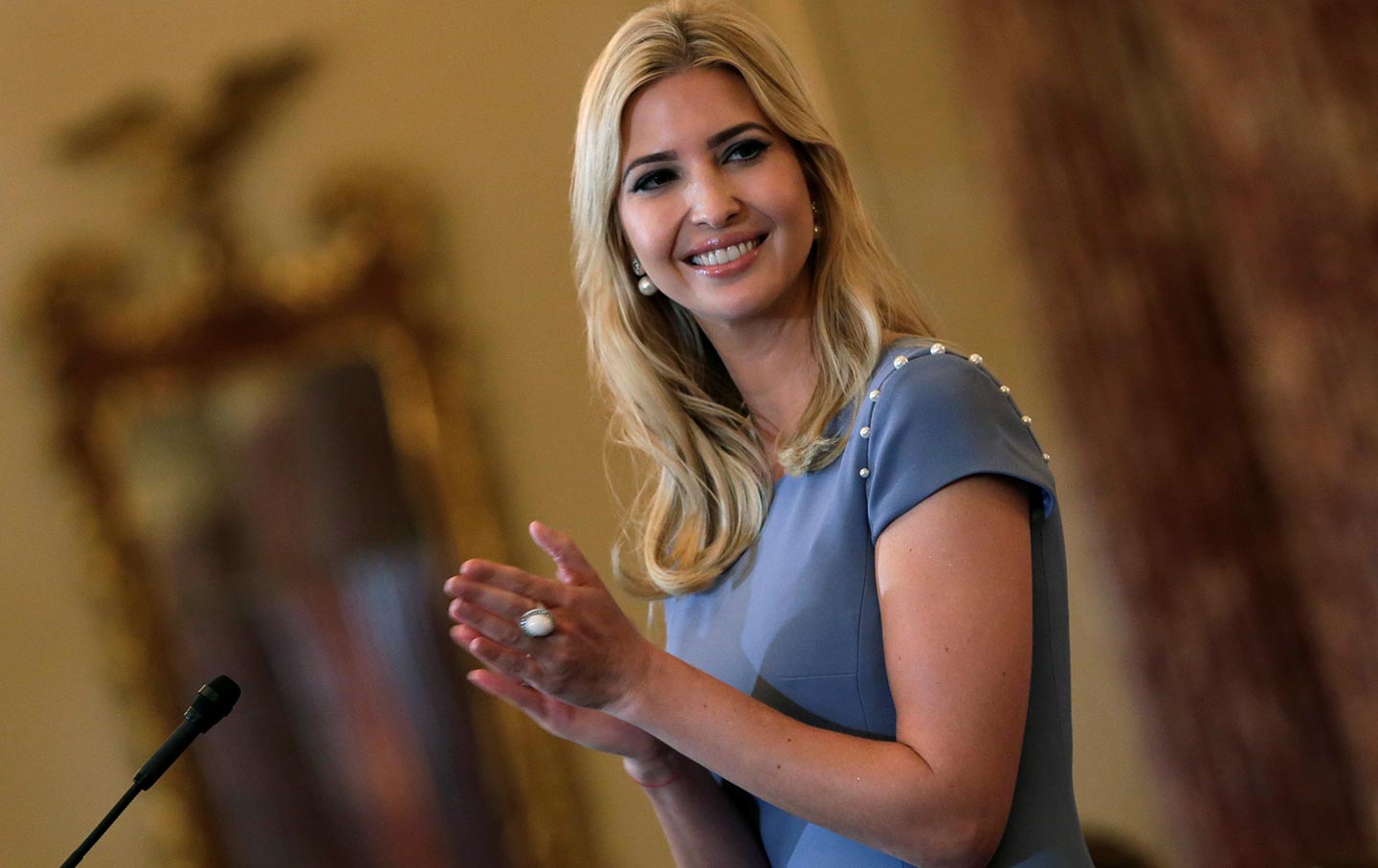
Ivanka Trump speech


You Can't Get Conservative White Women To Change Their Minds | The Nation

Undocumented student earns Rhodes scholarship

Thursday, November 22, 2018

Cindy Hyde-Smith Stumbles In Senate Debate | All In | MSNBC

Opinion | What if We’re All Coming Back? - The New York Times

NewImage


An excellent piece and particularly poignant critique of John Raws's "Theory of Justice" which was popular among advanced Jurisprudence students when I was in law school. It is fun to see how often African American scholars come independently to the exact same conclusions concerning western thought.

"I can’t say that I believe in reincarnation, but I understand why some people do. In fact, I had a bizarre experience as a teenager that made me wonder if I had known someone in a past life.

I was walking to school one day, lost in thought. I turned the corner onto a wide, tree-lined street and noticed a man on the other side heading my direction. For an instant, we held each other’s gaze and a startling wave of excitement and recognition washed over me. We spontaneously ran toward each other, as if to embrace a long-lost friend, relative or lover. But just as we were close enough to see the other’s face, we were both jolted by the awareness that we didn’t actually know each other.

We stood in the middle of the street, bewildered. I mumbled, “I’m so sorry — I thought I knew you.” Equally embarrassed, he replied: “Oh, my God, this is so strange. What’s happening right now?” We backed away awkwardly — me, a teenage black girl; he, a middle-aged white man. I never saw him again.

The incident shook me deeply. This was not a case of mistaken identity. Something profound and mysterious happened and we both knew it. Still, I’m not among the 33 percent of Americans (including 29 percent of Christians) who believe in reincarnation. Lately, though, I’ve been thinking that if more of us did believe we were coming back, it could change everything.

At first, I thought about reincarnation in the narrowest possible terms, wondering what future life I’d earn if karma proved real. It’s a worrisome thing to contemplate. It’s easier to speculate about what kind of future lives other people deserve. Maybe Bull Connor — that white supremacist Alabama politician who ordered that black schoolchildren protesting segregation be attacked with police dogs and fire hoses — has already been born again as a black child in a neighborhood lacking jobs and decent schools but filled with police officers who shoot first and ask questions later. Maybe he’s now subjected to the very forms of bigotry, terror and structural racism that he once gleefully inflicted on others.

This kind of thought experiment is obviously dangerous, since it can tempt us to imagine that people have somehow earned miserable fates and deserve to suffer. But considering future lives can also be productive, challenging us to imagine that what we do or say in this life matters and might eventually catch up with us. Would we fail to respond with care and compassion to the immigrant at the border today if we thought we might find ourselves homeless, fleeing war and poverty, in the next life? Imagining ourselves in those shoes makes it harder to say: “Well, they’re not here legally. Let’s build a wall to keep those people out.” After all, one day “those people” might be you.

Once I entered college, I found myself less interested in karma and more interested in politics. It occurred to me that if we’re born again at random, we can’t soothe ourselves with fantasies that we’ll come back as one of the precious few on the planet who live comfortably. We must face the fact that our destiny is inextricably linked to the fate of others. What kind of political, social and economic system would I want — and what would I fight for — if I knew I was coming back somewhere in the world but didn’t know where and didn’t know who I’d be?

In law school, I discovered that I wasn’t the first to ponder this type of question. In his landmark 1971 book, “A Theory of Justice,” the political philosopher John Rawls urged his audience to imagine a wild scene: A group of people gathered to design their own future society behind “a veil of ignorance.” No one knows his or her place in society, class position or social status, “nor does he know his fortune in the distribution of natural assets and abilities, his intelligence and strength and the like.” As Rawls put it, “If a man knew that he was wealthy, he might find it rational to advance the principle that various taxes for welfare measures be counted unjust; if he knew he was poor, he would most likely propose the contrary principle.” If denied basic information about one’s circumstances, Rawls predicted that important social goods, such as rights and liberties, power and opportunities, income and wealth, and conditions for self-respect would be “distributed equally unless an unequal distribution of any or all of these values is to everyone’s advantage.”

Back then, I was struck by how closely Rawls’s views mirrored my own. I now believe, however, that the veil of ignorance is quite distorted in an important respect. Rawls’s veil encourages us to imagine a scenario in which we’re equally likely to be rich or poor or born with natural talents or limitations. But the truth is, if we’re reborn in 50 years, there’s only a small chance that any of us would be rich or benefit from white privilege.

Almost half the world — more than three billion people — live on less than $2.50 per day. At least 80 percent of humanity lives on less than $10 per day. Less than 7 percent of the world’s population has a college degree. The vast majority of the earth’s population is nonwhite, and roughly half are women. Unless radical change sweeps the globe, the chances are high that any of us would come back as a nonwhite woman living on less than $2.50 per day. And given what we now know about climate change, the chances are very good that we would find ourselves suffering as a result of natural disasters — hurricanes, tsunamis, droughts and floods — and enduring water and food shortages and refugee crises.

This month, the world’s leading climate scientists released a report warning of catastrophic consequences as soon as 2040 if global warming increases at its current rate. Democratic politicians expressed alarm, yet many continue to accept campaign contributions from the fossil fuel industry that is responsible for such a large percentage of the world’s greenhouse gas emissions.

It’s nearly impossible to imagine that our elected officials would be so indifferent if they knew climate scientists were foretelling a future that they would have to live without any of the privileges they now enjoy.

Rawls was right: True morality becomes possible only when we step outside the box of our perceived self-interest and care for others as much as we care for ourselves. But rather than imagining a scenario in which we’re entirely ignorant of what the future holds, perhaps we ought to imagine that we, personally, will be born again into the world that we are creating today through our collective and individual choices.

Who among us would fail to question capitalism or to demand a political system free from corporate cash if we knew that we’d likely live our next life as a person of color, earning less than $2.50 a day, in some part of the world ravaged by climate change while private corporations earn billions building prisons, detention centers and border walls for profit?

Not I. And I’m willing to bet, neither would you. We don’t have to believe in reincarnation to fight for a world that we’d actually want to be born into.

Michelle Alexander became a New York Times columnist in 2018. She is a civil rights lawyer and advocate, legal scholar and author of “The New Jim Crow: Mass Incarceration in the Age of Colorblindness.”

Opinion | What if We’re All Coming Back? - The New York Times: