Thursday, November 02, 2017


Georgia Attorney General Won't Defend Election Officials in Lawsuit Over Wiped Electoral Server
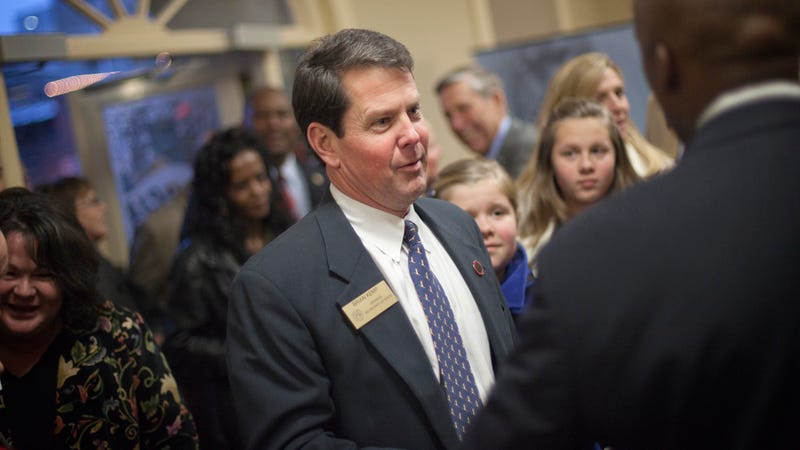
"Worried about whether U.S. elections are vulnerable to outside interference? On Wednesday, tech giants Facebook, Twitter and Google testified that their platforms were used to spread Russian misinformation and propaganda to millions of potential voters in 2016. But here’s a case that illustrates how the struggling technical systems that run elections on a local level could be just as much of a concern in the future as well.
In July, a lawsuit alleged that computer systems in Georgia containing the personal information of 6.7 million voters as well as election officials’ passwords were riddled with security vulnerabilities—and that authorities responsible for the databases failed to fix them within six months of being notified. Three days later, Georgia officials conveniently wiped the state’s election data, potentially preventing any investigation whether the server was indeed meddled with. As Slate noted, the incident could only be explained as either an “incredible act of incompetence” or a deliberate attempt to cover up the issue at the same time Republican Secretary of State Brian Kemp, Georgia’s top election official, runs for governor.
Another curious development in the case on Wednesday: According to the Associated Press, the Georgia attorney general’s office has declined to defend Kemp in the suit. Instead, Kemp and other election officials will instead be defended by a private firm, the AP wrote.
Assistant state attorney general Cristina Correia allegedly gave attorneys involved conflicting information on whether the server was wiped before or after the lawsuit was filed on July 3:
The server’s data was destroyed July 7 by technicians at the Center for Elections Systems at Kennesaw State University, which runs the state’s election system, Correia informed attorneys in the case in an Oct. 18 email. Twelve days earlier, she had informed the same group of attorneys that the data on the server was wiped on March 17, the same day it was returned to the Center for Elections Systems at Kennesaw State University by the FBI after a probe into the security incident. No one at the state attorney general’s office has explained Correia’s source for the apparently erroneous information on timing.
On July 2, one day before the lawsuit was filed, Kemp wrote an editorial in USA Today calling the allegations the server had security holes “misinformation from the media or disgruntled partisans” and “fake news.” Per Slate, Kemp later blamed the destruction of information on the server on KSU staff.
“There is no scandal or vast conspiracy,” Kemp’s campaign wrote in a statement to the AP. “This is a tasteless nothingburger cooked up by liberal activists who know their lawsuit is nothing short of stupid.”
Regardless of what’s going on, one thing that’s clear is that the alleged vulnerability of Georgia election systems is not an anomaly. In general, the U.S. election system is not very secure.
Reports earlier this year suggested the FBI is investigating numerous instances in which Russian hackers may have probed the security of voter registration, database and voting machine systems in dozens of states in the leadup to the 2016 election. There’s no evidence anything was changed, but the worry is that anyone (not just Russians) could take advantage of numerous security holes in the voting process. States are also reportedly doing a poor job of investigating the incidents or hardening their voting systems against future intrusion..."
Georgia Attorney General Won't Defend Election Officials in Lawsuit Over Wiped Electoral Server
Wednesday, November 01, 2017
Checking My Male Privilege - The New York Times

"With the recent rash of high-profile accusations of sexual harassment and assault — from Harvey Weinstein to George H. W. Bush to Mark Halperin — I found myself feeling shocked at the pervasiveness of this sort of behavior, and embarrassed that I was shocked.
After all, I know all the data.
According to the National Sexual Violence Resource Center:
• One in five women will be raped at some point in their lives.
• One in five women are sexually assaulted while in college.
• Ninety-one percent of the victims of rape and sexual assault in the U.S. are female.
• Eight percent of rapes occur while the victim is at work.
• Rape is the most underreported crime; 63 percent of sexual assaults are not reported to the police.
• More than 90 percent of sexual assault victims on college campuses do not report the assault.
• The prevalence of false reporting is between 2 percent and 10 percent.
Furthermore, a 2015 Cosmopolitan magazine survey of more than 2,234 female employees between 18 and 34 found that roughly one in three said they had been sexually harassed at work.
The survey also found that 71 percent never reported the harassment, and of the 29 percent who did report it, only 15 percent felt the report was handled fairly.
I have also raised a daughter and helped her deal with her own episodes of sexual harassment, including reporting it.
I have used this column to regularly condemn sexism, misogyny, patriarchy and toxic masculinity.
And yet, I am still shocked when I hear of another case that has real names and faces of people I know. Shocked every time!
This is not because I don’t listen to women or believe them, but rather, I think, because a personally lived experience is a far cry from a passively learned experience.
I am a man. Six-foot-two, 200 lbs. Able-bodied, and physically fit. I move through the world with the privilege of never even considering the idea of being sexually assaulted or harassed. (Men are also sexually assaulted and raped, but the scale of those occurrences is dwarfed by scale of those problems for women.)
This is one of my male privileges, and I have to check it.
More important, I must follow the advice on sexism that I proffer on racism: If you are not actively working to dismantle it, you are supporting it. It is not sufficient to simply not be a sexist yourself if you are a man. You must also recognize that you benefit from the system of sexism in ways to which you may not even be aware.
Every man must become a feminist. Every man must work as hard as every woman to elevate gender equality and to eliminate gendered violence.
And yes, I understand how hard this can be. Constant outrage is exhausting, even about your own oppression. I am a black man in America. I’m worn threadbare dealing with the oppressions that men who look like me endure, from racially skewed mass incarceration to being the targets of police violence.
I understand that all oppressions are, in some way, intersectional and connected to all other violence, that the empathic connections of ally-ship are multidirectional and reciprocal.
And yet, it remains a stubborn fact that it is hard to stay fully immersed in another person’s pain. No matter how many times you hear them talk about their struggle, and even when you feel deeply moved by their expression of it, unless you have experienced that same pain yourself, a gap remains.
This is a very human limitation, even for the egalitarian and well intentioned. Keeping someone else’s struggle and strife top of mind is hard to do.
But acknowledging this deficiency — to yourself and to others — is a healthy and helpful first step. There is no magical solution here for the infinite and permanent expansion of empathy and awareness. It is work: hard work.
We have to stop, listen and receive other people’s experiences, validate those experiences and honor the feeling with which they are expressed. And we have to center the speaker and not the listener, center the person who lacks the privilege and not the one who possesses it.
I can’t know what women experience in this country and indeed in this world — not on a gut level or an experiential level — but I can learn the facts of those experiences. I can be eager to listen. I can advocate for cultural and policy changes that would make women’s lives better. And, I can forgive myself, I believe, for being shocked and saddened when something that I deeply understand intellectually is illustrated in ways that make me deeply understand it emotionally.
When I was in college, there was a popular T-shirt that read, “It’s a black thing, you wouldn’t understand.” I never bought one because I disagreed. Others may not be able to fully know your plight as a lived experience, but they can absolutely be made to understand, particularly if they have an earnest desire to do so. That’s how allies are formed. That seems to me to also apply to all other oppressions, including sexism." By Charles Blow
.
Checking My Male Privilege - The New York Times
Driver Had Been Planning Attack in Manhattan for Weeks, Police Say - The New York Times

"The driver who sped down a crowded bike path in Lower Manhattan on Tuesday, killing eight people and injuring 11, had been planning the attack for weeks and appeared to have connections to people who were the subjects of terrorism investigations, police officials said on Wednesday.
As counterterrorism investigators drilled into whether the attacker, identified by officials as Sayfullo Saipov, had meaningful ties to terrorist organizations, it also became clear that some of those close to the attacker had feared for years that he was heading down the path of extremism.
Mr. Saipov, 29, rented a pickup truck from a Home Depot in New Jersey before driving onto a bike path, crashing into a school bus, jumping out with a pellet gun and paintball gun and shouting “Allahu akbar,” Arabic for “God is great,” the authorities said. Near the truck was a handwritten note with a few lines of Arabic indicating allegiance to the Islamic State, law enforcement officials said.
As investigators looked into Mr. Saipov’s history, they discovered that he had been on the radar of federal authorities. Law enforcement officials said Mr. Saipov, who is from Uzbekistan, had come to the federal authorities’ attention after coming into contact with an Uzbek who was under investigation by terrorism investigators in New York..."
Driver Had Been Planning Attack in Manhattan for Weeks, Police Say - The New York Times
Subscribe to:
Posts (Atom)