Contact Me By Email

Contact Me By Email

Tuesday, September 30, 2025

Why Pete Hegseth’s pitch to generals and admirals was even worse than expected


Why Pete Hegseth’s pitch to generals and admirals was even worse than expected

“Defense Secretary Pete Hegseth summoned 800 generals and admirals from around the world for a meeting in Virginia. He used the opportunity to criticize diversity initiatives, climate change, and “woke” policies, while encouraging military leaders to resign if they disagreed with his agenda. Hegseth’s speech, which included controversial remarks about war crimes and rules of engagement, was criticized as inappropriate and self-serving.

Did the secretary bring generals and admirals in from around the world so he could treat them like a CPAC audience? Actually, yes, he did.
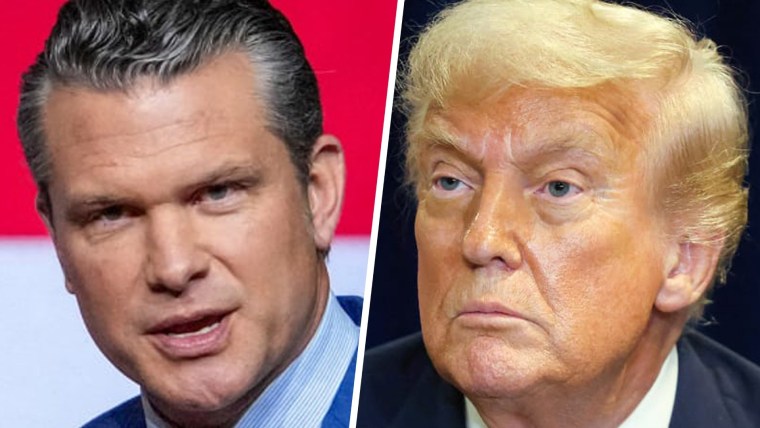
About a week ago, Defense Secretary Pete Hegseth issued an unprecedented order: The former Fox News host directed the military’s top commanders — roughly 800 generals and admirals — who are spread out around the world, to come to Virginia. The beleaguered Pentagon chief gave the flag officers little notice and didn’t explain why he was summoning them.

The White House characterized the move as routine, but reality told a very different story: MSNBC research could find no other instance in American historyin which every general and admiral, stationed around the planet, had been summoned to a joint meeting.

In the days that followed, as military leaders scrambled to make plans to travel thousands of miles on short notice, multiple news organizations reported that Hegseth didn’t have a good reason for the get-together: He simply wanted to deliver a “rally the troops” message.

I believed those reports were accurate, but part of me assumed that they must’ve been incomplete. It just seemed implausible that Hegseth, as absurd as his leadership has been, would engage in such pointless and potentially dangerous self-indulgence.

But having heard the secretary’s remarks, he proved to be even worse than expected. Reuters reported:

U.S. Defense Secretary Pete Hegseth slammed ‘fat generals’ and diversity initiatives that he said led to decades of decay in the military and told a rare gathering of commanders on Tuesday they should resign if they don’t support his agenda. ‘Foolish and reckless political leaders set the wrong compass heading and we lost our way. We became the “Woke Department,”’ Hegseth said as he kicked off the event in Quantico, Virginia. ‘But not anymore,’ he said.

Choosing the worst moment from Hegseth’s bizarre and unnecessary speech is admittedly challenging. Was it his boasts about firing qualified military leaders? Or maybe his condemnation of diversity initiatives and climate change as “s---”that the military will no longer care about?

Was it his whining about things he considers “woke”? Or maybe his defense of bullying? Or his eagerness to plug his own book? Or his apparent preoccupation with people’s weightfacial hair and appearance? Or his suggestion that only warriors are entitled to peace?

Maybe the lowest of the low points was Hegseth’s comment that seemed to open the door to a new attitude toward war crimes. “We unleash overwhelming and punishing violence on the enemy. We also don’t fight with stupid rules of engagement. We untie the hands of our warfighters to intimidate, demoralize, hunt, and kill the enemies of our country,” he declared. “No more politically correct and overbearing rules of engagement.”

In other words, Hegseth spent millions of taxpayer dollars to bring generals and admirals in from around the world so that he could treat them like a CPAC audience.

As for those in attendance who might’ve been uncomfortable with the secretary’s absurdities, he extended some advice to them, too. “If the words I’m speaking today are making your heart sink, then you should do the honorable thing and resign,” Hegseth said.“

Trump and Hegseth Recount Familiar Partisan Complaints to Top Military Leaders


Trump and Hegseth Recount Familiar Partisan Complaints to Top Military Leaders

“President Trump and Defense Secretary Pete Hegseth held a meeting with over 800 senior military officers at Marine Corps Base Quantico. The event, which included partisan rhetoric and criticism of the military, raised concerns about the politicization of the military and the disruption to military operations. Critics, including former military officials and Democratic lawmakers, condemned the gathering as a misuse of resources and a potential security risk.

The U.S. generals and admirals summoned from around the world had been given little information about the planned event.

Trump and Hegseth Gather U.S. Senior Military Officers in Virginia
More than 800 generals and admirals, under the direction of President Trump and Defense Secretary Pete Hegseth, were summoned to a military base in Virginia for an unprecedented meeting.Doug Mills/The New York Times

In the end, it was just another campaign-style presentation. President Trump and Defense Secretary Pete Hegseth recited a familiar litany of partisan culture war talking points in their highly anticipated call-up of several hundred military officers on Tuesday.

But in a rambling and sometimes incoherent speech in which he praised his own tariffs and insulted former President Joseph R. Biden Jr., Mr. Trump disclosed that he had told Mr. Hegseth to use American cities as “training grounds” for the military.

It was an evolution of one of Mr. Trump’s favorite themes — that cities run by Democrats are lawless, urban hellscapes. But now he was telling military commanders charged with waging war his thinking on where their next deployments could be.

“It seems that the ones that are run by the radical left Democrats, what they’ve done to San Francisco, Chicago, New York, Los Angeles, they’re very unsafe places,” the president told the generals and admirals at a military base in Virginia. “And we’re going to straighten them out one by one, and this is going to be a major part for some of the people in this room.”

“That’s a war too,” Mr. Trump said. “It’s a war from within.”

Mr. Trump’s comments were greeted by expressionless faces — the Pentagon’s senior military leaders had warned the officers not to react or cheer, per the norms of what is supposed to be a nonpartisan military. The result: the audience was quieter and much more still than Mr. Trump usually encounters in his stump speeches.

One senior officer said they were told to clap only when the Joint Chiefs of Staff did, like at the State of the Union address.

President Trump speaking at a podium in front of a large American flag.
President Trump said there was “a war from within” in American cities.Doug Mills/The New York Times

The news last week that Mr. Hegseth had hastily summoned hundreds of the country’s top brass to Marine Corps Base Quantico for a first-of-its-kind gathering had led to a flurry of speculation and apprehension about what he had planned. More firings? A declaration of war on Venezuela? A loyalty pledge to the president?

Instead it was more criticism of the military, which Mr. Trump and Mr. Hegseth complained had, under their predecessors, become distracted by political correctness.

Mr. Hegseth, who spoke first, told the generals and admirals that he was tightening standards for fitness and grooming, cracking down even more rigorously against “woke garbage” and rejecting the notion of “toxic” leadership.

It was unclear why, with a shutdown of the federal government looming, Mr. Trump and his defense secretary decided to gather the country’s senior military leaders from deployments in the U.S., Europe, Asia and the Pacific to tell them face to face that they were straight out of “central casting,” as Mr. Trump said.

“I’m thrilled to be here this morning to address the senior leadership of what is once again known around the world as the Department of War,” Mr. Trump said. (Though Mr. Trump has renamed the Defense Department, Congress has not yet approved the change.)

Mr. Trump praised his own policies as he looked to the future. “You’ll never see four years like we had with Biden and that group of incompetent people that ran this country that should have never been there,” Mr. Trump said, to silence in the room. “With leaders like we have right here in this beautiful room today, we will vanquish every danger and crush every threat to our freedom.”

In recent weeks, Mr. Trump has ordered National Guard soldiers to Los Angeles, Washington, Chicago and Portland, Ore., to assist immigration efforts and combat crime. Local political leaders have objected to the mobilizations, with many pointing out that violent crime rates have fallen sharply in recent years after surging during the coronavirus pandemic.

The president also directed the military to attack boats in the Caribbean that he said were carrying drugs to the United States, but he offered no detailed legal justification.

Even before the event was finished, former military officials were criticizing the president’s and Mr. Hegseth’s remarks.

“I couldn’t be prouder of our highest-ranking leaders for maintaining an apolitical face under immense pressure,” said retired Army Maj. General Paul D. Eaton, who served in the Iraq war.

He added, “Pete Hegseth spent millions to fly in all of our generals and admirals to rant about facial hair and brag about how many pull-ups he can do, and have Donald Trump sleepwalk through a list of partisan gripes.”

Senator Jack Reed of Rhode Island, the ranking Democrat of the Senate Armed Services Committee, called the gathering “an expensive, dangerous dereliction of leadership” by the Trump administration.

“While American forces confront real threats across the globe, Mr. Hegseth and President Trump chose to pull generals and admirals away from their missions to listen to hours of political grievances,” Mr. Reed, a West Point graduate and former officer in the 82nd Airborne Division, said in a statement after the speeches.

In his address, Mr. Hegseth also railed against what he called “stupid rules of engagement” that he said limited soldiers and commanders in the field. He defended his firing of more than a dozen military leaders, many of them people of color and women.

And he said that, from now on, promotions would be based on merit, which in his view, they previously were not.

“We’ve already done a lot in this area, but more changes are coming soon,” he said.

The military leaders traveled to the event from all over the world.Doug Mills/The New York Times

When Mr. Hegseth summoned the senior officers last week, he gave no reason for the meeting, which has no precedent in scope and scale in recent memory. The military leaders were told to expect a speech from the secretary heralding a so-called war-fighter culture he has championed since taking office, but they were given little other information.

The event took a new twist on Sunday when Mr. Trump said he would attend. That raised alarm among military specialists over his tendency as commander in chief to use U.S. troops as political props and visits to bases as occasions to bash political rivals, Democrats and the news media. During a speech at Fort Bragg, N.C., in June, Mr. Trump led troops to boo journalists and Mr. Biden.

The president criticized the news media on Tuesday as well, but this time there was no response from the crowd. “We have a really corrupt press,” he opined. One officer rolled his head and looked restless. “Terrible,” another senior officer said of the speech later, speaking on condition of anonymity.

The top four-star combatant commanders and Joint Chiefs of Staff typically meet at least twice a year in Washington, often holding a working dinner with the president. But the large number of lower-ranking generals and admirals at Tuesday’s meeting was highly unusual, military officials said.

In the days before the event, Democratic lawmakers and military specialists questioned the cost and disruption to daily operations caused by the meeting, as well as the security risks of concentrating so many top military commanders in one place. All, it appeared, for Mr. Hegseth to be able to lecture military leaders with decades of combat experience on an enhanced “warrior ethos” in a forum that was televised live.

“It appears to be one more demonstration of Secretary Hegseth mistakenly believing our military leadership needs to be directed to focus on fighting wars,” said Kori Schake, a former defense official in the George W. Bush administration who directs foreign and defense policy studies at the American Enterprise Institute.

Mr. Trump acknowledged the cost of the gathering as he boarded a helicopter to head to Quantico.

“These are our generals, our admirals, our leaders, and it’s a good thing, a thing like this has never been done before, because they came from all over the world,” the president said. “And there’s a little bit of expense, not much, but there’s a little expense for that. We don’t like to waste it. We’d rather spend it on bullets and rockets.”

Helene Cooper is a Pentagon correspondent for The Times. She was previously an editor, diplomatic correspondent and White House correspondent.

Eric Schmitt is a national security correspondent for The Times. He has reported on U.S. military affairs and counterterrorism for more than three decades.

Shawn McCreesh is a White House reporter for The Times covering the Trump administration.”

Republican HUMILIATED After Challenging Jasmine Crockett in Education Debate

Trump, 79, Forgets His Own Inauguration Year in Senior Moment

Trump, 79, Forgets His Own Inauguration Year in Senior Moment

"The septuagenarian suffered yet another moment of memory lapse, fueling speculations on his ability to serve.

President Donald Trump incorrectly remembered when his first presidential term began. 

The 79-year-old Commander in Chief could not recall details from his own resume during a joint White House press conference with Israeli Prime Minister Benjamin Netanyahu on Monday. 

U.S. President Donald Trump and Israeli Prime Minister Benjamin Netanyahu react during a joint press conference in the State Dining Room at the White House in Washington, D.C., U.S., September 29, 2025.  TPX IMAGES OF THE DAY
President Trump fueled additional rumors about his physical and cognitive abilities after he incorrectly asserted his first term began in 2016 during a joint press conference with Israeli Prime Minister Benjamin Netanyahu. Jonathan Ernst/REUTERS/Jonathan Ernst 

Trump made the error while discussing his past conversations with global leaders who supported his newly-unveiled plans for ending the Gaza War and achieving “peace in the Middle East.” 

“These are people I’ve gotten to know over the years,” Trump began. “It started around 2015, and then went into 2016 when the presidency began—officially began—but I’ve known him actually, for a long time.”

However, Trump was inaugurated into the White House on January 20, 2017 for his first presidential term. In his second term, Trump became the oldest person to ever be inaugurated as president at 78 years and seven months old in January earlier this year. 

This is not the first time Trump has displayed alarming signs of cognitive decline, prompting critics to question whether the president is fit to serve in the nation’s highest office. 

Just two days prior, the president appeared to forget the “paper tiger” insult he hurled towards Russia over the war in Ukraine. Trump also could not recall which wars he solved nor could he properly pronounce the names of drugs he claimed cause autism. 

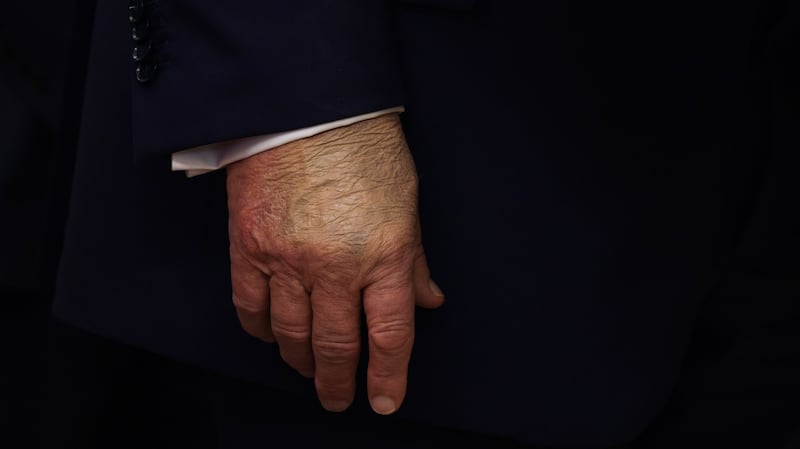
WASHINGTON, DC - SEPTEMBER 02: A detailed view of the hand of U.S. President Donald Trump as he speaks in the Oval Office at the White House on September 2, 2025 in Washington, DC. Following days of speculation about his health from users on social media, President Trump made his first public appearance in a week to announce the moving of Space Command headquarters from Colorado to Alabama.
Trump has made multiple public appearances with makeup on his bruised hands. Alex Wong/Alex Wong/Getty Images 

Trump has also publicly and frequently engaged in incoherent rambles; top rhetoric experts have claimed his ramblings are a sign of cognitive decline, while at least one psychologist is certain the president is ill with dementia. 

The president’s physical appearance has only fueled speculation around his health. Trump is frequently seen with hand makeup to cover bruises, which the White House previously said was due to “frequent handshaking and the use of aspirin, which is taken as part of a standard cardiovascular prevention regime.” 

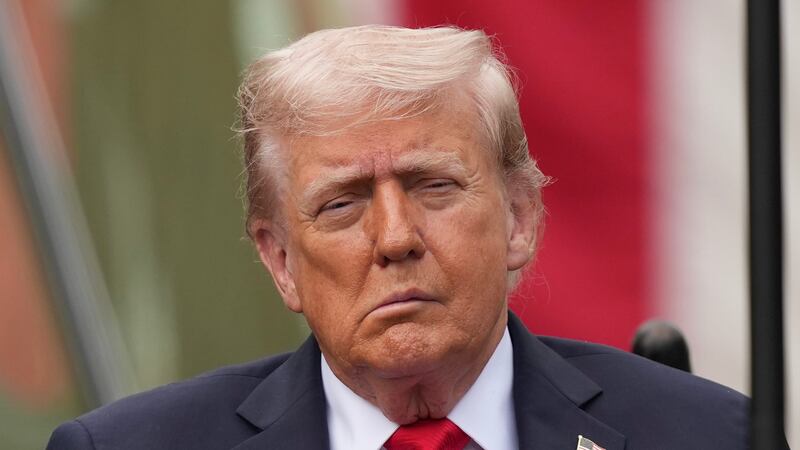
In addition, Trump’s “droopy face” at the 9/11 Memorial also fueled internet speculation, with many believing the president suffered a stroke. 

ARLINGTON, VIRGINIA - SEPTEMBER 11: U.S. President Donald Trump attends a September 11th observance event in the courtyard of the Pentagon September 11, 2025 in Arlington, Virginia. Today marks the 24th anniversary of the 9/11 terror attacks that claimed the lives of nearly 3,000 people.
The president's droopy face raised alarms on the leader's health condition. Andrew Harnik/Andrew Harnik/Getty Images 

The White House shared in July that the president was diagnosed with chronic venous insufficiency, a common condition where leg veins become damaged or weak, preventing the body’s ability to flow the blood back to the heart. Since then, Trump has frequently been seen with cankles, which the White House has previously attempted to hide. 

The Daily Beast has contacted the White House for additional details regarding the matter."


Trump, 79, Forgets His Own Inauguration Year in Senior Moment

Here’s How a Government Shutdown Works - The New York Times

Here’s How a Government Shutdown Works

"Federal funding will lapse this week if Congress does not act. Areas across the government will be affected.

Congress — the only entity that can bring a shutdown to an end — does not go dark. But congressional staffers are subject to the same furloughs as other federal workers.Alex Kent for The New York Times

As the country hurtles toward a shutdown this week, offices across the federal government are scrambling to finalize their contingency plans, knowing that many — but not all — operations will have to go dark.

A shutdown occurs when Congress cannot reach a deal to continue government funding by the time current funding lapses. One would begin at 12:01 a.m. Wednesday if Democrats and Republicans cannot come to an agreement.

In some parts of the federal government, there is an immediate impact. But not every federally funded initiative is at the mercy of Congress’s budgeting standoffs, and even some that are may be able to rely on cash reserves to get through a brief shutdown.

But if the two sides dig in, the consequences could be significant and lasting. Here is what to know.

What shuts down? What doesn’t?

The effects of a shutdown tend to unfold in stages. Some of the most visible expected closures are museums and monuments. Those planning a trip to a national park or the National Mall may find themselves greeted by locked doors and no entry signs if the shutdown lasts more than a few days. And federal workers will see their paychecks stop for the duration of a shutdown — even if they have to stay on the job.

Department to department, the impacts vary. The Postal Service, which is self-funded, and Social Security and Medicare benefits, which are considered “mandatory” spending, should keep on going. While most federal workers are likely to be furloughed, those designated as “excepted,” such as active-duty troops, air traffic controllers and federal law enforcement officers, stay on the job, even though they cannot be paid for that work until after the shutdown is over. 

Here is a fuller view of how a shutdown would affect different agencies.

Congress — the only entity that can bring a shutdown to an end — does not go dark. But congressional staffers are subject to the same furloughs as other federal workers.

Who decides what workers are ‘excepted’? Do essential employees have to work without pay?

It is up to every department, agency and congressional office to make contingency plans for a shutdown, including who stays on and who goes home. Whether they work or not, employees at federal agencies affected by a shutdown are not paid until the government opens again.

While much is left to the discretion of managers, designating “essential” workers ensures that even in the case of a federal shutdown, the government can continue to preserve public safety. That is why active-duty military members are traditionally required to keep working, as are officials at the F.B.I., Customs and Border Protection, Immigration and Customs Enforcement, the Drug Enforcement Administration and the Secret Service, among others. It is also why air traffic controllers and Transportation Security Administration officers traditionally must work, albeit without pay.

In the past, Congress had to approve back pay to make furloughed and excepted workers whole. But after the last shutdown — a 35-day ordeal that began in December 2018 — Congress passed a law to make back pay for federal employees automatic once the government opens.

How long will it last? 

It depends on how bitterly opposed the two parties are — and how willing each side is to dig in for the long haul. For now, the impasse has centered on health care, as Democrats demand that Republicans agree to extend Affordable Care Act subsidies that are set to expire at the end of the year. They are also looking to reverse cuts to Medicaid and other health programs in President Trump’s tax and domestic policy law.

Republicans control both houses of Congress, but they need at least seven more Senate votes to bypass procedural hurdles and reopen the government if all members of their party hang together. In March, they managed to avoid a shutdown, but the political blowback against Democrats who broke rank was severe, motivating the party to stand firmer this time. 

Still, as constituents begin to lose pay and access to federal services, the cost-benefit analysis of a shutdown for each senator may start to shift. In early 2019, slowdowns at airports — fueled in part by air traffic controllers and T.S.A. agents calling in sick — helped to bring an end to the longest shutdown on record.

What happens with the courts?

The federal courts are a bit of a hybrid: They are subject to federal appropriations, but they also collect fees, and historically have been able to tap into reserves to continue services. But some district courts are already facing funding shortfalls, and it is unclear how long each jurisdiction would be able to operate before cases are delayed.

According to the Administrative Office of the U.S. Courts, the federal judiciary expects to continue full operations through Oct. 3. But if the shutdown goes longer, courts may have to limit their work to “activities needed to support the exercise of the judiciary’s constitutional functions and to address emergency circumstances,” according to a spokesman for the administrative office. 

The salaries of federal judges and Supreme Court justices are considered mandatory spending, but furloughs are expected to affect court staff members. 

A shutdown-induced slowdown in the federal courts is particularly significant in the current climate, as the judiciary has been the main forum for mounting challenges to Trump administration policies. Immigrants facing deportation, laid off federal workers and holders of terminated federal contracts have turned to the federal courts for relief, adding volume and urgency to what were already robust dockets. 

It is also unclear how furloughs at the Justice Department, whose litigators argue on behalf of the government, could affect the timing of certain cases. Jurors in federal cases would not be paid during a shutdown, though they would receive back pay when the government reopens.

What about government contracts?

Contractors — including the companies, nonprofits and service providers who rely on federal funding — are also facing a hybrid situation. Their funding is at the mercy of the federal government reopening, and they are not covered by the 2019 law guaranteeing back pay. But depending on the disbursement schedule of the federal government’s payments to them, they may be able to get through a short shutdown relatively unscathed.

The federal government does not have the ability to claw back funds that have already been disbursed to contractors, so programs and positions that have been fully funded before a shutdown would be in the best position to ride out the budgetary storm. 

Contractors more closely tethered to the incremental operations of the federal government — with pay or work space — would be more directly affected. Contractors performing public safety and national security functions for the federal government may also be required to work without pay.

How does this all end, and what are the long-term impacts? 

Congress has to pass an appropriations bill to end a shutdown. But that means Republicans and Democrats have to compromise. The blame game has started even before the shutdown does, as each side attempts to spin the negative effects as the other party’s fault, and their own refusal to bend as a principled fight.

How long this could go on is anybody’s guess. Shutdowns were once common: During Jimmy Carter’s presidency, shutdowns lasting a week or two occurred almost annually. When President Ronald Reagan was in office, near-annual shutdowns lasted just a day or so. But they have become rarer in recent decades. The last one, which began just before Christmas in 2018 and ended in late January 2019, set a record of 34 full days.

But the end of a shutdown may not mark a return to normalcy. Mr. Trump has threatened layoffs if the government shuts down, potentially making some staffing reductions permanent. 

Eileen Sullivan and Mattathias Schwartz contributed reporting.

Karoun Demirjian is a breaking news reporter for The Times."

Here’s How a Government Shutdown Works - The New York Times

Government Shutdown Appears Imminent After Trump Meets With Democrats - The New York Times

Trump’s Meeting With Democrats Yields No Progress, With Shutdown a Day Away

"President Trump met with Republican and Democratic leaders at the White House, but they emerged without a deal, as Democrats seek more health care funding.

Hakeem Jeffries, the House minority leader, and Chuck Schumer, the Senate minority leader, outside the West Wing of the White House after meeting with President Trump on Monday. Doug Mills/The New York Times

President Trump and top Democrats failed to strike an agreement during a private meeting on Monday, with Senator Chuck Schumer pointing to “large differences” on health care and Vice President JD Vance saying that the government was probably “headed to a shutdown.”

Republican and Democratic leaders emerged from the White House blaming the other side for the stalemate as Congress faces a Tuesday deadline to fund the government.

The ramifications of a government shutdown could be immense for the federal work force and Americans relying on an array of government services, with Trump officials signaling they plan to conduct mass firings if the government shuts down. In a letter to federal agencies, the White House Office of Management and Budget said agencies should “use this opportunity to consider reduction in force.”

“I think we’re headed into a shutdown because Democrats won’t do the right thing,” Mr. Vance told reporters. “I hope they change their mind.”

Mr. Schumer, the minority leader, said “very large differences” remained on health care.

“The American people are hurting in their health care,” Mr. Schumer said. “We’re seeing people not being able to get the health care they need, and the American people are crying out for some help. It is our job as legislative leaders to try and solve this problem.”

Mr. Trump’s meeting with Mr. Schumer; Senator John Thune of South Dakota, the majority leader; Speaker Mike Johnson; and Representative Hakeem Jeffries, the House minority leader, came less than 32 hours before the government was slated to shut down, at 12:01 a.m. Wednesday. It marked the first time Mr. Trump hosted the Democratic leaders at the White House in his second term.

Democratic leaders characterized the private meeting at the White House as candid and frank, but said they left without being any closer to a breakthrough.

On Monday evening, Mr. Trump seemed to make that possibility more remote. He shared an A.I.-generated video on Truth Social, mocking Mr. Schumer, Mr. Jeffries and the Democratic Party by fabricating Mr. Schumer’s voice at a news conference on Monday afternoon. The video falsely accuses Democrats of trying to give free health care to undocumented immigrants to gain their support. In the video, Mr. Jeffries, who is Black, is pictured with a fake mustache and wearing a sombrero.

Because Republicans have only a narrow majority in the Senate, passing a government spending bill that can win the necessary 60 votes depends on attracting the support of several Democrats. They have said they will not lend their votes to funding legislation unless Republicans agree to add about $1 trillion in health care spending. Democratic lawmakers hope to extend Obamacare subsidies that are set to expire at the end of the year and reverse the cuts to Medicaid and other health care programs enacted in the marquee tax legislation passed earlier this year.

Senator John Thune, the majority leader, holding a short-term funding bill to keep the government open, outside the West Wing of the White House on Monday.Doug Mills/The New York Times

Democrats warned that up to 15 million people could lose their health coverage and 24 million could see their premiums go up by 75 percent.

Republicans have so far refused to agree to any concessions.

Mr. Schumer said he and Mr. Jeffries “laid out to the president some of the consequences of what’s happening in health care, and by his face, he looked like he heard about them for the first time.”

Before the meeting, Democrats had expressed some optimism about the possibility of a bipartisan compromise. But as they left the White House, Mr. Jeffries told reporters that “we are not going to support a partisan Republican spending bill.”

Democrats are also demanding that Republicans release federal funding that lawmakers previously approved that the White House has since unilaterally sought to cancel. “We made the point clear, that how could we negotiate a bipartisan agreement and then have the president unilaterally” undo it all, Mr. Schumer said.

For their part, Republicans repeatedly chided Democrats as being too unyielding, with Mr. Thune accusing them of “hostage taking.” Mr. Vance and the other Republican leaders repeated that they would be willing to work with Democrats on health care spending, but that they wanted to pass the seven-week funding extension first.

Republican leaders have said they will force another vote on Tuesday in the Senate on the House-passed legislation to keep funds flowing at current levels, effectively daring Democrats hours before the shutdown deadline to block it.

“If the Democrats make the decision to shut the government down, the consequences are on them,” Mr. Johnson told reporters after the meeting. “And I think it’s absolutely tragic.”

Tyler Pager is a White House correspondent for The Times, covering President Trump and his administration.

Catie Edmondson covers Congress for The Times.

Michael Gold covers Congress for The Times, with a focus on immigration policy and congressional oversight."

Government Shutdown Appears Imminent After Trump Meets With Democrats - The New York Times

Monday, September 29, 2025

Trump gets BEATEN TO A PULP as Newsom DELIVERS THE KARMA

Netanyahu: Last Week Tonight with John Oliver (HBO)

To Treat Prostate Cancer, There Are More Options Than Ever - The New York Times

To Treat Prostate Cancer, There Are More Options Than Ever

"It’s among the most common cancers affecting older men. But a diagnosis today isn’t always what it seems.

An illustration of multiple doctors' hands identifying different cancer cells within tissue.
Eiko Ojala

An estimated one in eight men will be diagnosed with prostate cancer in their lifetime, often after 65. And as terrifying as that number is, a diagnosis isn’t always quite what it seems. Today, the vast majority of patients will survive the disease — and a growing number of men are living out their lives without ever undergoing treatment.

Since the late 1980s, doctors have been able to detect most prostate cancers using a simple and inexpensive blood test, called P.S.A., that identifies proteins called prostate-specific antigens. The test revolutionized how prostate cancer is diagnosed, allowing doctors to spot it when it is most treatable. By 2021, nearly 98 percent of prostate cancer patients were still alive at least five years after diagnosis.

Traditional treatments for prostate cancer, including radiation therapy and a surgery to remove the entire gland — have long been effective but often come with life-altering costs.

Today, however, new technologies and treatment methods are expanding men’s options. Here’s what you should know about your choices for prostate cancer care.

Surgery and Radiation

For patients with large, fast-growing tumors that have not yet spread beyond the prostate, surgery and radiation remain the best frontline treatments — and both are effective at eradicating the disease.

What these patients choose, then, is “not so much the efficacy of the treatment, but the side effects they are prepared to put up with,” said Dr. Freddie Hamdy, the head of the department of surgical sciences at the University of Oxford.

Most men who have a prostatectomy experience some degree of erectile dysfunctionand urinary incontinence, particularly in the immediate aftermath of surgery. (New surgical techniques, however, are helping minimize this.) Men who undergo radiation are somewhat less likely to experience erectile or urinary issues, but slightly more likely to develop bowel problems or other types of cancer.

Younger men, and those without other significant health problems, can recover more easily from a prostatectomy — while older men, or those with certain conditions, like heart disease, may not be suitable candidates.

Active Monitoring

Until about 15 years ago, most men diagnosed with prostate cancer — no matter how aggressive — underwent surgery or radiation. But that’s changed. Research has shownthat patients often have similar survival rates with “active monitoring,” where doctors delay treatment and regularly check on slow-growing tumors.

The findings have been “quite a surprise” to many experts, Dr. Hamdy said, the lead researcher on the study. Many men with low-risk cancers — who make up about 43 percent of new diagnoses — can go the rest of their lives without experiencing harm to their health from their tumors, he added.

As a result, today nearly 60 percent of patients with low-risk cancers choose active monitoring instead of treatment — up from 26 percent in 2014. Some experts believe that number should be higher.

Dr. Hamdy said a lot of patients struggle with the idea of “living with cancer for the rest of their lives,” even if it’s low risk. But treatment has risks too, and one 2023 review found nearly 20 percent of men regretted their prostatectomy because of the side effects.

“If I take your prostate out, or you get radiation, I can guarantee that you will have side effects from your treatment,” said Dr. Kristen Scarpato, director of the urology residency program at Vanderbilt University. “But I can’t guarantee that I’m benefiting your life expectancy.”

Focal Therapy

While surgery and radiation therapy focus on the entire prostate, focal therapy is any treatment that targets the part of the gland with cancerous cells, while sparing the rest. Urologists use a variety of techniques, like high-intensity ultrasound waves, cryotherapy (freezing the tumor) and laser treatment.

Focal therapies have shown promise in early trials, Dr. Scarpato said — though she added it’s still considered experimental and lacks data demonstrating its effectiveness. (Several randomized controlled trials are currently underway.)

Dr. Scarpato — who specializes in focal therapy — said it often had fewer side effects than traditional treatments, but cautioned that it wasn’t right for everyone. The “ideal candidate” for focal therapy, she said, would be a man with intermediate-risk tumors confined to a single area clearly identifiable on an M.R.I. scan.

Unlike surgery and radiation, focal therapy often doesn’t remove a patient’s cancer completely, so it does have a higher chance of returning.

Advanced Imaging

Not long ago, P.S.A. tests typically led directly to a biopsy, in which urologists took random samples from across the prostate. This method, however, often risked missing high-risk tumors or flagging lower-risk ones — potentially leading to unnecessary treatment.

An advanced imaging tool, known as a multiparametric M.R.I., has been “transformative” for the field over the last decade, Dr. Scarpato said. Though not yet universally available, the scan helps experts focus on clues associated with aggressive tumors, like certain tissue abnormalities or a lack of blood flow. The American Urological Association recently changed its guidelines to recommend this scan, where available.

Hormone Therapy

A type of hormone therapy, called androgenable deprivation, helps reduce the likelihood that a cancer will reoccur or spread to other parts of the body.

However, the therapy is “really challenging for patients,” Dr. Scarpato said, since it causes testosterone levels to plummet. “When you take away a man’s testosterone, even temporarily, the quality of life implications are really significant,” she added. Low testosterone can lead to depleted energy, sexual dysfunction, brain fog, muscle loss and fat gain, among other issues.

New A.I. tools are helping experts predict which men have the most aggressive forms of the disease, and thus most likely to benefit from hormone therapy and who may be able to avoid it.

The goal today with hormone therapy, as in prostate care more generally, is to spare patients from debilitating side effects, Dr. Hamdy said. And to “target treatments to the patients who need it.”

David Dodge is a freelance writer focusing on health, wellness and L.G.B.T.Q. issues."


To Treat Prostate Cancer, There Are More Options Than Ever - The New York Times