Sunday, March 01, 2026


Who benefits from Trump’s war in Iran? The answer is disturbingly clear
Who benefits from Trump’s war in Iran? The answer is disturbingly clear
"There's no four-dimensional chess here. There's just the president, and what we know he's like.
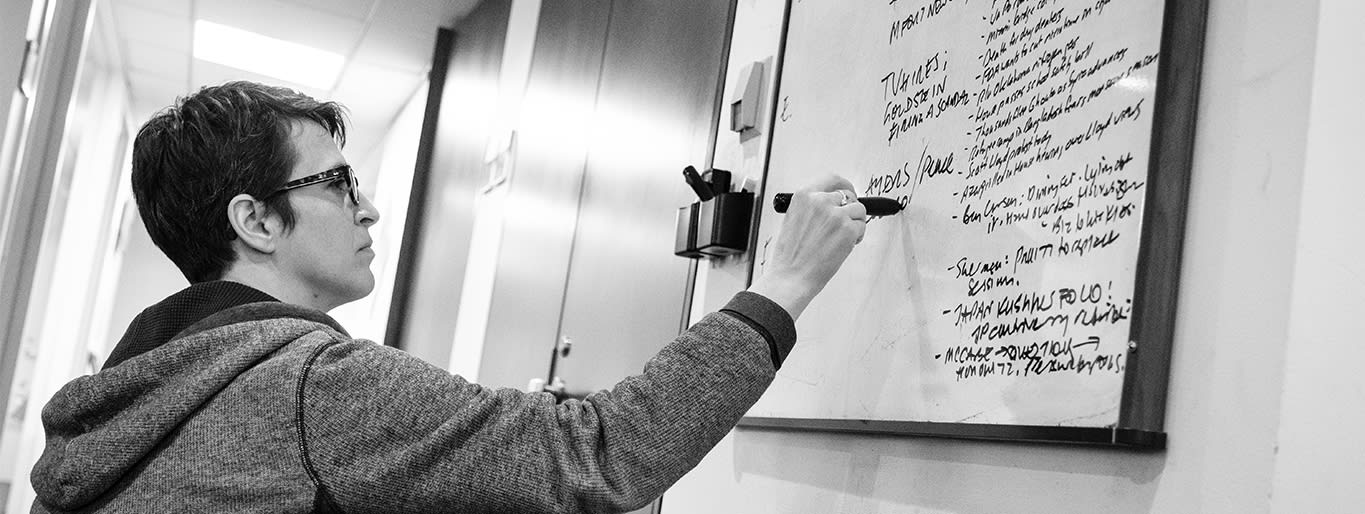
This is an adapted excerpt from MS Now’s Feb. 28 special coverage.
Early Saturday morning, the United States started a war with Iran for some reason. Your guess is as good as anyone’s as to why the president of the United States did this.
In terms of pure rational deduction about what he’s doing here, we can rule out all the reasons he has said he is doing it.
Is Iran on the precipice of having ballistic missiles that can reach the United States? Absolutely not. The United States is very far from Iran. One might even say it’s a whole continent away, which means a missile launched from there to hit us here would have to be an intercontinental ballistic missile.
Does Iran have intercontinental ballistic missiles? No, it does not. And there is no known evidence, or even serious allegation, that it’s anywhere near developing one anytime soon. Even Secretary of State Marco Rubio has recently admitted that the threat is only that maybe one day Iran might have that kind of capability. One day. Just like you or I might one day learn to fly! Or to time travel!
This isn’t Venezuela. There’s no vice ayatollah who’s going to step in to take over the top job.
Is Iran a week away from industrial-grade uranium enrichment? That’s what the president’s diminutive real estate friend, Steve Witkoff, asserted this week when asked about the Iran talks he’s inexplicably part of on behalf of the United States, despite his only relevant experience and training being that he is an old real estate friend of the president. But no, Iran is not. Not only has there been no American or international evidence or intelligence made public that Iran is doing that, but even the Trump administration says it’s not happening. Rubio, at a press conference in Saint Kitts and Nevis on Wednesday, told reporters, “They’re not enriching right now.”
Have we just started a war with Iran because they’ve got some advanced nuclear program that’s rushing toward a bomb? Ask President Donald Trump, who insists that the last time he ordered the bombing of Iran, it “totally obliterated” the country’s nuclear program. So it’s hard to say that anything “totally obliterated” — gone, pulverized, erased from the Earth — is now suddenly there again, and so a war must start.
So it’s not that they’re gonna get us with ballistic missiles. It’s not that they’re enriching uranium, and we don’t like that. It’s not their nuclear program, which Trump says he obliterated.
The president has said a couple of times in recent days that he just wants the Iranian government to say the words that they’re not pursuing a nuclear bomb. The Iranian government, actually, has said that over and over again; they’ll say it whenever you like. So that does not appear to be the reason either.
So why has the president just started a war with Iran?
Is it because his heart bleeds, empathetically, on a human level, for the protesters in Iran who have been killed by their own government in January and February? Is it because Trump really feels for those people, and that his heart throbs with a passionate support for the right of free speech, the right of people everywhere to protest against their own government, and not face violence because of it? Is that what you think? If so, good morning, hope you’ve slept well for this past decade in which you’ve been dead to the world.
But suspend disbelief for a moment.
Just suppose that the reason the United States of America has just started a war with Iran is because — as the president said in his weird prerecorded video message early Saturday morning — he wants the people of Iran to rise up and overthrow their government.
And maybe they will. Maybe they will try?
But Iran is a huge country. It’s 92 million people. It’s more than triple the population of Iraq or Afghanistan when we started disastrous regime change wars with those countries two decades ago.
Iran has regular military forces, but it also has a huge Revolutionary Guard force that has, effectively, its own army, navy, intelligence service and special forces. It plays a huge role in the massive, suffocating domestic security services that are happy to terrorize the Iranian people in the best of times, and to massacre the Iranian people in the worst times. They have massive economic interests. They have a huge hold on multiple sectors of the Iranian economy. And, to state the obvious, they are not the kind of force that’s going to go poof when Trump’s airstrikes manage to kill Iran’s supreme leader, Ayatollah Ali Khamenei. Iranian state media reported Sunday morning local time that the supreme leader has been killed.
But this isn’t Venezuela. There’s no vice ayatollah who’s going to step in to take over the top job.
If you voted for Donald Trump because you believed the hype that he was “America first,” that he was against foreign wars, that he was definitely against regime change wars… well, again, good morning, hope you slept well. But the president, in this case, says explicitly that this is a war we’re waging for regime change.
After the now-slain leader, Khamenei, who’s been in place since 1989, there’s no other person of that stature to just pop in place and say it’s done. And so if you really did want the Iranian people themselves to rise up in some kind of popular uprising and totally change their form of government — to organize very quickly into a new populist political force to rise up against, among other things, the security services there that have been massacring them by the thousands — you probably would have taken some steps to make sure they can organize and communicate.
When you, Donald Trump, in your baseball hat, proclaimed on that weird taped message early Saturday morning that the police and the security forces and the Revolutionary Guard must surrender and lay down their weapons, you might have given them some instructions or some way to do that, which Trump did not.
You might have taken steps to turn the internet back on in Iran so the people there could reach each other and the world, and so the world could reach them too.
You might not have gutted the crucial Farsi-language Voice of America communications platform and put it in the hands of a soft-focus election-denier local news anchor most famous for proclaiming the fraudulence of American elections.
If this is a regime change war that Trump is seriously hoping the Iranian people will complete for him, there has been no serious or even unserious effort by the United States to make it possible for any uprising by the Iranian people to succeed.
And so why is this happening?
Well, cui bono? — who benefits?
It’s always useful to start with that question. In any country.
Who wants Iran bombed off the map, for their own reasons? Who are their rivals and enemies? Perennially, the Gulf Arab states, countries like Saudi Arabia, the United Arab Emirates and Qatar.
You know, Qatar. The country that just gave Donald Trump a really, really nice $400-milion-dollar plane, a gilded flying palace for his own use both during his presidency and after?
And you remember the United Arab Emirates, structuring a recent, totally pointless crypto financial transaction so that $2 billion of it was stuffed into the Trump family’s otherwise worthless brand new crypto financial firm?
With this president, sadly, we keep learning over and over again that the easiest answer is the truest one.
And you remember the Saudis who stuffed $2 billion into the pockets of Trump’s son-in-law, Jared Kushner, just as Trump’s first term in office came to a close? Enough people were alarmed about that they actually bothered to come up with an excuse for what made it OK. They said, don’t worry, Jared will never again work for the U.S. government; he’s never coming back to Washington, so we’ll never have to worry about having someone involved in U.S. policy who has also been given billions of dollars by Saudi Arabia.
Well, who was leading the negotiations on behalf of the United States with Iran before we just started this war with them? I mean, Secretary of State Marco Rubio was in Saint Kitts and Nevis. It wasn’t him. It was Jared Kushner, who was recently paid billions of dollars by Iran’s chief rival, sitting alongside Trump’s tiny real estate friend, Steve Witkoff, whose son recently sought to improve his family fortunes by going to Qatar to seek money from its sovereign wealth fund.
So it’s like if you were having a backyard dispute with your neighbor: “Hey, your new fence crosses into my property line; hey, that tree you just cut down was mine!” You’re having a neighborly dispute, and then the cops show up. And the cops break down your door with a battering ram, they arrest your whole family, ransack your house, and then bulldoze it. They tell your neighbor, “Hey, it’s done, you can take his whole back yard, you can take his house now.”
And as you’re trying to figure out why this has just happened, you come to learn that your neighbor has been paying huge bribes to the police in your town.
There’s lots of attention on Israel, and indeed Israel and the U.S. worked together in the bombing campaign against Iran in June, and again in this new war that started Saturday. But it is the Gulf Arab states who are all against Iran, who want Iran removed as their regional rival. It’s those countries that have been assiduously buying up members of the Trump family and the Trump administration with just astonishing amounts of cash in recent years, and particularly in recent months.
And now for that low, low price, they appear to have rented the services of the United States military to start a war that they want, but that the American people do not, and that our American government hasn’t bothered to explain in terms that are even internally consistent, let alone rational and sound.
Why did Donald Trump just start a war with Iran? You tell me.
The New York Times editorial board wrote Saturday that in this second term, Trump’s “appetite for military intervention grows with the eating.”
It’s not that they have ballistic missiles that can reach us. It’s not that they have achieved some kind of breakthrough in nuclear enrichment. It’s not that they have or are about to have a nuclear bomb. It’s not about somehow supporting the Iranian people — or we’d be actually supporting the Iranian people.
Maybe it’s for oil, as the president daydreams himself into another 19th-century war fantasy of conquering foreign lands he doesn’t care about but would like to rob of their natural resources. Maybe he thinks Iran and its proud 92 million people will happily and easily become a new colony in an empire helmed by an American emperor.
Maybe.
But as this now becomes the seventh country he’s bombed since being back in office for one year, cui bono? — who benefits? — seems like a disturbingly easy question to answer.
With this president, sadly, we keep learning over and over again that the easiest answer is the truest one. There’s no four-dimensional chess here. There’s just him, and what we know he’s like.
This president appears to have grown his enormous and excited new appetite for military intervention during this term in office just because he thinks war is easy and exciting.
It earns him not only close attention but even occasionally plaudits from Very Serious People who are professionally inclined to believe that there’s some rationale, some strategery, some good thinking behind the start of every war.
It gets him a ton of attention. He gets to do it unilaterally — naturally, there’s no question that he would seek a declaration of war from Congress or even an authorization for the use of military force. It’s something he gets to do on his own say so in a baseball hat from home. It’s exciting, it’s controversial, it’s all about him, and — not for nothing — it’s the world’s greatest change of subject.
The airstrikes were launched on Saturday, a weekday and a school day in Iran. The internet’s off there. The government hasn’t advised its own people what to do, as American airstrikes hit multiple cities.
Donald Trump, as a private citizen, repeatedly said — in 2011, in 2012 and in 2013 — that then-President Barack Obama was about to start a war with Iran in order to help his political prospects, in order to get re-elected.
Trump was wrong about that. Obama didn’t start a war with Iran. But we know why Trump thought Obama should do it. He said so. He said it would get Obama re-elected. We know what Trump thought would be the salutary domestic political effect of a U.S. president starting a war with Iran.
And now, facing domestic political disaster in this year’s elections, he’s done it himself."
Anthropic was right not to trust Pete Hegseth
Anthropic was right not to trust Pete Hegseth
"A battle of wills between Anthropic and Defense Secretary Pete Hegseth concluded Friday with the artificial intelligence company effectively banned from all federal government systems. It was something of a deus ex machina, courtesy of President Donald Trump, to a moral standoff over how the Pentagon could use Anthropic model, Claude. Hegseth’s hardline stance — and Trump’s dudgeon over being challenged — showcase how right CEO Dario Amodei was to try to put (some) limits on the way his company’s technology was deployed.
Anthropic first won a major $200 million contract with the Defense Department last year, granting access to the company’s AI models and allowing them to be deployed on work involving classified material. But Anthropic, which was founded over concerns about the lack of safeguards at other AI startups like OpenAI, is one of the few companies in the AI space calling for more federal regulation over the emerging technology. It’s telling then that OpenAI swooped in soon after Anthropic’s unceremonious dumping to fill the vacuum, despite pledging to (somehow) prevent the Pentagon from abusing its technology.
Amodei soon found himself defending his company from claims that it is building “woke AI,” as White House AI czar David Sacks put it last year, and at odds with an executive order demanding that AI models used by the federal government be “free from ideological bias.” But the tensions between the Pentagon and Anthropic really exploded after Amodei published an essay in January listing his concerns about how AI could be used by governments:
‘There need to be limits to what we allow our governments to do with AI, so that they don’t seize power or repress their own people. The formulation I have come up with is that we should use AI for national defense in all ways except those which would make us more like our autocratic adversaries.’
In brief, Amodei named two major redlines for Claude’s use: conducting mass surveillance domestically and developing autonomous weapons — or weapons that don’t need a human to operate them. The Pentagon says it doesn’t intend to do either of those things — but also won’t let someone else say that it can’t. Defense officials have said that Anthropic must instead accept that its services can be used “for all lawful purposes” regardless of what the terms and conditions of its contract say. Hegseth likewise said last month at SpaceX headquarters that the Pentagon will not “employ AI models that won’t allow you to fight wars.”
The extremely heated rhetoric from the Pentagon toward Anthropic over the past week was well outside the norm. Hegseth warned Amodei in a meeting Tuesday that without granting carte blanche access to Claude, that the administration could invoke the Defense Production Act or label the company a “supply-chain risk” on par with foreign companies. Both are wild threats to make against an American company, particularly one already integrated into the DOD’s systems. And Amodei rightly pointed out in a statement Thursday that the two threats are “are inherently contradictory: one labels us a security risk; the other labels Claude as essential to national security.”

Despite Hegseth’s warnings, Amodei concluded in his statement, “we cannot in good conscience accede to their request.” However, before Hegseth’s 5 p.m. Friday deadline could be hit, Trump came out on Truth Social to declare that over the next six months, every federal agency will immediately cease use of Anthropic’s technology. “We don’t need it, we don’t want it, and will not do business with them again!” Trump wrote, calling Anthropic an “out-of-control, Radical Left AI company.”
Hegseth soon thereafter made good on his promise, writing on X that he’d instructed his department to name the company a “Supply-Chain Risk to National Security,” effectively making it persona non grata for the Defense Department and its suppliers.
The Pentagon’s inability to accept constraints isn’t necessarily unique to Trump or Hegseth. The defense community has pushed back hard against anything seen as a constraint on potential actions under GOP and Democratic administrations alike. History is littered with examples, from America’s refusal to join the International Criminal Courtto rejecting the international treaty banning land mines. Whether the Pentagon intends to use Claude in the ways Anthropic rejects is in many ways secondary to the idea that the military would accept guardrails on its actions from outside the chain of command.
At the same time, calling out Hegseth and the Pentagon is not intended to be a sweeping defense of Anthropic or Claude’s generative AI model, much less the AI industry writ large. Let’s not forget that it was only recently that Anthropic softened its own internal safeguards on responsibly scaling up its models in order to better compete with other companies.
Meanwhile, the redlines set by Amodei sound weighty, but still allow the company’s AI to be deployed in any number of potentially lethal ways. One hypothetical example: sifting through reams of surveillance data to determine targets for the military strikes against alleged drug boats off the coast of South America. Whether any profile generated on the targets of these signature strikes is accurate isn’t at issue here — only whether a human drone operator is the one to pull the trigger.
It’s easy to cast Amodei as a champion for responsibility when Elon Musk’s Grok is already in the process of being granted access to the same classified systems as Claude. The AI chatbot from Musk’s xAI does little to hide the right-wing, archconservative view of the world it’s been programmed to espouse. But with Musk’s total capitulation to the DOD’s access requirements, there have been no similar concerns from Hegseth or the White House about incorporating it into federal systems.
Given the competition’s amoral mindset toward products that have the potential to cause massive harm, the bar for assessing Anthropic’s self-regulation is so low as to truly be in hell. It means the Trumpist charges that Claude is somehow “woke AI” are both an overblown attack and an unearned badge of honor.
As with almost every major technological leap, America’s laws are deeply lagging when it comes to policing the rapid growth of AI. Without real safeguards and regulations, there’s little stopping the Pentagon from blacklisting a company that dares draw the line at having Americans’ data siphoned up rather than foreigners’, or at having a robot being the one pulling the trigger."
Opinion | Why Have You Started This War, Mr. President? - The New York Times
Trump’s Attack on Iran Is Reckless

"The editorial board is a group of opinion journalists whose views are informed by expertise, research, debate and certain longstanding values. It is separate from the newsroom.
This article has been updated to reflect the latest news.
In his 2024 presidential campaign, Donald Trump promised voters that he would end wars, not start them. Over the past year, he has instead ordered military strikes in seven nations. His appetite for military intervention grows with the eating.
Now he has ordered a new attack against the Islamic Republic of Iran, in cooperation with Israel, and it is much more extensive than the targeted bombing of nuclear facilities in June. Yet he started this war without explaining to the American people and the world why he was doing so. Nor has he involved Congress, which the Constitution grants the sole power to declare war. He instead posted a video at 2:30 a.m. Eastern on Saturday, shortly after bombing began, in which he said that Iran presented “imminent threats” and called for the overthrow of its government. His rationale is dubious, and making his case by video in the middle of the night is unacceptable.
Among his justifications is the elimination of Iran’s nuclear program, which is a worthy goal. But Mr. Trump declared that program “obliterated” by the strike in June, a claim belied by both U.S. intelligence and this new attack. The contradiction underscores how little regard he has for his duty to tell the truth when committing American armed forces to battle. It also shows how little faith American citizens should place in his assurances about the goals and results of his growing list of military adventures.
Mr. Trump’s approach to Iran is reckless. His goals are ill-defined. He has failed to line up the international and domestic support that would be necessary to maximize the chances of a successful outcome. He has disregarded both domestic and international law for warfare.
The Iranian regime, to be clear, deserves no sympathy. Nobody should mourn the death of Ayatollah Ali Khamenei, Iran’s supreme leader, who was reportedly killed in the attack.
Sign up for the Opinion Today newsletter Get expert analysis of the news and a guide to the big ideas shaping the world every weekday morning.
The regime has wrought misery since its revolution 47 years ago — on its own people, on its neighbors and around the world. It massacred thousands of protesters this year. It imprisons and executes political dissidents. It oppresses women, L.G.B.T.Q. people and religious minorities. Its leaders have impoverished their own citizens while corruptly enriching themselves. They have proclaimed “Death to America” since coming to power and killed hundreds of U.S. service members in the region, as well as bankrolled terrorism that has killed civilians in the Middle East and as far away as Argentina.
Iran’s government presents a distinct threat because it combines this murderous ideology with nuclear ambitions. Iran has repeatedly defied international inspectors over the years. Since the June attack, the government has shown signs of restarting its pursuit of nuclear weapons technology. American presidents of both parties have rightly made a commitment to prevent Tehran from getting a bomb.
We recognize that fulfilling this commitment could justify military action at some point. For one thing, the consequences of allowing Iran to follow the path of North Korea — and acquire nuclear weapons after years of exploiting international patience — are too great. For another, the costs of confronting Iran over its nuclear program look less imposing than they once did.
Iran, as David Sanger of The Times recently explained, “is going through a period of remarkable military, economic and political weakness.” Since the Oct. 7, 2023, attacks, Israel has reduced the threats from Hamas and Hezbollah (two of Iran’s terrorist proxies), attacked Iran directly and, with help from allies, mostly repelled its response. The new recognition of Iran’s limitations helped give rebels in Syria the confidence to march on Damascus and oust the horrific Assad regime, a longtime Iranian ally. Iran’s government did almost nothing to intervene. This recent history demonstrates that military action, for all its awful costs, can have positive consequences.
A responsible American president could make a plausible argument for further action against Iran. The core of this argument would need to be a clear explanation of the strategy, as well as the justification for attacking now, even though Iran does not appear close to having a nuclear weapon. This strategy would involve a promise to seek approval from Congress and to collaborate with international allies.
Mr. Trump is not even attempting this approach. He is telling the American people and the world that he expects their blind trust. He has not earned that trust.
He instead treats allies with disdain. He lies constantly, including about the results of the June attack on Iran. He has failed to live up to his own promises for solving other crises in Ukraine, Gaza and Venezuela. He has fired senior military leaders for failing to show fealty to his political whims. When his appointees make outrageous mistakes — such as Defense Secretary Pete Hegseth sharing advanced details of a military attack on the Houthis, an Iranian-backed group, on an unsecured group chat — Mr. Trump shields them from accountability. His administration appears to have violated international law by, among other things, disguising a military plane as a civilian plane and shooting two defenseless sailors who survived an initial attack.
A responsible approach would also involve a detailed conversation with the American people about the risks. Iran remains a heavily militarized country. Its medium-range missiles may have failed to do much damage to Israel last year, but it maintains many short-range missiles that could overwhelm any defense system and hit Saudi Arabia, Qatar and other nearby countries. Mr. Trump did acknowledge this in his overnight video, saying, “The lives of courageous American heroes may be lost and we may have casualties.”
He should have had the courage to say so in his State of the Union address on Tuesday, among other settings. When a president asks American troops and diplomats to risk their lives, he should not be coy about it.
Recognizing Mr. Trump’s irresponsibility, some members of Congress have taken steps to constrain him on Iran. In the House, Representatives Ro Khanna, Democrat of California, and Thomas Massie, Republican of Kentucky, have proposed a resolutionmeant to prevent Mr. Trump from starting a war without congressional approval. The resolution makes clear that Congress has not authorized an attack on Iran and demands the withdrawal of American troops within 60 days. Senator Tim Kaine, Democrat of Virginia, and Senator Rand Paul, Republican of Kentucky, are sponsoring a similar measure in their chamber. The start of hostilities should not dissuade legislators from passing these bills. A robust assertion of authority by Congress is the best way to constrain the president.
Mr. Trump’s failure to articulate a strategy for this attack has created shocking levels of uncertainty about it. The attack has succeeded in killing a brutal dictator, but it remains unclear what comes next. Mr. Trump has offered no sense of why the world should expect this regime change to end better than the versions in Iraq and Afghanistan at the start of this century. Those wars toppled governments but understandably soured the American public on open-ended military operations of uncertain national interest, and they embittered the troops who loyally served in them.
Now that the military operation is underway, we wish above all for the safety of the American troops charged with conducting it and for the well-being of the many innocent Iranians who have long suffered under their brutal government. We lament that Mr. Trump is not treating war as the grave matter that it is.
The Times is committed to publishing a diversity of letters to the editor. We’d like to hear what you think about this or any of our articles. Here are some tips. And here’s our email: letters@nytimes.com.
Follow the New York Times Opinion section on Facebook, Instagram, TikTok, Bluesky, WhatsApp and Threads.
The editorial board is a group of opinion journalists whose views are informed by expertise, research, debate and certain longstanding values. It is separate from the newsroom."