A collection of opinionated commentaries on culture, politics and religion compiled predominantly from an American viewpoint but tempered by a global vision. My Armwood Opinion Youtube Channel @ YouTube I have a Jazz Blog @ Jazz
and a Technology Blog @ Technology. I have a Human Rights Blog @ Law
“The World Health Organization issued an official recommendation on Friday, as a result of rising cases of the coronavirus Delta variant. Here's what's happening now.
Even fully vaccinated people should wear masks, according to the WHO.
Sarah Tew/CNET
For the most up-to-date news and information about the coronavirus pandemic, visit the WHO and CDC websites.
The World Health Organization officially recommended that people who are fully vaccinated against the coronavirus should continue wearing face masks to curb the spread of the virus, including dangerous new variants. The recommendation announced Friday comes in response to rising coronavirus cases around the world, driven by the Delta variant that was first identified in India, and which has become the dominant strain in many countries around the world, including the UK, South Africaand Malaysia.
COVID-19 cases are steadily on the rise again and only 10.7% of the world is fully vaccinated. WHO's recommendation contradicts that of the Centers for Disease Control and Prevention, a global authority on infectious diseases that has received some criticism during the pandemic. The CDC website currently advises that people who are fully vaccinated can stop wearing masks, and that groups of people can congregate -- for instance, at home or a concert. Here's what we know about the WHO's guidance on masks.
Why does the WHO say vaccinated people should wear face masks?
Wearing a mask consistently continues to be important, even for people who are vaccinated, WHO Assistant Director General Dr. Mariângela Batista Galvão Simão said during a press briefing on June 25. "People cannot feel safe just because they had the two doses. They still need to protect themselves."
Get more out of your tech
Learn smart gadget and internet tips and tricks with CNET's How To newsletter.
Wearing masks in public places is essential to help people from inhaling particles that will cause them to become sick, Dr. Maria Van Kerkhove, an American infectious disease epidemiologist, said during the same briefing.
Watch this:Your phone might be a powerful tool to help stop the...
1:34
What does the CDC say?
The CDC's current guidance on mask wearing continues to remain the same for fully vaccinated people. The guidelines say those who are fully vaccinated can "resume activities without wearing masks or physically distancing" except where required, such as planes and businesses.
The CDC warned CNN on Saturday that there's still a small chance fully vaccinated people can become infected with the new variant if they're exposed.
We've asked the CDC for comment.
Why is the Delta variant important?
The Delta variant is the latest of new coronavirus variants, and is the most contagious of the variants identified so far, according to the WHO. The Delta variant has been identified in 85 countries so far and is spreading among the unvaccinated population, the organization said during the press conference.
"The Delta variant is currently the greatest threat in the US to our attempt to eliminate COVID-19," Dr. Anthony Fauci, director of the US National Institute of Allergy and Infectious Diseases, said during a White House press briefing June 22.
Some countries are returning to lockdowns to curb the spread.
Sarah Tew/CNET
Will there be a return to face mask mandates and lockdowns?
Some countries have already begun tightening COVID-19 restrictions. For instance, four cities across Australia have returned to lockdown, including Sydney's state of New South Wales. In the US, Los Angeles County is strongly recommending face masks indoors, regardless of whether someone has been vaccinated or not, though masks aren't required in most places. Some countries within Africa and Asia -- for instance, South Africa and Malaysia -- have also moved into lockdown due to the Delta variant spreading.
Some places never loosened mask mandates, such as airports and airlines. In the US, other public transportation facilities require masks, such as buses and trains.
Critical Race Theory recognizes that racism is not a bygone relic of the past.
NEONBRAND ON UNSPLASH & FREEPIK
In September 2020, President Trump issued an executive order excluding from federal contracts any diversity and inclusion training interpreted as containing “Divisive Concepts,” “Race or Sex Stereotyping,” and “Race or Sex Scapegoating.” Among the content considered “divisive” is Critical Race Theory (CRT). In response, the African American Policy Forum, led by legal scholar Kimberlé Crenshaw, launched the #TruthBeTold campaign to expose the harm that the order poses. Reports indicate that over 300 diversity and inclusion trainings have been canceled as a result of the order. And over 120 civil rights organizations and allies signed a letter condemning the executive order. The NAACP Legal Defense and Educational Fund, Inc. (LDF), the National Urban League (NUL), and the National Fair Housing Alliance filed a federal lawsuit alleging that the executive order violates the guarantees of free speech, equal protection, and due process. So, exactly what is CRT, why is it under attack, and what does it mean for the civil rights lawyer?
CRT is not a diversity and inclusion “training” but a practice of interrogating the role of race and racism in society that emerged in the legal academy and spread to other fields of scholarship. Crenshaw—who coined the term “CRT”—notes that CRT is not a noun, but a verb. It cannot be confined to a static and narrow definition but is considered to be an evolving and malleable practice. It critiques how the social construction of race and institutionalized racism perpetuate a racial caste system that relegates people of color to the bottom tiers. CRT also recognizes that race intersects with other identities, including sexuality, gender identity, and others. CRT recognizes that racism is not a bygone relic of the past. Instead, it acknowledges that the legacy of slavery, segregation, and the imposition of second-class citizenship on Black Americans and other people of color continue to permeate the social fabric of this nation.
Principles of the CRT Practice
While recognizing the evolving and malleable nature of CRT, scholar Khiara Bridges outlines a few key tenets of CRT, including:
Recognition that race is not biologically real but is socially constructed and socially significant. It recognizes that science (as demonstrated in the Human Genome Project) refutes the idea of biological racial differences. According to scholars Richard Delgado and Jean Stefancic, race is the product of social thought and is not connected to biological reality.
Acknowledgement that racism is a normal feature of society and is embedded within systems and institutions, like the legal system, that replicate racial inequality. This dismisses the idea that racist incidents are aberrations but instead are manifestations of structural and systemic racism.
Rejection of popular understandings about racism, such as arguments that confine racism to a few “bad apples.” CRT recognizes that racism is codified in law, embedded in structures, and woven into public policy. CRT rejects claims of meritocracy or “colorblindness.” CRT recognizes that it is the systemic nature of racism that bears primary responsibility for reproducing racial inequality.
Recognition of the relevance of people’s everyday lives to scholarship. This includes embracing the lived experiences of people of color, including those preserved through storytelling, and rejecting deficit-informed research that excludes the epistemologies of people of color.
CRT does not define racism in the traditional manner as solely the consequence of discrete irrational bad acts perpetrated by individuals but is usually the unintended (but often foreseeable) consequence of choices. It exposes the ways that racism is often cloaked in terminology regarding “mainstream,” “normal,” or “traditional” values or “neutral” policies, principles, or practices. And, as scholar Tara Yosso asserts, CRT can be an approach used to theorize, examine, and challenge the ways which race and racism implicitly and explicitly impact social structures, practices, and discourses. CRT observes that scholarship that ignores race is not demonstrating “neutrality” but adherence to the existing racial hierarchy. For the civil rights lawyer, this can be a particularly powerful approach for examining race in society. Particularly because CRT has recently come under fire, understanding CRT and some of its primary tenets is vital for the civil rights lawyer who seeks to eradicate racial inequality in this country.
The originators of CRT include Derrick Bell, Kimberlé Crenshaw, Cheryl Harris, Richard Delgado, Patricia Williams, Gloria Ladson-Billings, Tara Yosso, among others. CRT transcends a Black/white racial binary and recognizes that racism has impacted the experiences of various people of color, including Latinx, Native Americans, and Asian Americans. As a result, different branches, including LatCrit, TribalCrit, and AsianCRT have emerged from CRT. These different branches seek to examine specific experiences of oppression. CRT challenges white privilege and exposes deficit-informed research that ignores, and often omits, the scholarship of people of color. CRT began in the legal academy in the 1970s and grew in the 1980s and 1990s. It persists as a field of inquiry in the legal field and in other areas of scholarship. Mari Matsudi described CRT as the work of progressive legal scholars seeking to address the role of racism in the law and the work to eliminate it and other configurations of subordination.
CRT grew from Critical Legal Studies (CLS), which argued that the law was not objective or apolitical. CLS was a significant departure from earlier conceptions of the law (and other fields of scholarship) as objective, neutral, principled, and dissociated from social or political considerations. Like proponents of CLS, critical race theorists recognized that the law could be complicit in maintaining an unjust social order. Where critical race theorists departed from CLS was in the recognition of how race and racial inequality were reproduced through the law. Further, CRT scholars did not share the approach of destabilizing social injustice by destabilizing the law. Many CRT scholars had witnessed how the law could be used to help secure and protect civil rights. Therefore, critical race theorists recognized that, while the law could be used to deepen racial inequality, it also held potential as a tool for emancipation and for securing racial equality.
Foundational questions that underlie CRT and the law include: How does the law construct race?; How has the law protected racism and upheld racial hierarchies?; How does the law reproduce racial inequality?; and How can the law be used to dismantle race, racism, and racial inequality?
In the field of education, Daniel Solórzano has identified tenets of CRT that, in addition to the impact of race and racism and the challenge to the dominant ideology of the objectivity of scholarship, include a commitment to social justice; centering the experiential knowledge of people of color; and using multiple approaches from a variety of disciplines to analyze racism within both historical and contemporary contexts, such as women’s studies, sociology, history, law, psychology, film, theater, and other fields.
Some of the most compelling demonstrations of how racism has been replicated through systems is within the education system. Many can recall images of troops escorting nine Black students to integrate Little Rock Central High School. Or Ruby Bridges being escorted into a New Orleans Elementary School by armed guards six years after the U.S. Supreme Court invalidated racially segregated education in Brown v. Board of Education (1954). Those moments are just snapshots of the intersection of racism, the law, and the education system. This article provides just a snapshot of CRT, and the following explanation is a glimpse of the application of CRT in education. But the explanation below seeks to capture how CRT applies to the education system, particularly in addressing how racial inequality persists in the post–civil rights era.
Education and CRT
Segregated schooling is a particularly profound and timely demonstration of the persistence of systemic racism in education. For example, Brown is often couched in terms of American exceptionalism. But Gloria Ladson-Billings and other CRT originators in the field of education recognizethat Brown was the culmination of over a century of legal challenges to segregated schooling and second-class citizenship and far from a natural occurrence or inevitable result of racial progress. The late Harvard Law Professor Derrick Bell, in Brown v. Board of Education and the Interest-Convergence Dilemma, noted that the Fourteenth Amendment alone could not effectively promote racial equality for Black people where such a remedy threatened the superior social status of wealthy white people. Further, Bell noted that Brown was decided the way it was because of what he termed “interest convergence,” which is the recognition that the interests of Black people in achieving racial equality will be accommodated only when it converges with the interests of white people.
Therefore, Brown’slegal invalidation of racial segregation in education held some benefits for white policymakers as well as for Black students. Chief among these, Bell argued, was not the moral imperative of ending legal segregation but restoring the credibility of America’s image abroad. As the nation waged a Cold War, it became increasingly difficult for the country to justify its racial caste system, Bell observed. Further, the Brown ruling was limited in its relief, and the persistence of racial inequality following the civil rights era implicates the law in maintaining racial inequality. For example, the Supreme Court failed to outline a specific remedy to achieve integrated education. As Ladson-Billings notes in Landing on the Wrong Note: The Price We Paid for Brown of Brown II decided in 1955, it can be seen as a combination of flawed compromises that combined a denouncement of legal segregation with a limited and unworkable remedy. It took years of subsequent litigation over the ensuing decades until the Court finally mandated that school districts act to uproot all vestiges of segregation “root and branch.”
A particular limitation of legal efforts to address racial inequality has been the inability of many legal mandates to reach the covert and insidious nature of de factoracism. This has proved that eradicating racial inequality in education is not merely an exercise in ending legal segregation. For example, achieving racial balance, as Bell asserted, did not obviate the need to address other systemic practices that perpetuate racial inequality within diverse schools, such as the loss of Black faculty and administrators, many of whom lost their jobs in the wake of Brown as retribution for aiding school desegregation efforts. Bell observed that changing demographic patterns, white flight, and the reluctance of the courts to urge the necessary degree of social reform rendered further progress in Brown virtually impossible.
The limitations of legal interventions have led to current manifestations of racial inequality in education, including:
The predominance of curriculum that excludes the history and lived experiences of Americans of color and imposes a dominant white narrative of history;
Deficit-oriented instruction that characterizes students of color as in need of remediation;
Narrow assessments, the results of which are used to confirm narratives about the ineducability of children of color;
School discipline policies that disproportionately impact students of color and compromise their educational outcomes (such as dress code policies prohibiting natural Black hairstyles);
School funding inequities, including the persistent underfunding of property-poor districts, many of which are composed primarily of children of color; and
The persistence of racially segregated education.
School funding inequities are exemplified in many racially and socioeconomically isolated districts, such as Detroit’s public schools. In 1940, shortly before Verda Bradley arrived in Detroit, Black Americans comprised 9.2 percent of the city’s population. Over 30 years later, when her children went to school, Black Americans comprised 44.5 percent of the city’s population. The ratio of Black students to white students was 58 to 41 in 1967. Seeking to desegregate the city’s schools, Bradley and other parents who were represented by the National Association for the Advancement of Colored People alleged that Michigan maintained a racially segregated public school system through policies that isolated Black students within the city’s public schools. Due to racially discriminatory housing practices, Black families were excluded from the surrounding suburbs populated by white families that fled the city to avoid integrating the schools. However, in Milliken v. Bradley, the Supreme Court rejected a desegregation plan that encompassed Detroit’s public schools and the surrounding all-white suburbs. In exempting the surrounding suburban districts from the desegregation plan, the Court held that they were not required to be part of the desegregation plan because district lines had not been drawn with “racist intent” and the surrounding suburbs were not responsible for the segregation within the city’s schools. The Court left Detroit to desegregate within itself. In his prescient dissent, Thurgood Marshall observed, “The Detroit-only plan has no hope of achieving actual desegregation. . . . Instead, Negro children will continue to attend all-Negro schools. The very evil that Brown was aimed at will not be cured but will be perpetuated.”
Consequently, in 2000, the ratio of Black students to white students in Detroit’s public schools was 91 to 4. The city’s racially isolated public schools are also profoundly under-resourced. Recent litigation—Gary B. v. Whitmer—brought on behalf of students in Detroit’s public schools illuminates the state of the schools in the decades following Milliken. In their complaint, the plaintiffs describe deteriorating facilities that lack heat and are infested with vermin. They describe the absence of qualified educators that resulted in a middle schooler serving as a substitute teacher. But students like the Gary B. plaintiffs (and students in similarly racially isolated and under-resourced districts) are left with little recourse given that the Supreme Court held in 1973’s San Antonio v. Rodriguez that there is no federal right to education.
Instead, the Gary B. plaintiffs brought a novel claim alleging that they were entitled to a minimum level of education that enabled them to achieve at least a basic level of literacy. The decision of the Court of Appeals in favor of the plaintiffs was ultimately set aside, and the state of Michigan reached a settlement with the plaintiffs. However, from a CRT perspective, the case is instructive about how the law can reproduce racial inequality. By rejecting a desegregation plan that sought to transcend the racial divisions imposed by discriminatory housing practices, the Court essentially foreclosed the possibility of implementing a workable desegregation strategy, and racial and economic inequality persisted unabated. CRT recognizes the inevitability of the segregated and under-resourced schools at issue in the Gary B. litigation, given Milliken’s indifference to the nature of covert discrimination decades earlier.
CRT and a Call to Action for Civil Rights Lawyers
The example of application of CRT to education in the case of Milliken illustrates how CRT recognizes the role of the law in perpetuating racial inequality. Employing a CRT framework necessitates interrogation of systems and structures in which we function. The Milliken example also implicates the impact of discriminatory housing policies and school financing systems in perpetuating racially isolated and under-resourced schools in Detroit and recognizes that education policy does not operate in a vacuum.
Another important consideration is that many of our nation’s systems and structures—including the legal system—were created when people of color were denied full participation in American society. Therefore, as many critical race theorists have noted, CRT calls for a radical reordering of society and a reckoning with the structures and systems that intersect to perpetuate racial inequality.
For civil rights lawyers, this necessitates an examination of the legal system and the ways it reproduces racial injustice. It also necessitates a rethinking of interpersonal interactions, including the role of the civil rights lawyer. It means a centering of the stories and voices of those who are impacted by the laws, systems, and structures that so many civil rights advocates work to improve. It requires the abandonment of a deficit approach that perceives those impacted by unjust laws and policies as deficient, defective, or helpless. Instead, we ought to recognize that these individuals have stories, histories, and knowledge that are worth acknowledging, learning about, and centering. Particularly in devising legal and policy interventions to address racial inequality, CRT calls for considering unintended consequences of proposed remedies, addressing intersecting policies and structures, and acting intentionally to ensure that harm is not further replicated by the legal system. Most of all, CRT demands challenging the status quo of racial inequality that has persisted for far too long in this nation and exploring how the law and lawyers can help to finally upend it.
Like any other approach, CRT can be misunderstood and misapplied. It has been distorted and attacked. And it continues to change and evolve. The hope in CRT is in its recognition that the same policies, structures, and scholarship that can function to disenfranchise and oppress so many also holds the potential to emancipate and empower many. It provides a lens through which the civil rights lawyer can imagine a more just nation.“
An unprecedented heatwave has engulfed the Pacific north-west, a typically moderate climate. Photograph: Maranie Staab/Reuters
Last modified on Tue 29 Jun 2021 01.01 EDT
The Pacific north-west, known for its moderate climate, is experiencing a recordheatwave. The temperatures have driven crowds to the region’s beaches, pools and air-conditioned hotels, as residents in a region with few air-conditioned households try desperately to get some relief.
Here’s what you need to know:
What’s going on?
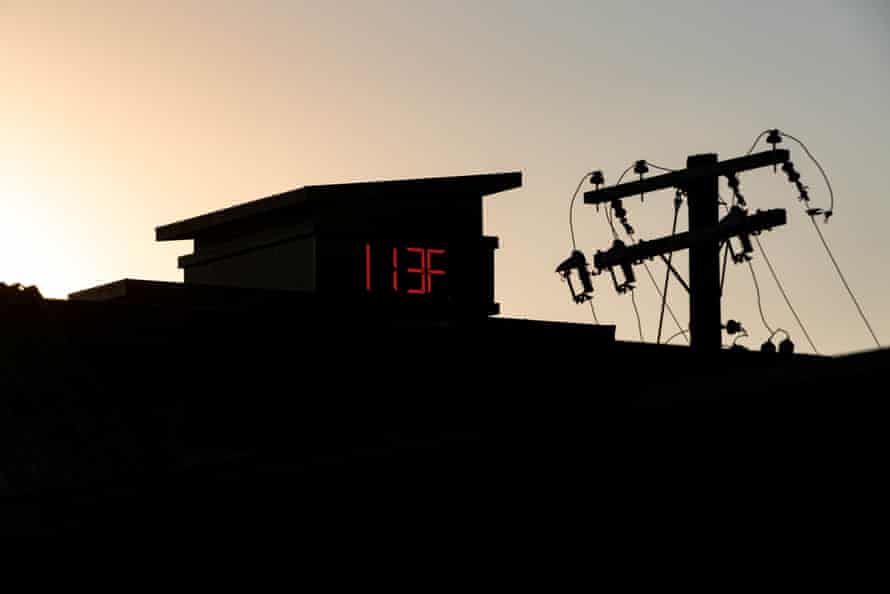
A heatwave has engulfed the region, with both Portland and Seattle breaking record high temperatures (Portland hit 112F, while Seattle hit 104F) over the weekend. Seattle has reached 100F for three consecutive days – a first for the typically overcast city. Washington state surpassed its all-time high for June, with at least one part of the state reaching 115F onSunday.
In many areas outside these metropolitan hubs, temperatures were even more extreme. Canby, in north-western Oregon, for example, hit 118F over the weekend, according to Nick Bond, the Washington state climatologist. At the same time, Spokane, Wenatchee and Pullman, Washington, each beat their previous record high for overnight temperatures, according to the National Weather Service.
The air quality has also become a concern in some areas. On Monday, the Puget Sound clean air agency tweeted that the extreme heat had resulted in the air quality in the Cascade foothills becoming “unhealthy”.
A heat warning was in effect for most of western Canada, too. The country set its highest recorded temperature on Sunday, when the village of Lytton hit 115F (46.1C).
A thermometer reads 113F during a heat wave in Portland, Oregon. Photograph: Maranie Staab/Reuters
Why is this happening?
The heatwave was caused by two pressure systems, one coming from the Aleutian Islands in Alaska, and the other from James Bay and Hudson Bay in Canada, explained Richard Bann, a meteorologist with the National Weather Service’s Weather Prediction Center.
“The Pacific north-west got caught in a region where a series of feedbacks set up these very warm temperatures – no, hot temperatures – with very little cloud cover and very warm temperatures at night too,” he said.
And these types of extreme hot weather events are being exacerbated by global heating.
The heatwave is being described as a “heat dome”. The term refers to the idea that this type of warmth extends high into the atmosphere and isn’t just a thin layer, and that it can have an impact on pressure and wind patterns. “That is important here in the Pacific north-west with the present event because it has served to essentially shut off the flow of cool marine air off of the Pacific into the land area,” Bond said.
How unusual is it?
Bond said similar events didn’t happen often, taking place every one to three decades.
“It blows my mind that we could get the temperatures that we’re observing here in the Pacific north-west, especially on the west sides of the Cascades that [have] that proximity to the ocean, that it could get that hot for so many days in a row,” he said. “I would have been willing to guess something like that in the middle of the century, in the latter part of the century.”
Why has this been so concerning?
These temperatures, while certainly not the worst in the country, are particularly detrimental for this region. The area isn’t used to this and hasn’t adapted to these types of temperatures, explained Bond.
“When it gets really hot here, we haven’t learned how to deal with it the same way other parts of the country have,” he said.
People cool off at Willow’s Beach in Victoria, British Columbia. The heatwave has extended across the US north-west and south-western Canada. Photograph: Chad Hipolito/Reuters
He gave the example of a colleague whose apartment in Seattle reached 100F. When she looked for an air-conditioned hotel, she found most in and around Seattle sold out, and the ones that weren’t were charging hundreds of dollars for a single night.
How long will it last
Relief is on its way for some parts of the region, including Seattle and Portland, according to Bond. But they will probably still experience higher temperatures than normal over the next two weeks. That type of prolonged heat could be dangerous when it came to wildfires and extremely detrimental for land agriculture, he said.
But Bann said further inland, it would continue to be very hot, with temperatures around 113F in some areas. He said those areas would probably see high temperatures continuing into the middle or later part of this week.
How are people coping?
Across the region, residents are turning to cooling centers, beaches, pools and hotels to get some relief.
On Sunday, Seattle’s mayor, Jenny Durkan, announced the opening of the Amazon Meeting Center as a cooling center, saying it had a capacity of 1,000 people. The city has also highlighted the fact that on Saturday, “libraries and water activities saw the highest use by residents and families”.
Multnomah county, which includes Portland, has opened a series of libraries as cooling centers, as well as the Oregon Convention Center and the Arbor Lodge Shelter.
Some in these regions have taken to posting to neighborhood social media groups as they search desperately for air-conditioning units, fans or simply tricks for keeping themselves cool.
You've read 8 articles in the last year
… we have a small favour to ask. Through these challenging times, millions rely on the Guardian for independent journalism that stands for truth and integrity. Readers from 180 countries chose to support us financially more than 1.5 million times in 2020.
"You never act your age, in spirit, outlook, humor or perspective. But you do show the wisdom and sensibility that only 200 years' of extraordinary reporting can bring. One can only imagine what you will continue to grow into!" – Mary Garton, US
With your help, we will continue to provide high-impact reporting that can counter misinformation and offer an authoritative, trustworthy source of news for everyone. With no shareholders or billionaire owner, we set our own agenda and provide journalism that’s free from commercial and political influence. When it’s never mattered more, we can investigate and challenge without fear or favour.
Unlike many others, we have maintained our choice: to keep Guardian journalism open for all readers, regardless of where they live or what they can afford to pay. We do this because we believe in information equality, where everyone deserves to read accurate news and thoughtful analysis. Greater numbers of people are staying well-informed on world events, and being inspired to take meaningful action.
We aim to offer readers a comprehensive, international perspective on critical events shaping our world – from the Black Lives Matter movement, to the new American administration, Brexit, and the world's slow emergence from a global pandemic. We are committed to upholding our reputation for urgent, powerful reporting on the climate emergency, and made the decision to reject advertising from fossil fuel companies, divest from the oil and gas industries, and set a course to achieve net zero emissions by 2030.”
“Bangladesh and Malaysia are among the countries scrambling to contain outbreaks as slow vaccination campaigns leave people vulnerable. The W.H.O. is recommending that fully vaccinated people wear masks, in a split with the C.D.C.
A drive-through coronavirus testing site in Brisbane, Australia, on Tuesday.Darren England/EPA, via Shutterstock
Countries across the Asia-Pacific region are scrambling to slow the spread of the more infectious Delta variant, reimposing restrictions and stay-at-home orders in a jarring reminder — for societies that had just begun to reopen — that the pandemic is far from over.
In Bangladesh, soldiers are preparing to patrol the streets to enforce stay-at-home orders, with new cases rapidly approaching their early April peak. “The Delta variant of Covid-19 is dominating,” said Robed Amin, a health ministry spokesman, adding that testing suggested the strain was responsible for more than 60 percent of new cases.
The lockdowns and restrictions have deflated hopes across the region, where many countries avoided the worst of the pandemic’s initial spread last year. Now, weary residents are frustrated by what some describe as their countries’ pandemic regression, as other parts of the world edge toward normalcy.
Outside Kuala Lumpur, Malaysia’s largest city, a restaurant owner, Marcus Low, bemoaned the fourth lockdown of the pandemic. Daily infections in Malaysia peaked in early June, but even after weeks of lockdown, new cases have dipped by only 5 percent over the past two weeks, according to New York Times data. Only 6 percent of the country’s 33 million people are fully vaccinated.
“My restaurant is known for its hospitality and shared dishes, the antithesis of social distancing,” Mr. Low said. For his and other small businesses struggling to survive, this lockdown “might be the last straw,” he said.
Sydney is one of four major Australian cities now in lockdown.Loren Elliott/Reuters
“If we were able to get a really high vaccination rate, that changes the game completely,” said Hassan Vally, an associate professor in epidemiology at La Trobe University in Melbourne. With less than 5 percent of Australia’s population fully vaccinated, he said, “in some ways, where we’re at now is no surprise.”
The Delta strain is one of several “variants of concern” identified by the World Health Organization and the U.S. Centers for Disease Control and Prevention. Though estimates of its infectiousness differ, the variant could be 50 percent more contagious than the already faster-spreading Alpha variant, which emerged in Britain last year, health officials say.
Studies have shown that Covid-19 vaccines are still largely effective against the Delta variant, though protection is significantly lower for those who are partially vaccinated. But the experiences of several countries show that the Delta variant can spread rapidly through the unvaccinated, including children.
“Anywhere you carry out vaccination, the disease will be pushed into the unvaccinated population,” said Raina MacIntyre, a professor of global biosecurity at the University of New South Wales in Sydney.
Countries that have vaccinated relatively high percentages of their populations are moving ahead with reopening plans. In Britain, where the Delta variant now accounts for almost all new cases, officials say they still plan to lift most remaining pandemic restrictions on July 19. New cases there have more than doubled in the past two weeks, but officials believe that the country remains well protected, with nearly half the population fully vaccinated.
“While cases are now ticking up, the number of deaths remains mercifully low,” the country’s health secretary, Sajid Javid, said on Monday
Experts say that as long as the virus continues to circulate, it can acquire mutations that may present new challenges. In India, where a devastating second wave this spring caused thousands of deaths daily, Maharashtra state has reimposed partial stay-at-home orders in response to the emergence of what has become known locally as “Delta Plus,” described by scientists as a sub-lineage of the Delta variant.
Indian health officials have expressed concern that Delta Plus could spread even more easily. “There is the possibility of the third wave,” said Maharashtra’s chief minister, Uddhav Balasaheb Thackeray.
The World Health Organization’s headquarters in Geneva. The W.H.O. is the world’s largest public health body.Salvatore Di Nolfi/EPA, via Shutterstock
World Health Organization officials, concerned about the Delta variant, have urged even fully vaccinated people to continue wearing masks and taking other precautions.
The Centers for Disease Control and Prevention, on the other hand, told fully vaccinated Americans in May that they no longer needed to wear masks indoors or to stay six feet from other people. The agency also eased advice about testing and quarantine after suspected exposure.
Asked on Monday about the W.H.O.’s cautions, a C.D.C. spokesman pointed to the existing guidance and gave no indication it would change.
The Delta variant, a highly infectious form of the virus that has spread to at least 85 countries since it was first identified in India, is now responsible for one in every five Covid-19 cases across the United States. Its prevalence here has doubled in the past two weeks, and Dr. Anthony Fauci, the nation’s top infectious disease doctor, has called it “the greatest threat” to eliminating the virus in the United States.
“Until we better understand how and to who the Delta variant is spreading, everyone should focus on maximum protection with minimum interruption to routine as all businesses operate without other restrictions,” county officials said in a statement.
The rise of new variants “makes it even more urgent that we use all the tools at our disposal,” Dr. Tedros Adhanom Ghebreyesus, the director-general of the W.H.O., said at a news briefing on Friday.
Going masked in Lisbon, Portugal. Patricia De Melo Moreira/Agence France-Presse — Getty Images
Though fully vaccinated people are largely protected, studies suggest the Pfizer vaccine’s efficacy against the Delta variant is slightly lower than against other variants, and significantly lower for individuals who have received only one dose.
Britain — where some two-thirds of the population have received at least one dose of the Pfizer or AstraZeneca vaccine and just under half have received two — has seen a sharp rise in cases driven by the variant. And Israel, with one of the highest vaccination rates in the world, has partially reimposed mask mandates in response to an uptick in cases.
Given how fast-moving the variant is, “the vaccine approach is not enough,” said Eric Feigl-Ding, senior fellow at the Federation of American Scientists in Washington. “We’re not at the level of vaccinations where we can release the brakes on everything else.”
Other scientists disagreed, saying guidance has to be tailored to local conditions.
“The W.H.O. is looking at a world that is largely unvaccinated, so this makes sense,” said Dr. Ashish Jha, the dean of the Brown University School of Public Health, adding that parts of the United States might also need different advice.
“If I were living in Missouri or Wyoming or Mississippi, places with low vaccination rates,” he said, “I would not be excited about going indoors without wearing a mask — even though I’m vaccinated.”
Bruce Springsteen in “Springsteen on Broadway” at New York’s St. James Theater on Saturday night.Sara Krulwich/The New York Times
In a city whose cultural soul had been closed for more than a year, with boarded-up windows and empty streets, Bruce Springsteen called it back to life on Saturday night. His gruff and guttural rasp was the first to echo across a Broadway stage to a paying audience in 471 days.
Of course, “Springsteen on Broadway” is no traditional Broadway production. The show consists of a man alone onstage. His ensemble: a microphone, a harmonica, a piano and six steel strings stretched across a select slab of spruce wood.
“I am here tonight to provide proof of life,” Springsteen called out early on. It was a line from the monologue of his original show — which ran for 236 performances, in 2017 and 2018 — and now it carried extra weight. That proof, he continued, was “to that ever elusive, never completely believable, particularly these days, us.”
For the “us” that packed inside the St. James Theater — 1,721 filled seats, very few masked people, all vaccinated — that first chord from “Growin’ Up” was indeed proof that the rhythms that moved New York City were emerging from behind a heavy, dark and weighty curtain.
The 15 months that Broadway had been closed were its longest silence in history. In years past, strikes, hurricanes, blizzards and blackouts had managed to tamp down the lights on Broadway only for a few days, weeks or a month.
But the pandemic forced the Theater District into an extensive darkness on March 12 of last year, as New York became the epicenter of the epidemic in the United States.
Logs ready to be processed at a saw mill in Arkansas. The price of lumber has come down 47 percent since early May.Karen E. Segrave for The New York Times
The cure for high prices is high prices.
That’s an old line used in commodity markets, and it helps explain why the great inflation scare of 2021 has eased some in recent weeks. When the price of something soars because demand outstrips supply, it has a way of self-correcting. Buyers, scared off by high prices, find other options, and sellers crank up production to take advantage of a profit opportunity.
It is an idea simple enough to be taught in the first few weeks of any introductory economics class, but one with powerful implications for the American economy as it aims for a postpandemic reboot.
Several of the key products whose prices soared in the spring have grown less expensive, as producers have increased output and buyers have held tight. This is particularly evident with lumber; as of Friday, its price was down 47 percent from its early-May peak (though still well above historical norms). Sawmills responded to soaring prices by pushing the limits of their capacity.
The prices of corn, copper and a variety of other economically important commodities are also down by double-digit percentages since early May. This supports the notion that the inflation the world has been experiencing is transitory — set to ease in the months ahead as the laws of supply and demand take hold.
Markets have plenty of flaws and imperfections, but when it comes to allocating scarce goods and sending signals to sellers to make more and buyers to buy less, they work quite well.
But just because markets work doesn’t mean they will work instantly. The complexity of the way many of the goods still in short supply are produced, transported and sold means that people in those markets are reluctant to predict the kind of snapback evident in lumber prices.“